
Introduction to Korean BBQ Portion Sizes: A Guide for Business Owners
Korean BBQ is not just a culinary experience; it’s a communal celebration that can elevate any gathering. For business owners planning events, understanding how much Korean BBQ per person is essential for creating memorable dining experiences. The perfect amount ensures that every guest leaves satisfied while also minimizing wastage, a critical factor in managing both costs and environmental impact.
When contemplating your menu for various occasions-be it a casual meet-and-greet, a formal business dinner, or a festive celebration-having a clear guideline on portion sizes can play a vital role in the overall success of the event. Too little food can lead to disappointed guests, while excessive servings may result in excess waste and ballooned budgets. By learning the ideal Korean BBQ portions tailored for different events, business owners can effectively streamline their planning processes and enhance guest satisfaction.
Engaging your guests with the delightful flavors of Korean BBQ is more than just serving food; it’s about crafting an experience that speaks to their preferences and appetites. Explore our menu to see how various offerings can cater to different group sizes and preferences. Additionally, our insights into optimizing serving sizes can help you maximize your event’s impact without compromising quality or taste. Understand the art and strategy behind portion control to make your next gathering not only a success but a highlight in your guests’ calendars.
Factors Influencing BBQ Portion Sizes
When determining how much Korean BBQ to serve per person, several key factors should be considered to ensure an enjoyable dining experience. Below is a list of these influencing factors:
-
Meal Type (Lunch/Dinner): The time of day impacts serving sizes. Dinner portions may be larger due to guests typically consuming more at night.
-
Event Duration: Longer events may require more food to keep guests satisfied. It’s vital to predict how much time guests will spend at the BBQ to calculate appropriate portion sizes.
-
Guest Preferences: Knowing the preferences of your guests is essential. If you determine that most guests enjoy certain meats or have a favorite side dish, you may want to serve more of those options.
-
Dietary Restrictions: Be aware of any dietary needs or restrictions among your guests. This includes vegetarian or vegan options, gluten-free choices, or any food allergies that may affect how much food to prepare.
-
Type of Event: Casual social gatherings might require less food per person compared to formal events (like weddings), where guests typically expect a more substantial meal.
-
Children vs. Adults: Serving sizes can vary for children and adults. Typically, adults may eat around ½ pound of cooked meat, while children may require about ⅓ pound.
-
Side Dishes and Accompaniments: The presence of side dishes (like rice, vegetables, or pickled items) affects the meat portion size. If more sides are provided, you might serve less meat per person.
-
Season and Weather: In warmer weather or during summer months, guests might eat less heavier food, while colder weather may lead to larger appetites for hot BBQ meals.
Understanding these factors will help you provide an appropriate quantity of food, reducing waste and ensuring that everyone enjoys the meal! For more insights on coordinating BBQ events, learn more about our Korean BBQ options.
Average Portion Sizes for Korean BBQ
When running a Korean BBQ restaurant, understanding average portion sizes is pivotal for ensuring customer satisfaction while managing food costs effectively. Here’s a detailed overview of appropriate serving sizes for meats and side dishes commonly enjoyed during a Korean BBQ dining experience:
Recommended Meat Portions
- Beef (Bulgogi, Galbi):
- Recommended portion size: 8 oz (approximately 227 grams) per person. This includes popular choices like marinated beef or short ribs, which are main attractions in most meals.
- Pork (Samgyeopsal, Marinated Pork Belly):
- Recommended portion size: 6-7 oz (170-200 grams). The rich flavor of grilled pork is a staple that guests enjoy, and these sizes can support satisfaction.
- Chicken (Dak Galbi):
- Recommended portion size: 6 oz (about 170 grams). Tender cuts of chicken marinated in Korean spices provide a flavorful option that balances the richer meats.
- Seafood (Shrimp, Squid):
- Recommended portion size: 5-8 oz (140-227 grams) depending on the type. Seafood can be a lighter alternative that provides balance in a meat-heavy meal.
For precise quantities, consider that one portion of Korean beef translates to approximately 25 grams in everyday culinary practices. Thus, scaling this across the crowd ensures a pleasant experience.
Side Dishes (Banchan)
In addition to meats, side dishes are a key component of a Korean BBQ meal. Here are typical recommendations:
- Kimchi:
- Recommended portion size: 40 grams (about 1.4 oz). Beansprouts or pickled vegetables are a refreshing side that boosts the meal’s flavor.
- Salad/Rice:
- Recommended portion size: 100 grams (about 3.5 oz) for rice or a side salad. Rice often accompanies grilled meats, soaking up the flavors and enhancing the meal.
- Lettuce Wraps (Ssam):
- Recommended portion: 5-7 leaves per person. These are used for wrapping grilled meats and adding sauces.
Practical Application
In conclusion, for a balanced and enjoyable experience at your Korean BBQ establishment, aiming for around ½ to 1 pound (8-16 oz) of meat per person along with a variety of side dishes will likely satisfy most guests. Ideally, creating a well-rounded menu that offers assorted meats and a generous selection of banchan can enhance the dining experience tremendously.
For more tips on creating a balanced menu, learn more about our menu options. It’s recommended to train your staff to help guests with portion recommendations based on their appetites and preferences, enhancing overall satisfaction.
User Insights on Korean BBQ Portion Sizes
When considering how much Korean BBQ to serve per person, understanding user preferences and feedback is crucial. Reviews from various platforms have consistently highlighted common themes and best practices related to portion sizes that can help business owners optimize their dining experience.
Key Insights from User Reviews
Recent feedback from diners about Korean BBQ portion sizes reveals several important insights:
- Generous Portions Are Celebrated: Many diners appreciate establishments that offer large portions. For instance, Kalbi Korean BBQ received praise specifically for its large serving sizes, making it a preferred option for group gatherings.
- High-Quality Ingredients Matter: Customers have noted that while some places may offer smaller portions, they often compensate with better quality. For example, Antoya Korean BBQ focuses on high-quality meat options that are more expensive but recognized as worth the cost.
- Diverse Side Dishes Enhance Satisfaction: Establishments like Um Yong Baek serve a variety of side dishes along with meat, typically offering six to ten banchan. This variety enhances diners’ experiences and ensures satisfaction beyond just meat portions.
Current Trends in Portion Sizes
Trends indicate that Korean BBQ is moving towards:
- Interactive Dining Experience: Many restaurants are focusing on the interactive nature of grilling meats at the table, engaging customers in the process. This includes offering thinly sliced marinated meats that require only short cooking times, allowing diners to enjoy both the food and the preparation process (Family Destinations Guide).
- Plant-Based Options: To cater to a wider audience, many Korean BBQ restaurants are introducing plant-based options and fusion dishes, appealing to those interested in healthier dining experiences (Kooky Culinary).
Recommended Portion Sizes for Diners
Based on feedback, here are some general recommendations for Korean BBQ portion sizes:
- Meats: Between 200-300 grams per person is typically recommended, allowing guests to sample different types without feeling overwhelmed.
- Banchan: Offer an array of 6-10 different side dishes that can enhance the meal experience without overshadowing the main meats. These should include a mix of pickled vegetables, salads, and traditional Korean sides.
- Shared vs. Individual Portions: Consider offering shared platters, which not only promote social interaction but also allow diners to try multiple flavors without the risk of waste if they order too much individually.
Conclusion
Understanding these preferences and common practices can help Korean BBQ restaurant owners better allocate their portion sizes and enhance customer satisfaction. By focusing on generous portions of high-quality meats accompanied by a diverse selection of banchan, businesses can create a captivating dining experience that reflects the rich culture of Korean BBQ.
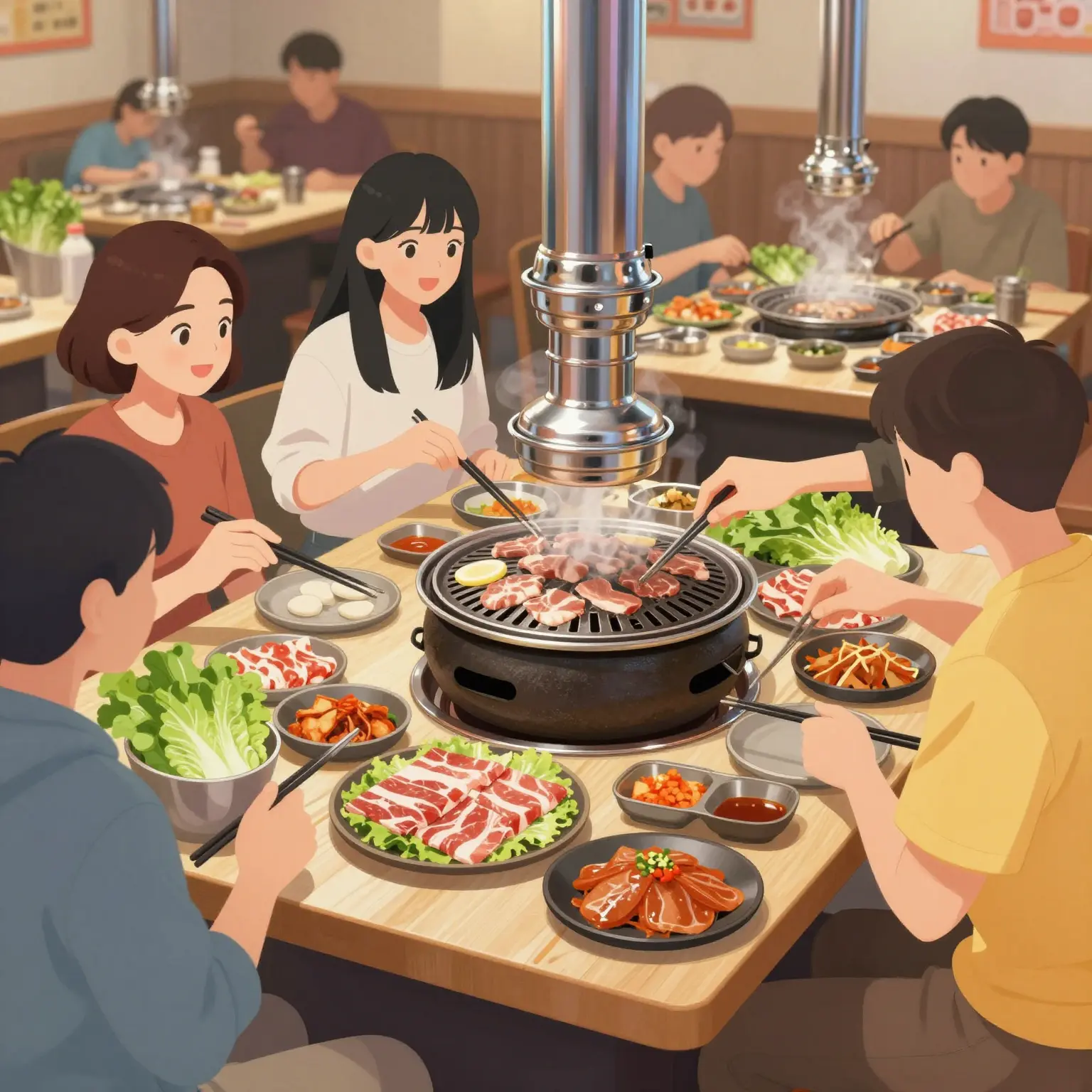
A vibrant illustration of a Korean BBQ dining scene, featuring a variety of meats and side dishes.
For more detailed insights on menu offerings, check our Korean BBQ menu options.
Portion Size Recommendations for Korean BBQ Events
When planning for Korean BBQ events, it’s crucial for business owners to ensure adequate food portions based on the size of the gathering. Below is a table that compares portion size recommendations for various types of meat and side dishes, tailored for small, medium, and large events.
| Item | Small Event (up to 10 people) | Medium Event (10-50 people) | Large Event (50+ people) |
|---|---|---|---|
| Beef | 6-8 oz per person | 5-6 oz per person | 4-5 oz per person |
| Pork | 6-8 oz per person | 5-6 oz per person | 4-5 oz per person |
| Chicken | 6 oz per person | 5 oz per person | 4 oz per person |
| Vegetables | 1/2 cup per person | 1/3 cup per person | 1/4 cup per person |
| Rice | 1/4 cup dry rice per person | 1/4 cup dry rice per person | 1/4 cup dry rice per person |
| Starches | 1/2 cup per person | 1/3 cup per person | 1/4 cup per person |
Serving Efficiency
- Aim for 1-1.25 pounds of total food per adult for seated dinners, including meats and side dishes.
- For sides, consider about 1 pound of vegetables for every 5 guests (around 3 ounces per guest).
- Make sure to provide a diverse selection to accommodate various dietary preferences, which is especially important in a Korean BBQ setting.
For further insights into menu planning and quantities, check out our Korean BBQ menu options or look into our all-you-can-eat offerings.
Cultural Aspects of Korean BBQ
Korean BBQ embodies not just a style of cooking but a cultural ritual that emphasizes community, family bonding, and interaction. Unlike many Western BBQ traditions, which often center around large cuts of meat and individual servings, Korean BBQ fosters a shared experience. Diners gather around a grill right at the table, cooking marinated meats, such as galbi (short ribs) and samgyeopsal (pork belly), enhancing the social aspect as everyone participates in the cooking process.
In Korean culture, the act of sharing food represents unity and togetherness. Each meal includes a variety of banchan (side dishes), which complements the main dishes and encourages sharing. This communal dining style contrasts sharply with Western BBQ, where meals primarily consist of larger, pre-cooked servings – often with diners focusing on individual plates rather than interacting over shared dishes.
Impact of Portion Sizes on Guest Experience
The portion sizes in Korean BBQ are typically designed for sharing, creating a family-style atmosphere. This allows guests to sample a wide variety of flavors and textures, facilitating conversation and enhancing the dining experience. In contrast, Western BBQ tends to feature larger portions that can often lead to a less interactive dining experience, as guests may fill their plates with set servings without the same level of sharing and engagement.
For restaurant owners, understanding these cultural aspects is crucial when designing menus and portion sizes for Korean BBQ. Offering shareable portions encourages guests to engage with one another, enriching their overall experience. Moreover, an all-you-can-eat format, which is popular in Korean BBQ establishments, allows guests to experiment with different dishes without feeling restricted to fixed portion sizes.
For instance, restaurants like Kogi Korean BBQ and The Moon Korean BBQ highlight the joy of sampling various meats and side dishes, reinforcing the cultural values of sharing and togetherness that define Korean dining.
As a business owner, catering to these elements not only nurtures a vibrant dining environment but also builds lasting connections among your guests.
By understanding the cultural significance of portion sizes, you can enhance your customers’ dining experience and create a welcoming atmosphere that embodies the essence of Korean BBQ.
Portion Size Trends in Korean BBQ
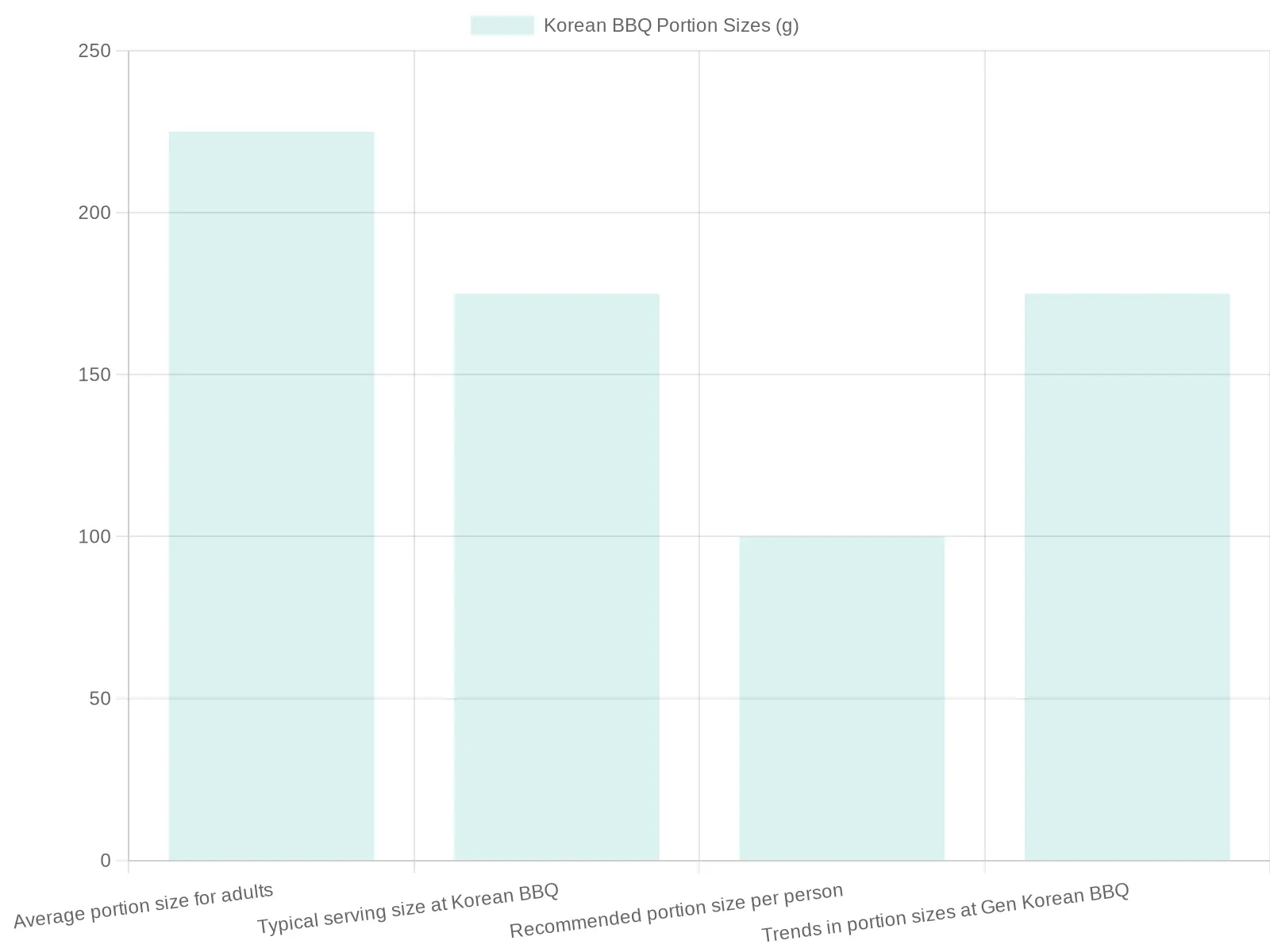
As Korean BBQ continues to grow in popularity, understanding the trends in portion sizes is essential for business owners wanting to optimize their menus and offerings. A recent chart illustrates the shifts in portion sizes over time, highlighting average serving sizes and their variations.
Key Insights:
- Average portion size for adults: Typically around 225 grams per person, which is considered a standard serving.
- Typical serving size: Generally falls between 150-200 grams (5-7 oz) per person, accommodating varied appetites.
- Recommended portion size: A suggestion of 3-4 oz (85-113g) works well for lighter eaters or shared dining experiences.
- Trends in restaurant chains: Notably, Gen Korean BBQ has maintained consistent portion sizes of 150-200 grams over the last decade, emphasizing generous servings that enhance customer satisfaction.
Business owners can utilize this information to better tailor their menus and offerings, ensuring they meet customer expectations while also managing food costs efficiently. For more details on menu options, explore our Korean BBQ and sushi menu.
In conclusion, understanding how much Korean BBQ to serve per person for business gatherings is essential for creating a successful and enjoyable dining experience. Key guidelines suggest preparing approximately 1/2 pound (8 ounces) of meat per person, particularly when offering various meat types to ensure guests have ample options and quantities. The overall cost typically ranges between $20 and $50 per person, depending on the menu selections, with many opting for multiple servings to fully enjoy the communal dining experience that Korean BBQ offers.
Furthermore, it’s vital to consider the visual appeal of the food presentation, as a well-arranged Korean BBQ spread can ignite conversations and create a warm atmosphere conducive to networking and relationship building during business meetings. If you’re planning a gathering and want to ensure that your Korean BBQ setup is perfect, don’t hesitate to reach out for assistance. For expert advice and catering options tailored to your business needs, contact Kogi Korean BBQ today! Enjoy the benefits of a thoughtfully planned meal that stands out and leaves a lasting impression on your guests!
FAQ Section on Korean BBQ Portions
How do I calculate portions for large groups?
Calculating portions for large groups is central to planning a successful Korean BBQ. Here are a few steps to help you:
- Know Your Guests: Understanding the general appetite of your guests is crucial. A common guideline is to estimate about 0.5 lbs (around 225g) of cooked meat per adult. For those with hearty appetites or if you anticipate a more elaborate meal, consider increasing that amount to 0.75 lbs to 1 lb (340g to 450g).
- Consider Variety: Korean BBQ traditionally involves various meats and side dishes. It’s wise to encourage sampling, so adjust accordingly if you have multiple items on the menu.
- Side Dishes and Complements: Remember to account for side dishes (like rice, kimchi, and vegetables). Generally, for every pound of meat, include about 0.2 to 0.3 lbs (90 to 135g) of side dishes to ensure that guests have enough variety without overprovisioning meat.
- Calculate by Group Size: For example, for a group of 10 adults, plan for 5 – 10 lbs of meat depending on their appetite. Use tools like the BBQ Party Calculator for a more tailored estimate.
What if guests have dietary restrictions?
Handling dietary restrictions can be complex but manageable. Here are some practical tips:
- Inquire Ahead: Before the event, ask guests about allergies or dietary preferences. This includes vegan, vegetarian, gluten-free, or other specific needs.
- Offer Alternatives: Include dish options that cater to dietary restrictions. For instance, you can offer plant-based meats as alternative protein sources, or ensure that at least one side dish is free of common allergens like gluten.
- Cooking Separately: If you have guests with multiple dietary needs, cooking items separately can prevent cross-contamination. Make sure to clean the grill between different meat types or to use separate grilling plates for vegetarian options.
- Labeling Dishes: Clear labeling on dishes helps guests make informed choices. For a diverse grouping, consider providing a menu with descriptions that highlight any allergens.
How much meat should I serve per person?
It’s essential to serve an appropriate amount of meat considering many guests will likely want to sample a variety:
- General Rule: As a general rule for Korean BBQ, consider serving about 10 oz (280 g) per adult for a regular appetite or up to 13 oz (370 g) for heavier eaters. This considers that the meal is both hearty and varied.
- Pre-Cooked vs. Raw: Note that portion sizes often apply to cooked meat; when preparing, calculate the raw meat needed, which is usually about 1.5 times the cooked amount due to shrinkage during grilling.
How does portion size change for children?
Children generally eat less than adults, so it’s important to modify portions accordingly:
- Recommended Amount: About 0.33 lbs (150 g) of cooked meat per child is typically sufficient. Consider the age and appetite of each child before finalizing amounts, and ensure there’s plenty of variety and side options.
- Family-Style Serving: Serving family-style allows children to sample different meats rather than committing to larger portions initially, making it a savvy approach to managing children’s appetites without waste.
Conclusion
Korean BBQ can be a delightful experience when executed with thoughtful portions. By planning appropriately for guests’ appetites, dietary needs, and portion sizes, you can ensure a successful meal that caters to everyone’s tastes. For additional tips on menu recommendations, explore our Korean BBQ and Sushi Menu and make your event a memorable feast!