
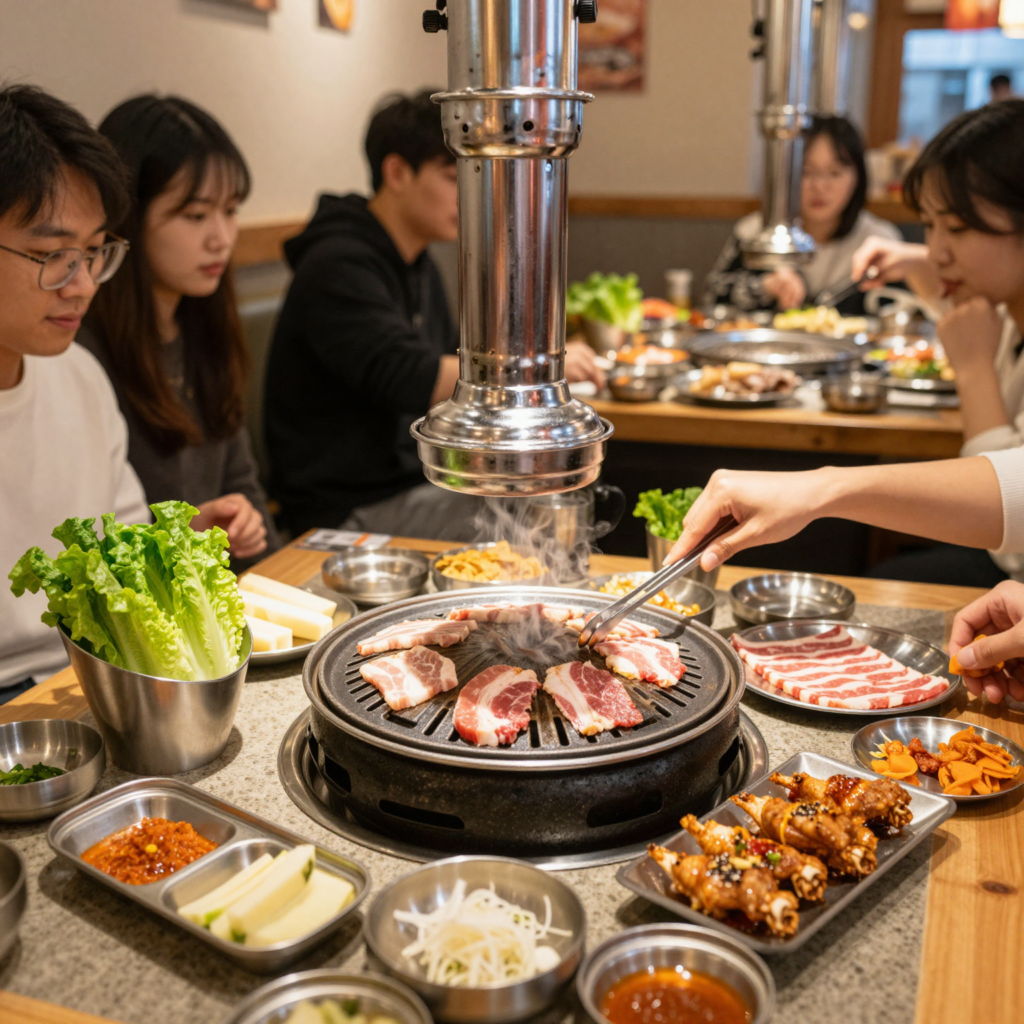
How Long Does Korean BBQ Take?
Have you ever found yourself at a Korean BBQ restaurant, eagerly cooking your meal, and wondered, “How long does Korean BBQ take?” This seemingly simple question holds significant implications for restaurant owners looking to optimize their service efficiency. In today’s fast-paced dining landscape, understanding the average duration of a Korean BBQ meal can help you enhance customer satisfaction while maximizing table turnover. Factors such as cooking time, preparation, and even the social aspect of dining all contribute to the overall experience. For business owners, mastering the timing can lead to improved operations and greater revenue. Curious about effective strategies? Learn more about optimizing your Korean BBQ service.
Furthermore, let’s explore how these insights can be applied to your food service models, particularly when crafting your Korean BBQ and sushi menu.
Preparation Time for Korean BBQ
When it comes to Korean BBQ, preparation time is a crucial factor that can directly influence customer satisfaction and restaurant efficiency. Understanding the various aspects that contribute to preparation time can help business owners streamline their operations and enhance the dining experience.
1. Marinating Ingredients
The marination process is central to Korean BBQ, where meats such as bulgogi and galbi are marinated in a blend of soy sauce, sugar, sesame oil, garlic, and other seasonings. This process not only enhances flavor but also tenderizes the meat.
- Time Requirement: Marinating typically requires at least 30 minutes to several hours or even overnight for optimal flavor absorption.
- Business Insight: Pre-marinating meats in batches can help reduce wait times during peak service hours.
2. Grilling Equipment & Setup
The type of grill used, whether it’s tabletop gas, charcoal, or electric, also affects preparation time. Each grill has its own heating time, affecting when the cooking can start.
- Efficiency Tip: Ensure all grilling equipment is preheated and ready before guests arrive. For instance, electric grills require only 5-10 minutes to heat up, while charcoal may take longer.
3. Ingredient Preparation
Besides meats, various side dishes or banchan, such as kimchi, pickled vegetables, and rice, must be prepared and ready for serving. The complexity of these dishes can either speed up or slow down the overall process.
- Example: Preparing simple banchan can take around 15-20 minutes, while intricate side dishes may require more time.
Impact on Meal Duration
Overall, the entire preparation and meal serving process might typically range between 30 to 60 minutes for diners. Efficient management of marinating, grilling, and ingredient preparation not only streamlines service but also ensures that customers receive a delightful experience without excessive wait times. For more insights on effective preparation, learn more about our menu.
By being strategic about every stage of preparation, business owners can greatly improve the timing of meal services, contributing to higher customer satisfaction and retention.
| Korean BBQ Style | Preparation Time | Cooking Method | Average Cooking Duration |
|---|---|---|---|
| Table-top Grilling (Bulgogi, Pork Belly) | 15-30 minutes | Indoor grilling on a built-in or portable tabletop grill, often using gas or electric heat | 8-12 minutes |
| Oven Roasting (Galbi) | 30-60 minutes | Slow roasting in a preheated oven at 375°F (190°C), typically with marinated beef short ribs | 25-40 minutes |
| Charcoal Grilling | 20-40 minutes | Outdoor grilling over natural charcoal, allowing for smoky flavor and high-heat searing | 10-15 minutes |
Understanding Grilling Time in Korean BBQ
Grilling is an art form in Korean BBQ, where timing is essential to ensure flavors and textures are just right. Understanding the average grilling times for various meats can significantly enhance customer satisfaction at your establishment. Here’s a detailed overview of the common meats and their grilling times:
Average Grilling Times for Popular Korean BBQ Meats
In Korean BBQ, here are the average grilling times for popular meats:
| Meat Type | Grilling Time Per Side (Minutes) | Notes |
|---|---|---|
| Bulgogi (Beef) | 2-3 | Thinly sliced beef marinated in a sweet-salty sauce; cooks quickly due to the thin cut. |
| Samgyeopsal (Pork Belly) | 3-4 | Thick slices with layers of fat and meat; requires longer time for fat rendering and crispiness. |
| Dak Bulgogi (Chicken Thighs) | 3-4 | Marinated chicken thighs; cook until juices run clear and edges are golden brown. |
| Galbi (Beef Short Ribs) | 4-5 | Bone-in short ribs; longer grilling time needed for tenderness and caramelization. |
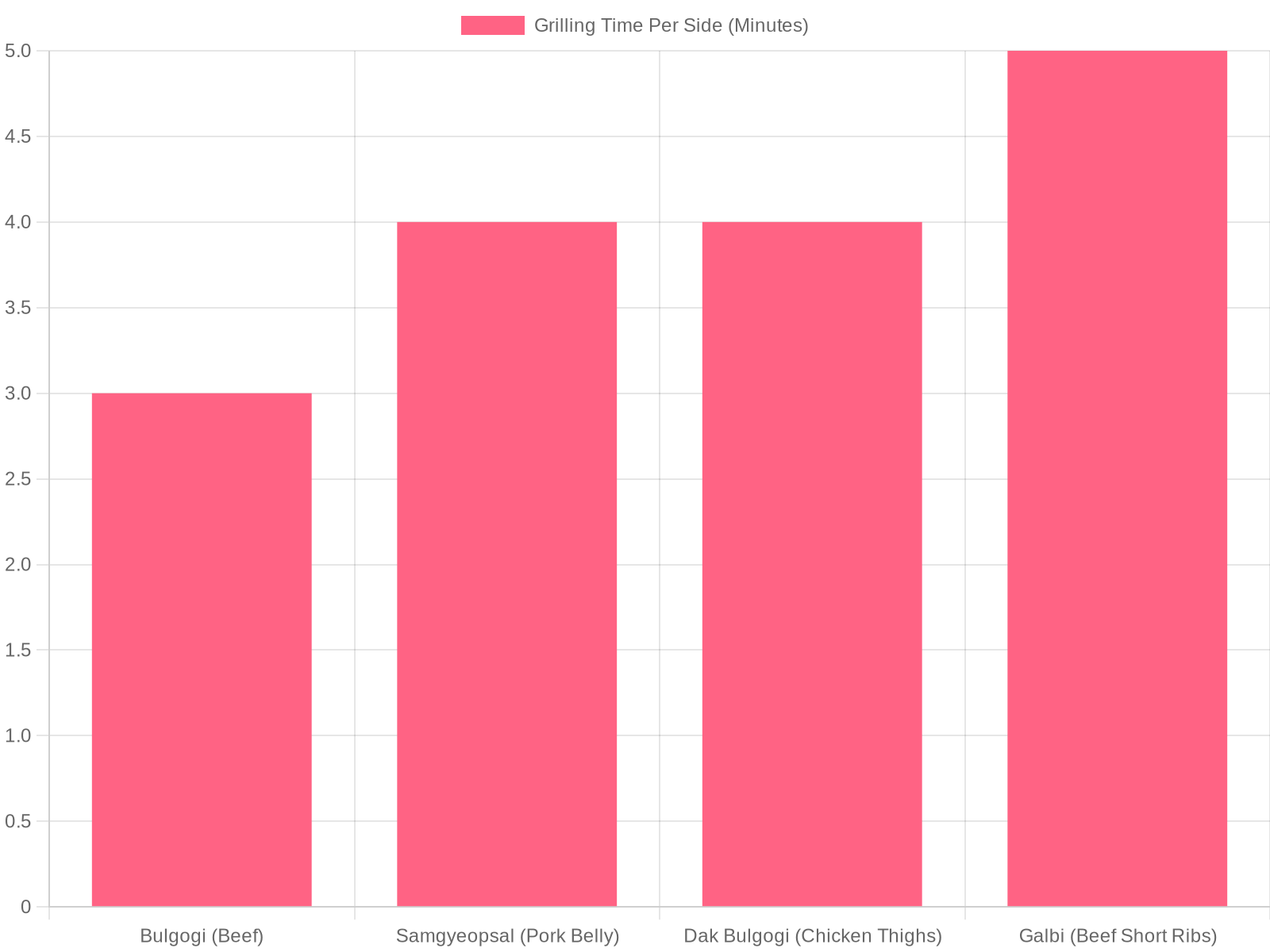
Chart created based on sources from Serious Eats.
Factors Influencing Grilling Time
Several factors affect the grilling time for meats:
- Meat Thickness: Thicker cuts, such as pork belly, require longer grilling times to cook through. For consistency, it’s vital to maintain even thickness across cuts.
- Heat Level: High heat sears quickly, ideal for thin cuts, whereas lower heat helps even cooking for thicker pieces. Achieving the right heat ensures not just cooking speed but also flavor development.
- Marination: Marinated meats often cook faster, as the marinade can create a slightly cooked outer layer, resulting in caramelization. Keep an eye on such meats to avoid charring.
- Bone-in vs. Boneless: Bone-in cuts take longer to grill than boneless ones due to slower heat transfer.
- Desired Doneness: Educate your staff on the appropriate temperatures for different meats. For example, beef should reach 145°F (63°C) and pork 160°F (71°C).
Enhancing Customer Satisfaction
Understanding these grilling times not only improves the quality of the food served but also enhances the overall dining experience. Educated staff can confidently grill meats to perfection, ensuring customers receive their meals hot and flavorful. By investing in knowledge about grilling, business owners can cultivate a loyal customer base that appreciates the quality and effort behind each dish.
For more information on how to effectively manage your Korean BBQ experience, check out our Korean BBQ menu options and see how various dishes can complement your offerings!
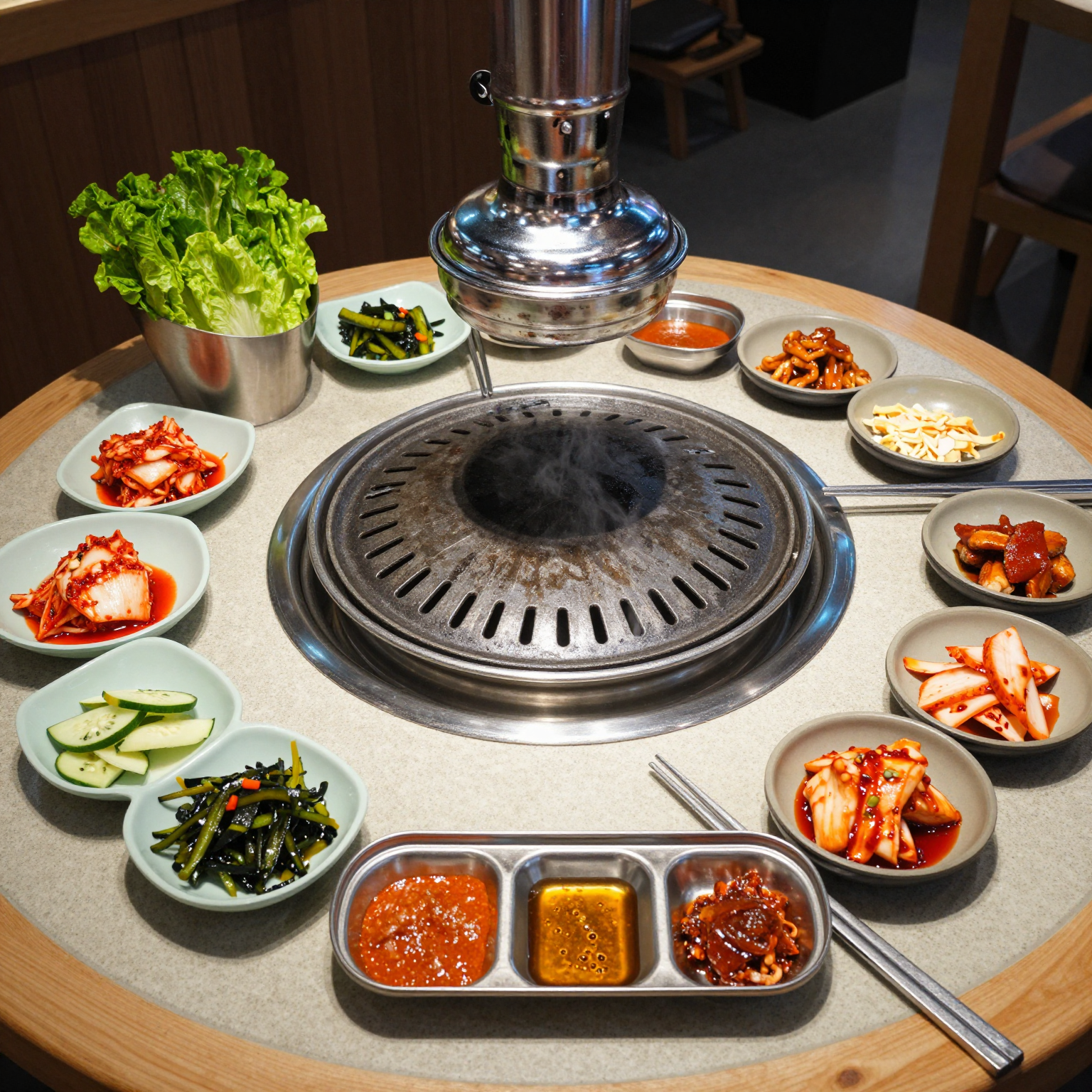
The Social Aspect of Dining in Korean BBQ
Dining at a Korean BBQ restaurant is not just about savoring delicious grilled meats but also embracing a communal dining experience that encourages interaction among diners. One of the unique features of Korean BBQ is that customers cook their own meats at the table, creating a relaxed and engaging atmosphere. This interactive aspect can significantly affect the overall dining duration, which tends to range from 60 to 90 minutes, with an average dining time of around 75 minutes reported by various sources. Larger groups often extend their meal times beyond two hours, reflecting not only the nature of their interaction but also the desire to prolong the experience of sharing a meal together.
Understanding these typical dining durations can help restaurateurs better manage their seats and optimize table turnover while still encouraging customers to enjoy their meals at a comfortable pace. Guests often report that they savor not just the food but the rich experience of cooking together and sharing dishes, known as banchan, which includes an array of side dishes like kimchi and pickled vegetables. The opportunity to pass around these side dishes and engage in conversations forms a crucial part of the dining ritual.
Notably, review platforms like Yelp showcase that diners often feel as if they are at a party rather than a typical dining situation. This delight contributes to repeat business, as diners are likely to return for another adventure, whether they wish to gather with friends or celebrate special occasions. Creating spaces that foster such social interactions, alongside a delectable BBQ menu, can significantly enhance customer satisfaction and encourage recurring visits, establishing a loyal customer base for your Korean BBQ restaurant. For more insights on our menu, check out our Korean BBQ and Sushi menu.
Factors Affecting BBQ Duration
When it comes to Korean BBQ, various factors come into play that can significantly impact how long a meal takes. Understanding these factors can be beneficial for business owners to optimize service and customer satisfaction. Here’s a detailed look at the key elements that affect BBQ duration:
-
Number of Diners: The more people at a table, the longer the overall meal may take, as multiple individuals are cooking and consuming food simultaneously. Larger groups might result in longer cooking times, especially when sharing grills.
-
Type of Dishes Ordered: Different meats and side dishes have varying cooking times. For instance, thicker cuts of beef may take longer to grill compared to thinner slices of pork belly. Additionally, ordering a variety of side dishes can prolong the meal as they all require attention and management on the grill.
-
Speed of Service: The efficiency of the restaurant staff plays a significant role. Quick service can enhance the overall dining experience, while a slow pace can lead to longer meal durations. Having staff readily available to help with grilling can minimize waiting times, thus speeding up the meal process.
-
Cooking Method: Individual grills at each table may allow for more personal control, leading to varied cooking speeds among diners. In contrast, a shared grill may require coordination, impacting how quickly food is prepared and consumed.
-
Grill Temperature Control: Proper grill management is crucial. A grill that is too hot or too cool can result in longer cooking times, directly affecting how quickly diners can enjoy their meals. Additionally, customer familiarity with the grilling process can influence the cooking duration.
These factors all contribute to the dynamics of a Korean BBQ meal, and managing them effectively can lead to improved efficiency and customer satisfaction at restaurant establishments. To enhance understanding of how meal timings can be optimized, learn more about the Korean BBQ menu and common dining patterns
Understanding Customer Preferences in Korean BBQ Dining
One essential aspect that Korean BBQ restaurant owners should consider is the average length of stay for diners. This affects table turnover, staffing needs, and overall customer experience. Based on recent studies, we’ve gathered data on how long guests tend to stay during peak versus non-peak hours:
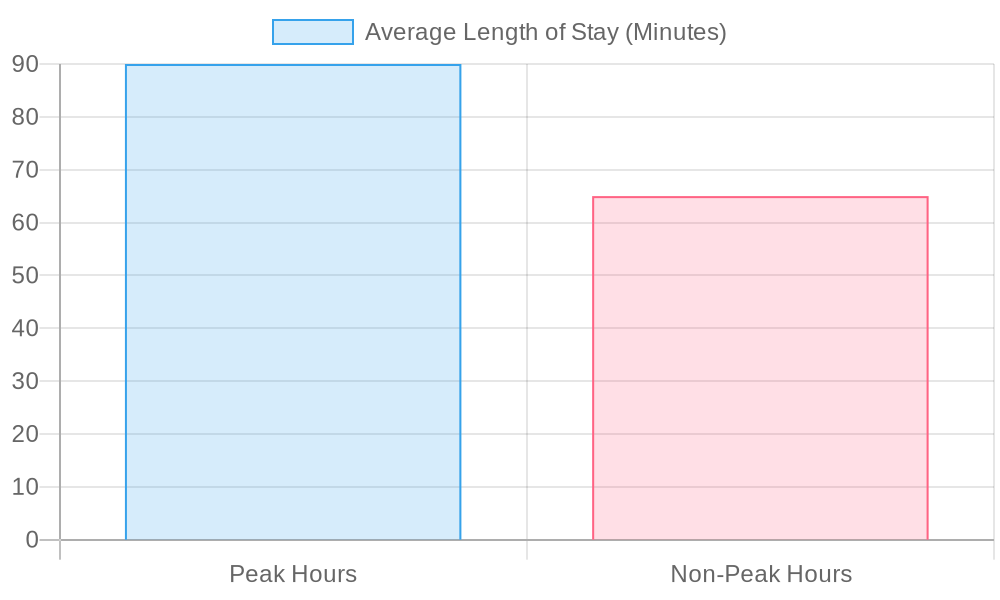
| Category | Average Length of Stay (Minutes) |
|---|---|
| Peak Hours | 90 |
| Non-Peak Hours | 65 |
During peak hours (typically from 6 PM to 9 PM), the average length of stay is about 90 minutes. Conversely, diners tend to stay for approximately 65 minutes during non-peak hours. This difference is mainly due to higher traffic and social interactions during peak times, leading to longer dining experiences.
Understanding these patterns can help restaurant owners optimize their operations and create better promotional strategies to attract customers during off-peak hours. For more insights on Korean BBQ menus and strategies, explore our menu options or check out our all-you-can-eat offerings.
Conclusion
Understanding the duration of Korean BBQ is vital for business owners looking to optimize restaurant operations and enhance customer experiences. The typical duration of a Korean BBQ meal can significantly affect table turnover, staffing needs, and overall customer satisfaction. By managing this time effectively, restaurants can improve efficiency, accommodate more guests, and provide a memorable dining experience.
Key factors influencing duration include meal setup, cooking times, and customer engagement. Ensuring that diners are well-informed on how to best enjoy their meal, while also keeping service prompt, can result in higher repeat visit rates. Moreover, creating a comfortable dining atmosphere where guests can relish their meals at a leisurely pace is essential.
As you take the next steps to refine your Korean BBQ operations, remember that details matter. If you’re looking for more guidance on optimizing your restaurant processes, we’re here to help. Contact us for personalized support tailored to elevate your dining establishment. Not only can we assist with understanding operational timings, but we can also share innovative marketing strategies to boost your Korean BBQ restaurant. Let’s work together to ensure your success in this vibrant industry!
In conclusion, the operational efficiency of your Korean BBQ establishment can significantly impact customer satisfaction and your bottom line. As the demand for unique dining experiences grows, optimizing your processes can ensure that each customer enjoys not only great food but also a memorable experience that encourages repeat business. If you are a business owner looking to enhance your operational efficiency and would like personalized quotes or further discussions, we invite you to reach out to us. Let’s explore together how we can assist you in improving your restaurant operations. At Kogi Korean BBQ, we offer a range of services tailored to meet the needs of your business, ensuring that you achieve the perfect balance between service speed and quality. For more information, don’t hesitate to contact us today!