
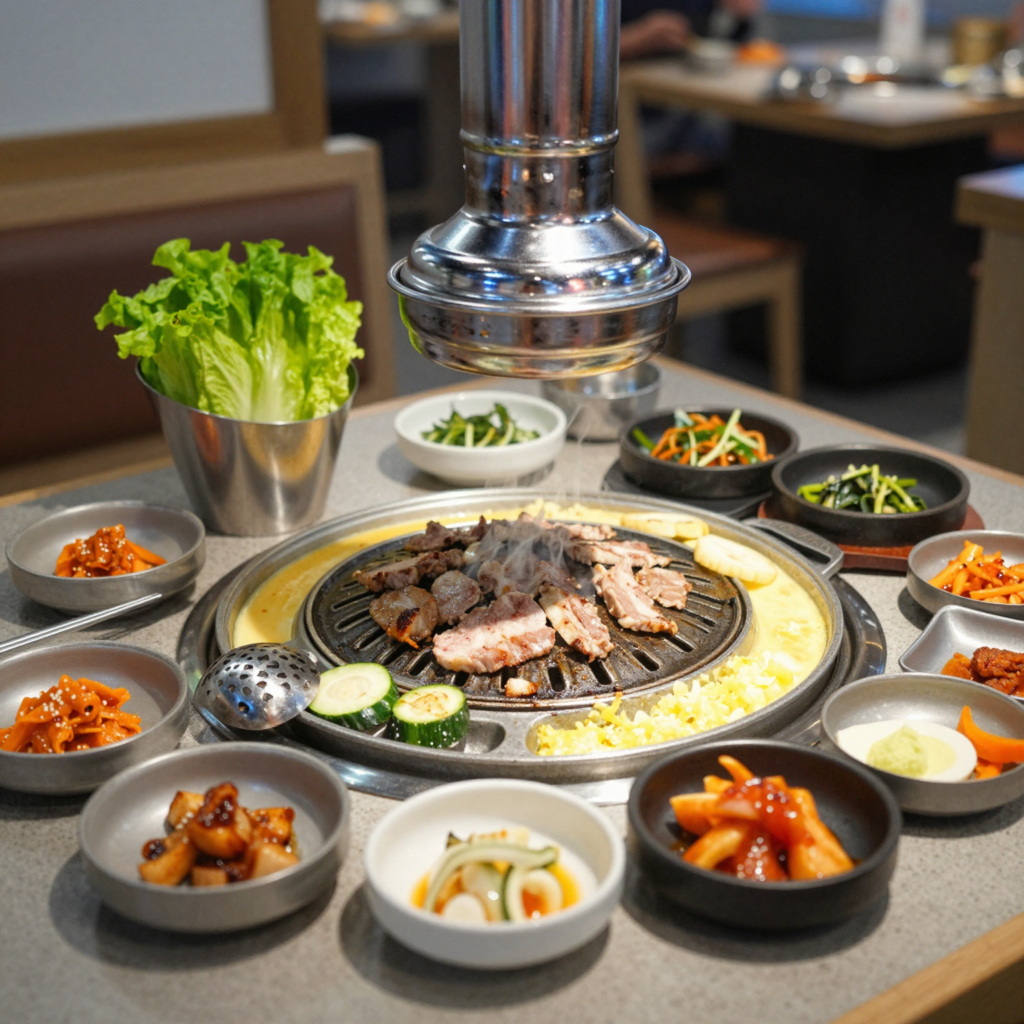
Discover the Allure of Korean BBQ in Corporate Settings
In recent years, Korean BBQ has surged in popularity as a go-to option for businesses looking to create memorable dining experiences. The unique Korean grill technique, where guests can cook their own meats at the table, fosters an interactive and engaging environment that is perfect for team bonding and corporate meetings. But the experience goes beyond just the grill; it also revolves around the Korean BBQ cooking time, which allows for leisurely dining and rich conversations, essential for relationship building in a business context. As companies increasingly recognize the importance of culinary experiences in fostering strong workplace relationships, incorporating Korean BBQ into corporate dining becomes not just a meal, but a strategy for enhancing employee morale and connections. Discover more about the diverse offerings in Korean BBQ by checking out Kogi Korean BBQ’s extensive menu. By blending fun with delicious flavors, Korean BBQ is poised to become an essential part of the modern business dining experience.
Basics of Korean BBQ Preparation
Korean BBQ is a delightful culinary experience that allows marinating meats, selecting fresh vegetables, and setting up grilling equipment to play a crucial role in bringing out the flavors of the dish. Below, we will delve into the essential steps of preparing Korean BBQ.
1. Marinating the Meats
Marinating is pivotal in enhancing the flavors and tenderness of the meat. The key ingredients for an authentic marinade include soy sauce, pear or apple juice (for natural sweetness and tenderizing), garlic, sesame oil, and sugar. Here’s how to do it:
- Choose the Right Cuts: Popular choices include ribeye, short ribs, or pork belly. Ensure the meat is thinly sliced (3-5mm) for even cooking.
- Marination Duration: Allow the meat to marinate for 4 to 12 hours. The longer the meat marinates, the richer the flavor. The addition of pear juice not only adds sweetness but also serves as a tenderizer due to its natural enzymes, making it easier to chew once cooked.
2. Selecting Vegetables
The vegetables you serve alongside Korean BBQ are just as essential as the grilled meats. Freshness is the key.
- Common Vegetables: Typical options include:
- Butter lettuce or perilla leaves (used for wrapping grilled meat)
- Sliced radishes
- Scallions
- Kimchi (fermented vegetables for added flavors)
Having a colorful array of vegetables enhances both the presentation and taste, providing a refreshing balance to the rich flavors of the grilled meats.
3. Setting Up Grilling Equipment
Preparation also includes selecting the right grilling setup:
- Grilling Tools: You can choose between a tabletop grill, an electric griddle, or even a traditional charcoal grill. Ensure that the grilling surface is preheated to medium-high to achieve the perfect sear on the meat.
- Drip Tray: When using a grilling unit, consider a drip tray to collect fat and keep the grilling area clean.
Cooking Method
When you start grilling, this is where the question arises: how long do you cook Korean BBQ? The standard cooking time for marinated meats is approximately 3 to 5 minutes per side for cuts like galbi (marinated beef short ribs). The goal is to quickly sear the outside while keeping the interior juicy and flavorful. Always cook in small batches to avoid overcrowding, ensuring each piece gets the right amount of heat.
The practice of wrapping grilled meat in lettuce or perilla leaves and adding ssamjang (a spicy dipping sauce) is popular, allowing diners to enjoy the full flavor experience.
For additional insights on setting up your Korean BBQ feast, check our Korea BBQ menu and learn more about Korean BBQ techniques.
Popular Korean BBQ Meats and Their Cooking Times
Korean BBQ is a delightful experience that appeals not just to taste buds, but also to the sense of community that comes with sharing food. If you’re a business owner considering Korean BBQ catering options, understanding the meats available and their recommended cooking times is essential. Below is a list of popular Korean BBQ meats along with their cooking times:
-
Bulgogi (Marinated Beef)
Cooking Time: 2-3 minutes per side
Description: Thinly sliced beef marinated in a sweet soy sauce-based mixture. -
Galbi (Short Ribs)
Cooking Time: 7-10 minutes per side
Description: Flavorful marinated short ribs that are juicy and tender. -
Samgyeopsal (Pork Belly)
Cooking Time: 3-5 minutes per side
Description: Thick slices of pork belly, often enjoyed with dipping sauces. -
Dak Galbi (Spicy Chicken)
Cooking Time: 5-7 minutes per side
Description: Marinated chicken with gochujang (Korean chili paste) served with vegetables. -
Chadolbaegi (Beef Brisket)
Cooking Time: 1-2 minutes per side
Description: Thinly sliced beef brisket that cooks quickly for a tender bite. -
Dwaejigogi (Pork Neck)
Cooking Time: 5-7 minutes per side
Description: Tender and flavorful cuts of pork, perfect for grilling. -
Yangnyeom Chicken (Spicy Grilled Chicken)
Cooking Time: 6-8 minutes per side
Description: Chicken pieces marinated in a sweet and spicy sauce. -
Sogalbi (Beef Ribs)
Cooking Time: 8-12 minutes per side
Description: Bone-in beef ribs, packed with flavor and a tender texture. -
Oi Sobagi (Stuffed Cucumbers)
Cooking Time: 2-3 minutes per side
Description: Grilled cucumbers stuffed with a spicy mix, often served as a side dish. -
Mandu (Korean Dumplings)
Cooking Time: 3-5 minutes per side
Description: Dumplings filled with meat and vegetables, grilled until crispy.
Conclusion
Understanding the cooking times for these meats is crucial when considering catering for events. By choosing a variety of meats and ensuring they’re prepared correctly, you can offer a memorable and authentic Korean BBQ experience. For more catering options, you can learn more about our menu or check our event caterings.
Cooking Times of Korean BBQ Meats and Vegetables
Understanding the cooking times and ideal temperatures for Korean BBQ is essential for delivering a delicious experience. Below is a comprehensive table comparing various meats and vegetables commonly found in Korean BBQ, along with their ideal grilling temperatures and cooking times.
| Item Type | Item | Cooking Time (minutes per side) | Ideal Grilling Temperature (°F) |
|---|---|---|---|
| Meats | Beef Bulgogi | 2-4 | 375-400 |
| Galbi (Short Ribs) | 2-3 | 375-400 | |
| Samgyeopsal (Pork Belly) | 4-6 | 375-400 | |
| Yukke (Ground Beef) | 1-2 | 375-400 | |
| Chicken Thighs | 3-4 | 375-400 | |
| Vegetables | Mushrooms | 2-3 | 375-400 |
| Zucchini | 2-3 | 375-400 | |
| Cabbage | 3-5 | 375-400 | |
| Bell Peppers | 2-3 | 375-400 |
This table provides a quick reference for your cooking needs. For more in-depth cooking tips and techniques, you can learn more about Korean BBQ cooking times here and discover ideal grilling temperatures for perfect Korean BBQ here.
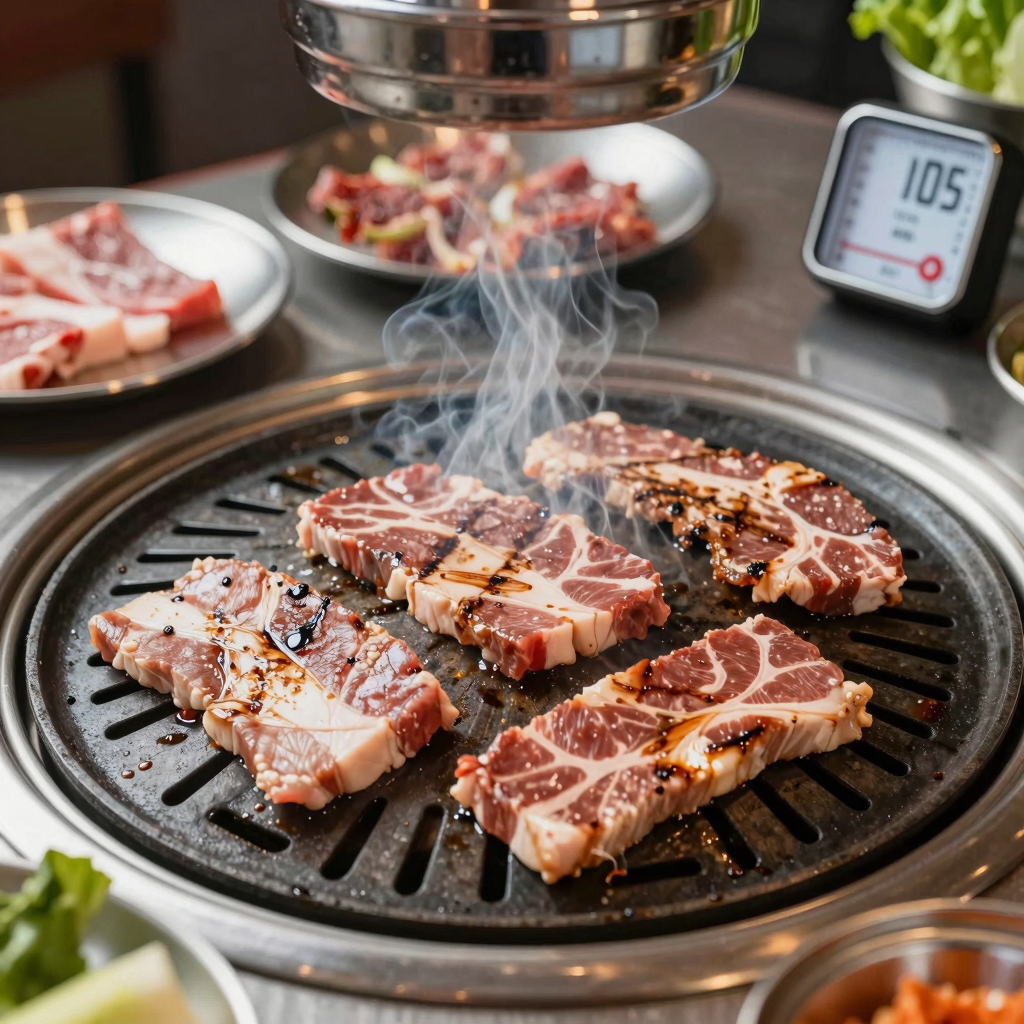
Common Misconceptions About Korean BBQ Cooking Times
Korean BBQ is famous for its grilling techniques and unique flavors, yet many business owners and food enthusiasts often hold misconceptions regarding the cooking times involved. Understanding the truth behind these misconceptions is crucial for maintaining both the quality of the dishes served and food safety standards, making it essential for those in the restaurant industry.
1. Korean BBQ Cooking Times Are Long
One prevalent misunderstanding is that Korean BBQ requires long cooking times similar to that of Western BBQ methods. In reality, the cooking times for Korean BBQ are incredibly short. Most meats are grilled at high heat for a duration of 1-2 minutes per side. This method focuses on quick, high-temperature cooking, allowing the meat to retain its moisture and flavor, while Western BBQ often involves ‘low and slow’ techniques that can last hours.
“Korean BBQ involves short cooking times, typically 1-2 minutes per side, as meat is consumed immediately after grilling.”
– The Spruce Eats
2. All Korean BBQ Meat Must Be Well-Done
Another common misconception is that all meats served in Korean BBQ must be cooked well-done. However, this belief overgeneralizes the cooking times and doneness required for various proteins. Beef, for example, can be cooked for a shorter duration, while pork may require more care to ensure doneness. The key is to confirm that the surface of the meat is sufficiently browned, which indicates that it is safe to consume. The internal temperature should ideally reach at least 165°F (74°C) for non-marinated meats.
“Cooking time depends on the protein and thickness. Beef requires less time (e.g., 1-2 minutes per side), while pork needs sufficient time to ensure internal doneness.”
– Food & Wine
3. High Flames Make Korean BBQ Unsafe
The nature of grilling often leads to another misconception, centering around the safety of high flames in Korean BBQ. While it is true that the flames can be intense, modern Korean BBQ establishments have effective systems in place to manage smoke and heat safely. The vital safety concern is not the flame intensity but ensuring the meat reaches the necessary internal temperatures where pathogens are eliminated.
4. No Standardized Temperature Requirements
Some may believe that there are no recognized temperature standards for Korean BBQ. Although specific temperatures are not always published, it is prudent to follow established food safety guidelines. Research suggests most meat samples served in these settings are cooked to a safe temperature, lending credibility to these informal standards.
“Although specific temperatures aren’t always stated publicly, food safety standards require that meat reaches a point where the surface is dark brown and the interior is fully cooked.”
– Development of Safe Food Handling Guidelines for Korean BBQ
Conclusion
For business owners looking to emphasize quality at their Korean BBQ establishments, understanding these common misconceptions about cooking times is essential. Not only does correct cooking time enhance the taste and texture of the meats, but it also upholds food safety standards that protect both the customer and the business.
The following chart summarizes the common misconceptions about Korean BBQ cooking times:
| Misconception | Fact | Source |
|---|---|---|
| Korean BBQ cooking time is long | Korean BBQ involves short cooking times, typically 1-2 minutes per side. | BBQ vs Korean BBQ: What’s the Real Difference? |
| All Korean BBQ meat must be well-done | Cooking times depend on the protein; beef requires less time than pork. | Beginner’s Guide to Korean Barbecue: Top Tips You Need to Know |
| High flames make Korean BBQ unsafe | Safety is defined by internal cooking temperature, not flame strength. | Development of Safe Food Handling Guidelines for Korean BBQ |
| There are no standardized temperature requirements | Food safety standards require proper cooking temperatures to ensure safety. | Development of Safe Food Handling Guidelines for Korean BBQ |
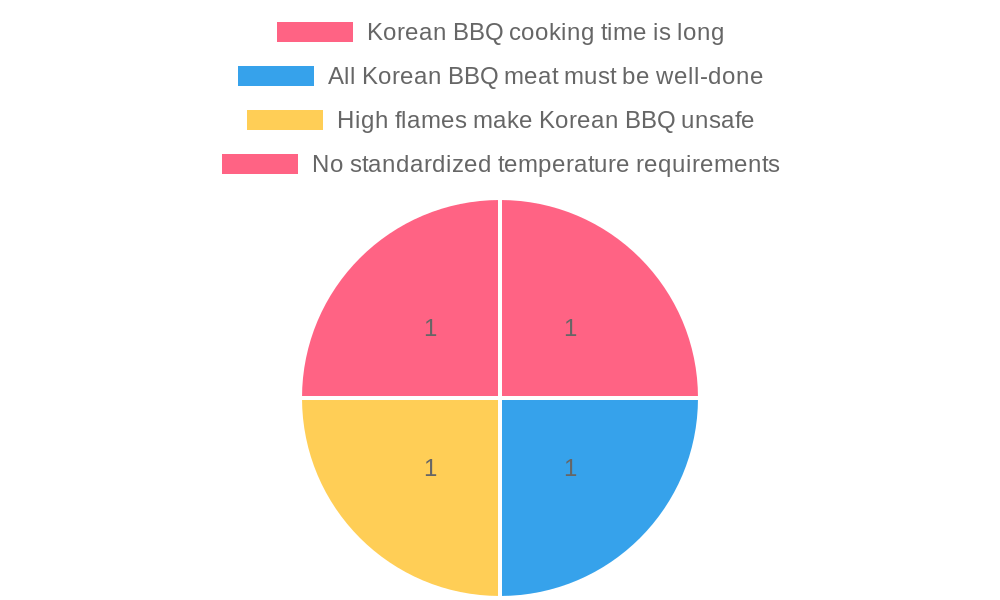
Understanding these misconceptions will empower restaurant owners and chefs to provide high-quality dishes that are both safe and delicious.
Grilling Tips and Techniques for Korean BBQ
Korean BBQ has gained immense popularity among food enthusiasts, particularly for its interactive and flavorful dining experience. For business owners seeking to master the art of Korean grilling, focusing on specific tips and techniques can make a significant difference in serving high-quality food. Here are key insights to ensure your grilling experience is both efficient and enjoyable.
Preheating the Grill
to achieve the best results, it’s essential to preheat your grill properly. For electric and gas grills, aim for at least 10 minutes of preheating until the surface is smoking hot. This not only helps to sear the meat effectively but also prevents it from sticking. According to sources like Bon Appétit, a hot grill is crucial for achieving that authentic texture and flavor.
Avoid Overcooking
Monitoring cooking times is critical in Korean BBQ, especially since many cuts of meat are thinly sliced. For instance, most proteins take only 1 to 3 minutes per side to cook. Flipping the meat only once can help retain its juices and flavors. As detailed by Serious Eats, flipping too often leads to overcooking and a dry texture. Always keep an eye on the meat and remove it as soon as it’s cooked to your satisfaction.
Ingredient Pairing
Traditionally, Korean BBQ is served with various banchan (side dishes) to complement the rich flavors of grilled meats. Pair your proteins with fresh lettuce leaves, ssamjang (a thick, spicy soybean paste), sliced garlic, and kimchi for a balanced, flavorful meal. Flavor pairings enhance customer satisfaction and create a more immersive culinary experience, as highlighted in the guide by TikTok Korean BBQ Experts.
Understanding Cooking Temperatures
Optimal cooking temperatures vary by meat type. Here’s a quick reference for grilling:
| Meat Type | Optimal Temperature (°C) | Cooking Time per Side (minutes) |
|---|---|---|
| Beef (e.g., ribeye, bulgogi cuts) | 180-220 | 2-4 |
| Pork (e.g., belly, shoulder) | 170-200 | 3-5 |
| Chicken (boneless thighs, breasts) | 190-210 | 3-6 |
| Beef short ribs (galbi) | 200-220 | 4-6 |
| Pork belly (jung-dan) | 180-200 | 4-5 |
By mastering these grilling techniques and incorporating them into your service style, you can enhance the dining experience at your establishment while optimizing flavor and presentation for your Korean BBQ offerings.
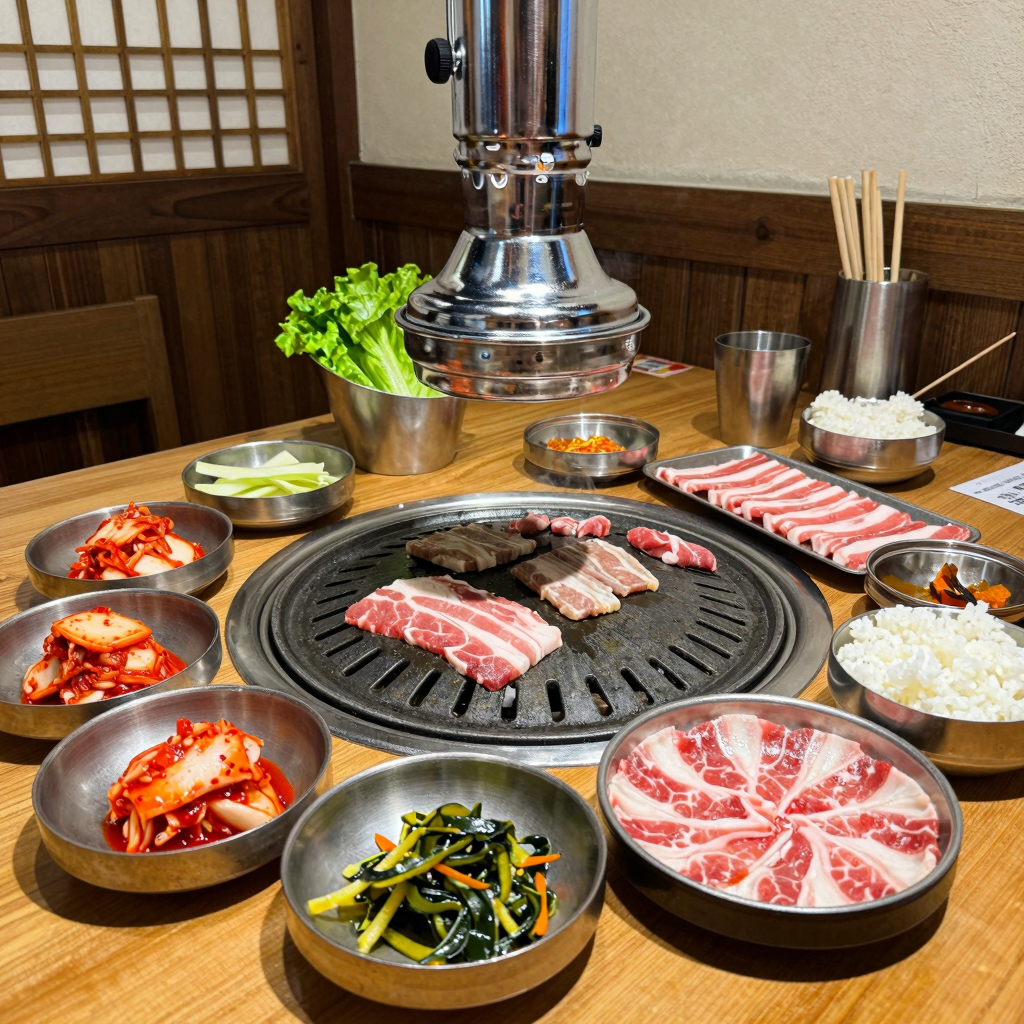
This engaging image showcases a traditional Korean BBQ setup featuring a grill surrounded by marinated meats and side dishes, offering an authentic dining experience.
“The communal grilling at the center of the table symbolizes unity and shared joy – each person contributes to the cooking, shares in the feast, and strengthens bonds through the act of eating together.”
- Seoul National University’s Department of Culinary Anthropology, Korean Culture and Information Center
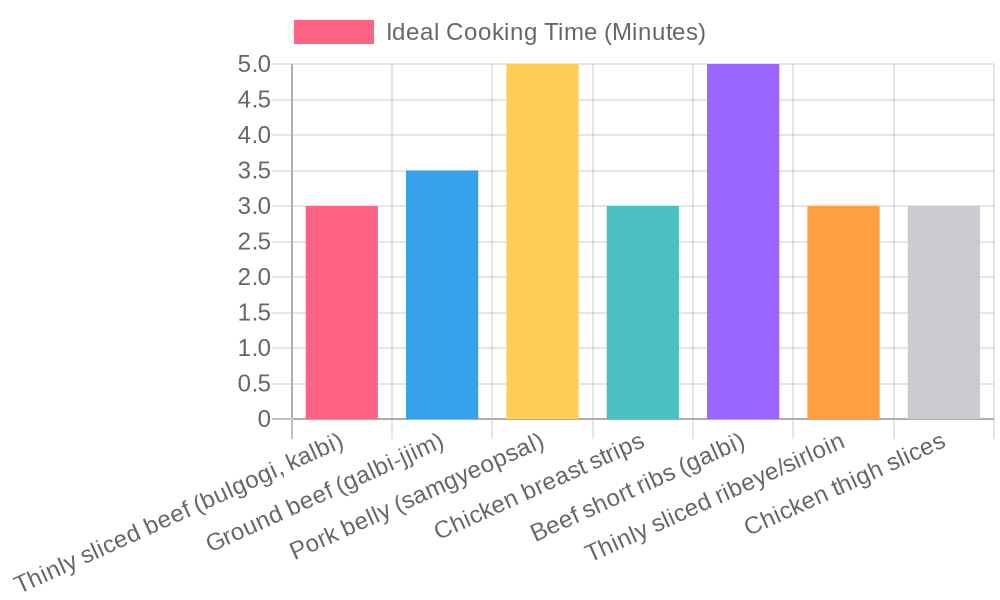
Ideal Cooking Times for Various Meats
The following chart summarizes the ideal cooking times for different meats used in Korean BBQ:
| Meat Type | Ideal Cooking Time (Minutes) |
|---|---|
| Thinly sliced beef (bulgogi, kalbi) | 1-2 per side |
| Ground beef (galbi-jjim) | 3-4 total |
| Pork belly (samgyeopsal) | 2-3 per side |
| Chicken breast strips | 1-2 per side |
| Beef short ribs (galbi) | 2-3 per side |
| Thinly sliced ribeye/sirloin | 1-2 per side |
| Chicken thigh slices | 1.5 per side |
Data compiled from culinary sources on Korean BBQ cooking techniques (2025-2026).
Conclusion
In the world of Korean BBQ, timing is everything. From grilling delectable meats to sizzling vegetables, understanding the correct cooking times can dramatically enhance the flavors and textures of your dishes. Properly cooked food not only satisfies the palate but also creates memorable dining experiences that keep customers coming back for more. Business owners must prioritize refining their cooking techniques and timings to meet customer expectations and deliver unparalleled dining experiences.
As we’ve explored, the perfect BBQ experience hinges on precision and attention to detail. This preparation doesn’t just elevate your menu; it showcases your commitment to quality. By ensuring that each ingredient is cooked to perfection, you signal to your diners that you care about their experience, which can significantly improve customer satisfaction and loyalty.
If you’re looking to elevate your Korean BBQ business further, consider reaching out to professionals who can guide you in achieving the best results. Zoomlion offers comprehensive support and solutions tailored to your needs. From equipment recommendations to cooking techniques, they can help you refine your processes and enhance your offerings. Don’t miss out on the opportunity to stand out in this competitive landscape-contact Zoomlion today and take your Korean BBQ to the next level. Your patrons deserve nothing less than the best!
Start your journey towards excellence today!