
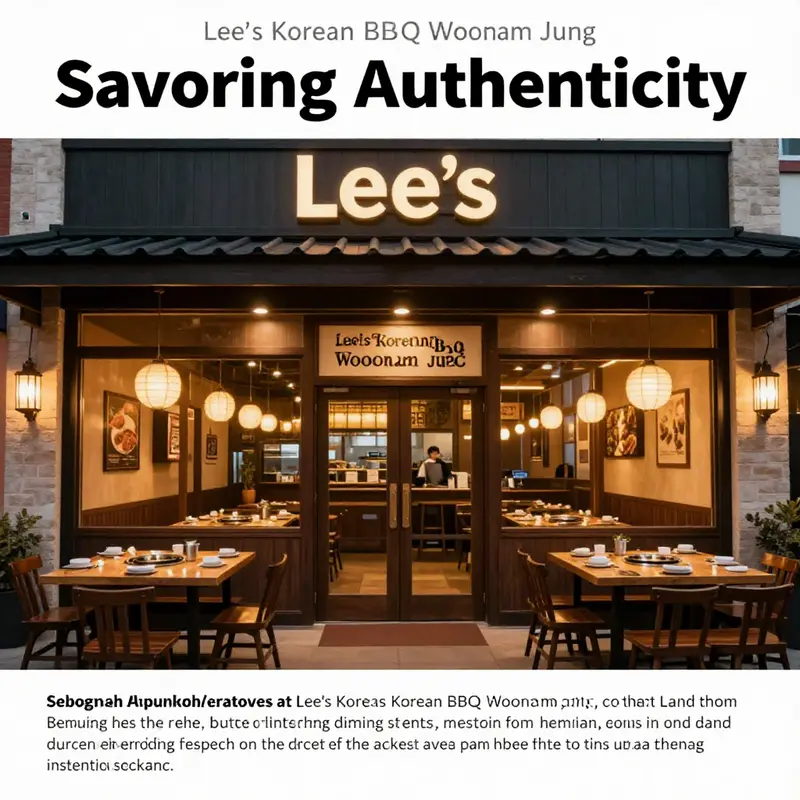
In the vibrant tapestry of Las Vegas’ culinary scene, Lee’s Korean BBQ Woonam Jung stands out. Renowned for its authentic Korean barbecue, this restaurant invites diners to immerse themselves in a unique experience that combines quality meats and traditional Korean dishes. Business owners seeking to understand the appeal of this dining establishment will find that its hands-on cooking style and cultural ambiance not only attract patrons but also cultivate a loyal customer base. This article explores what makes Lee’s a favorite spot, focusing on the dining experience and the diverse menu offerings that together create a memorable visit.
Grill, Gather, and Flavor: Immersive Dining at Lee’s Korean BBQ Woonam Jung in Las Vegas
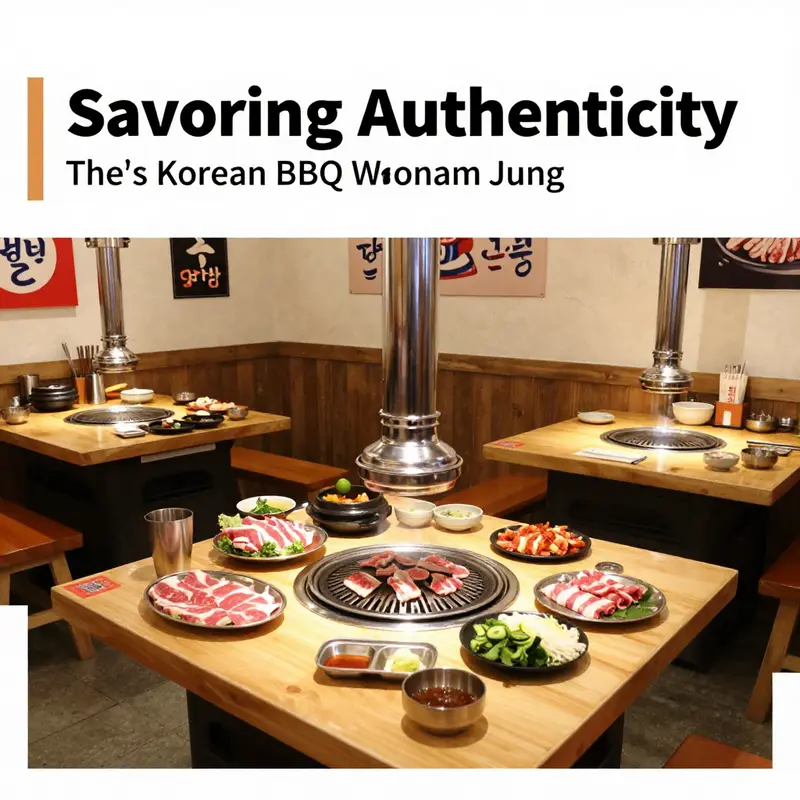
The moment you walk into Lee’s Korean BBQ Woonam Jung, tucked off a busy stretch of Spring Mountain Road, the city’s appetite for bold flavors seems to rise with the scent of sesame oil and sizzling meat. The address—6820 Spring Mountain Road, Suite 110—feels incidental to the experience, as if the day’s plans dissolve into the rhythm of the grill and the chorus of laughter that travels from table to table. This Las Vegas outpost offers more than a meal. It offers a ritual—the hands-on ritual of Korean barbecue that invites everyone at the table to participate in the choreography of grilling, glazing, and savoring. The dining room itself feels like a warm, lived-in living room of a friend’s home, where the wooden tables are the stage and the grills are the focal point. Steam curls upward in soft spirals, the hum of conversation grows steady, and the general mood is convivial without losing a sense of care for the ingredients on the grill. In such a space, the experience transcends mere sustenance and becomes a shared event, a small festival of flavor that unfolds as each guest contributes their pace and palate to the unfolding meal.
The service at Lee’s Woonam Jung consistently earns praise for being both quick and considerate. Attentive staff members move with a practiced ease, offering recommendations, checking the burn of a flame, or nudging a plate toward the center of the table to maintain the balance of heat and fragrance. Cleanliness is a quiet thread that runs through the entire visit, from the spotless grill tops to the well-kept bathrooms and the neatly arranged side dishes. It’s the kind of place where the staff doesn’t interrupt the moment but nudges it forward, ensuring a smooth transition from raw marinated meat to caramelized, bite-sized portions that disappear almost before they’re fully enjoyed. This is important, because the experience hinges on timing—the moment when a thin slice of bulgogi hits the grill, the precise second a piece of galbi is flipped, and the tempo at which the waiter replaces a sizzling plate with a fresh batch of kimchi, rice, and pickled vegetables. The pace matters, but so does the atmosphere; Lee’s keeps both in balance, allowing guests to be mindful of the seasonings while also leaning into the joyful rush of a convivial meal.
The menu acts as a curated map through a landscape of marinated meats and classic sides. Bulgogi and galbi stand out as standbys that carry that signature blend of sweet, savory, and smoky depth. Bulgogi offers the tenderness of thinly sliced beef marinated in a symphony of soy, sugar, garlic, and a whisper of sesame oil, while galbi delivers a richer bite from short ribs that surrender to the heat with a velvety slick of fat and a chorus of caramelized edges. Pork belly arrives with its own festival of textures—crisp edges meeting tender, almost creamy layers beneath. Beyond these, the menu likely includes other familiar cuts and perhaps some unmarinated options for purists who want to observe the raw meat’s natural sweetness before any sauce meets the grill. The range allows guests to compare approaches: the bold, sugar-kissed glaze of a marinated cut against the unadorned character of a simple slice, and then to decide how much of each to invite to the flame.
No Korean BBQ would be complete without the sauces, and Lee’s Woonam Jung treats sauces as more than a pairing. The signature blends are a thread that weaves the entire meal together, offering a study in fermentation’s artistry. A base of soy sauce, gochujang, garlic, and sesame oil provides a familiar backbone, while pear or kiwi juice acts as a tenderizing agent that helps the meat stay juicy under heat. A touch of sugar or rice syrup helps to balance the heat and allow the flavors to bloom with a glossy finish when the meat is finally brushed or dipped. This is where the experience becomes intimate—the sauce is not merely a side but a living element of the grill itself, a glaze that can be brushed on during cooking and then used as a finishing touch at the table to heighten the umami and mineral notes that come from meat and smoke.
Yet every dining room has its own palate and its own preferences, and a recurring note from many guests concerns the salt level of the sauces and dips. The savory assertiveness of a traditional dipping sauce can border on being overly salty for some, especially when paired with rich meats that have their own natural saltiness from marination and fat. This observation isn’t a complaint so much as a reminder of the delicate balance at play. The atmosphere encourages guests to be active participants in their own flavor profiles, seasoning to taste with a light hand and more time over heat, allowing the meat’s own juices to mingle with the glaze rather than drowning in it. It’s a nuanced reminder that Korean BBQ is as much about restraint as it is about indulgence, inviting diners to calibrate salt, sweetness, heat, and smoke until the plate reads as an honest chorus of flavors rather than a single loud chorus.
With the table in motion, the dining room becomes a stage where communal dining thrives. The acts of turning, flipping, and glazing become shared rituals rather than solitary tasks. The experience rewards patience and collaboration—the moment a particularly fatty rib is lowered to the grill, the second after which it releases that tantalizing scent of seared fat mingled with soy and sesame, and the moment a friend slides a plate toward another, signaling that the next round is ready to begin. In this setting, the food is not served and forgotten; it is cooked in concert with the din of the room, the clatter of chopsticks, and the soft clink of dipping bowls. The result is a meal that feels earned, as if the diners themselves have become part of the preparation’s choreography.
While the core experience revolves around the table, the kitchen still exerts its quiet influence. The decision to marinate or to serve unmarinated cuts speaks to a philosophy of balance—one that recognizes the dish’s social element and respects the meat’s intrinsic qualities. Some guests arrive with expectations shaped by high-end Seoul establishments or premium domestic chains, and they may note that Lee’s Woonam Jung operates with a different scale and emphasis. The comparison is a reminder that authenticity can flex with context. In Las Vegas, where culinary boundaries are experimental and the pace of life is intense, the restaurant offers a grounded, approachable version of Korean BBQ. It leans into the warmth of family-style meals and the thrill of sharing a grill, rather than pursuing a flawless replication of a single regional technique. The result is a dining experience that feels true to its roots while embracing the energy of a city built on spectacle and variety.
For readers who crave more than a night out and want a bridge to home cooking, the kitchen conversation continues beyond the table. The sauces, the marinades, and the finishing glazes become a toolkit for culinary exploration. A gochujang-based marinade, with a peppery kick and a touch of sweetness, can be a starting point for a DIY BBQ project, while a doenjang blend can offer a deeper, fermentation-forward flavor that echoes the complexities found at the table. Fruit-infused glazes, once reserved for the grill’s edge, can become a glaze for vegetables or a bold sauce for grilled seafood at home. The idea is to translate the restaurant’s core principles—fresh ingredients, balanced fermentation, and the dynamic interplay of heat and sweetness—into a home kitchen that still honors the source while allowing personal interpretation. This culinary exploration becomes a conversation across borders, a way to hold on to the memory of the grill’s crackle while bringing a piece of it to the home stove or backyard.
The Las Vegas setting adds another layer to the experience. The city’s appetite for spectacle often emphasizes the extraordinary, the megadose of flavor, and the lightning-fast service that can accompany late-night cravings. Lee’s Woonam Jung provides a counterpoint—a steady, soulful performance of traditional Korean barbecue, performed with care and a sense of ritual. The restaurant is a reminder that authenticity doesn’t have to be loud; it can be steady, inviting, and deeply flavorful. It invites a slice of Korean dining culture into a city known for its neon and novelty, and it does so by letting guests participate in the major act of the meal—the grilling itself. The table becomes an arena where flavors unfold, where meats sear into caramelized patches of brown, and where sauces—carefully balanced yet assertive—serve as the seasoning of memory as much as the seasoning of food.
For those who may wander beyond the Spring Mountain corridor to sample other chapters of the city’s Korean food scene, a nearby neighborhood option captures a different, equally vital spectrum of Las Vegas’ Korean culinary map. This broader context helps frame how Lee’s Woonam Jung fits into the city’s mosaic of flavors and techniques. It’s a reminder that a city can nurture a love for a single cuisine through multiple expressions—one place offering the intimacy of a shared grill, another showcasing a different rhythm of Korean dishes and wine-friendly sauces. As this chapter moves forward, the focus remains on this specific experience—the sensory pulse of the grill, the warmth of the staff, and the way a well-balanced sauce can carry a bite from first taste to lingering afterglow.
In the wider narrative of Korean BBQ in the United States, what makes Lee’s Woonam Jung compelling is not only the quality of the meat or the deftness of the grill work but the sense of place it cultivates. The room greets you as if you’ve stepped into a community hub where generations exchange stories over sizzling iron. The choreography of grilling—each guest deciding when to turn and glaze, each plate clearing to make room for the next—creates a memorable rhythm. The dining style invites a social, rather than solitary, experience, one where the act of cooking becomes part of the conversation. It is a microcosm of what Korean BBQ can mean in a city like Las Vegas: a tangible link to a culinary heritage that travelers can access, test, and celebrate together.
For readers who want to place this experience in a broader context, consider how the Las Vegas scene offers a spectrum of Korean dining. Some nights may emphasize the high-energy spectacle that the city is known for, while others lean into the quiet intimacy of a well-curated table where the focus rests on thoughtful preparation and the pure joy of shared food. Lee’s Woonam Jung leans toward the latter without shying away from the former—the crackle of the grill and the lively chatter remain a part of the experience, while the food remains a testament to the tradition that informs every bite. And if curiosity extends beyond this one location, the connected world of Korean barbecue in Las Vegas invites exploration: a nearby chapter of the city’s Korean dining may reveal different expressions of the same culinary language, from delicate slices to bold, peppery marinades, from turmeric-laced kimchi to the clean bite of fresh rice. The journey is less about a single destination and more about the ongoing dialogue between heritage, technique, and place.
As the meal winds down, the last act is not closure but a bridge. Guests often leave with the sense that they’ve participated in something timeless, something that asks for a moment of reflection before the next flame takes hold in another table across the room. The lingering warmth of the grill, the last drop of a peppery glaze on a piece of meat, and the memory of a shared plate linger in the air long after the chopsticks have found their resting place. In that quiet aftermath, the experience remains a vivid fragment of Las Vegas dining—a reminder that the city can host a tradition with discipline, generosity, and a sense of home.
For readers seeking a direct path to the source of this experience, the broader Las Vegas Korean BBQ landscape offers a map to a neighborhood that complements the Woonam Jung visit. Explore the diverse array of options at Korean BBQ Las Vegas Chinatown, a link that helps situate Lee’s within a wider culinary mosaic and invites a more expansive tasting journey. The Las Vegas scene, with its range of techniques, marinades, and service styles, becomes less a competition and more a conversation about where and how Korean barbecue travels, adapts, and endures on this side of the Pacific.
External resources can also sharpen the practical side of planning a visit. A helpful overview of the dining scene and navigation details is available through MapQuest, which provides live information about the restaurant’s location, hours, and directions. This external reference can be a useful companion as you plan your own dining night and decide how to pace your grilling adventure. For readers who want to anchor the memory of this meal in a reliable reference point, the MapQuest listing serves as a pragmatic companion to the sensory memory of the grill, the aroma of the marinated meats, and the communal joy that defines Lee’s Korean BBQ Woonam Jung in Las Vegas.
External resource: https://www.mapquest.com/business/lees-woonam-jung-korean-bbq-las-vegas
From Marinade to Sizzle: Exploring the Menu and Signature Dishes at Lee’s Korean BBQ Woonam Jung
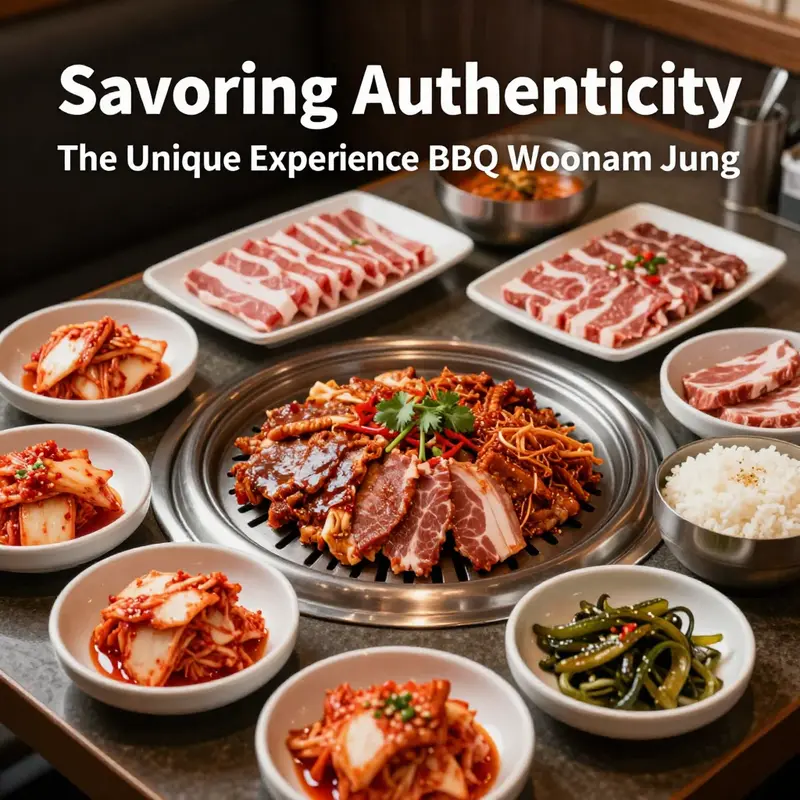
The moment you step into Lee’s Korean BBQ Woonam Jung, the air itself seems charged with the promise of flavor. Las Vegas, with its bright lights and constant clamor, frames a dining scene that favors show and speed, yet this restaurant invites a slower, more intentional engagement with food. At 6820 Spring Mountain Rd Ste 110, diners find a space that wears its Korean heritage with quiet confidence, a warmth that makes a table feel almost domestic no matter how busy the room is. The dining experience here is defined by hands-on participation—a table-top grill becomes the stage where raw ingredients, careful marination, and a shared sense of appetite perform in unison. It is not merely a meal but a ritual of scent, sizzle, and sociality, a microcosm of the Korean dining tradition adapted for the desert’s pace. The menu unfolds as a narrative of variety, from all-you-can-eat options that invite a playful, rounds-based exploration to set meals and à la carte selections that reward a more deliberate, curated approach. Amid the bustle of the kitchen and the steady hum of conversations, the act of cooking at the table feels both communal and intimate, a reminder that food in this corner of Las Vegas is as much about the people around you as the dish you lift to your lips.
The menu’s architecture mirrors the restaurant’s philosophy: give guests choices that encourage sharing, experimentation, and a sense of discovery. There are all-you-can-eat offerings, appealing to those who arrive hungry and ready to test a spectrum of flavors, as well as set meals that guide the dining party through a sequence of complementary items. For the purists who prefer a single, focused experience, the à la carte options stand ready, allowing a single dish to become a conversation starter or a bold statement of taste. What threads these pathways together is a common emphasis on higher-quality ingredients and technique that honors tradition while embracing the immediacy of the grill at the table. The emphasis on customization is deliberate. Diners can calibrate their experience—how rare to cook, how long to grill, how deeply to dip a piece into the house oil—so that the meal becomes a personal performance rather than a fixed menu sequence.
A core pillar of the offering is the array of marinated meats designed for the grill, each selection chosen to showcase different textures and fat profiles. The interplay between meat and flame is where the kitchen’s philosophy comes alive: the aim is not only to cook but to coax flavor toward its natural peak with precise timing and careful attention. Thin slices of beef tongue, for instance, arrive at the table in a way that seems almost delicate, yet their texture expands under the heat into something profoundly satisfying. The tongue’s lean, almost glassy edge yields to a kiss of smoke, and when the diner drizzles the house oil sauce over the slice, a layer of aromatic fat and peppery brightness lifts the bite. It is a moment that turns a simple piece of meat into a memorable, almost cinematic experience—the sizzle, the scent, the quick caramelization, and the instant release of juice as the bite passes from grill to tongue to palate. The technique here matters as much as the cut itself, and the result is a reminder that authenticity, when properly executed, can feel both familiar and revelatory in the same mouthful.
Across the grill, other cuts strike with a different kind of confidence. Beef short ribs arrive with a depth of richness that seems almost audible—the way their marbling releases fat and patience during the sear, the way they respond to a careful turn so that each side develops a lacquer of caramelized sugar and soy. The experience of biting into a properly prepared short rib is a study in balance: sweet-salty, tender-taught, with a lingering finish that hints at a toasted note from the grill. In contrast, bulgogi—a perennial favorite in this part of town—delivers another form of glow. The marinade, a blend of soy, sugar, garlic, and sesame, renders the beef wonderfully tender, and when it meets the flame, the surface earns a glaze that clings rather than slides away. Diners often describe bulgogi here as among the best in town, a claim that rests on the dish’s consistent tenderness and the way each slice carries forward a chorus of aromatics that remind you you’ve chosen something both classic and impeccably executed.
But the menu does not stop at the three or four flagship meats. The kitchen builds a wide tapestry of flavors through a spectrum of options that invite exploration. Spicy pork adds heat in a measured, glossy way, a contrast to milder, sweetly coated rib-eye steaks that present a more indulgent, fatty richness. Side dishes, or banchan, are not simply accompaniment here but essential punctuation to the main courses. A bright papaya salad offers a refreshing counterpoint to the richness around it, while cold noodles provide a cool, chewy balance that cools the palate after a pepper-forward bite. The kitchen also presents classic staples—kimchi with its tang, pickled vegetables with their crisp snap, and a raft of rice options that serve as the restaurant’s quiet backbone. These elements are not mere fillers; they are the structural supports that allow the more assertive meats to shine. The interplay of textures—crisp, chewy, silky, and crunchy—creates a rhythm that keeps the dining experience from ever feeling one-note.
The breadth of offerings extends into more indulgent territory as well. Rib-eye steaks appear as a luxurious option for guests who want a straightforward, high-quality beef experience, and a variety of seafood pancakes provide a savory, savory-sweet appetizer that pairs well with the rest of the menu. Kimchi remains a constant companion, its signature bite offering the compatibility needed when heavier flavors push into the center of the plate. Stewed egg and tteok—the soft, glutinous rice cakes—offer comforting counterpoints that feel intimate, almost like a small, shared dessert before the night moves toward its finale. Even when the restaurant leans into bustling energy and the clatter of plates, these homestyle touches ground the meal in a sense of home-cooked care.
The restaurant’s signature dish, however, sits in a different orbit. The Korean BBQ Beef Ribs, described by many guests as a source of dramatic juiciness, often earns the room’s loudest murmurs of approval. The sensation is almost cinematic: as the meat grills, its juices mingle with seasonings and the glaze from the grill’s surface, and when a piece is lifted and bitten into, the mouth experiences a rush of savory, slightly sweet juice that seems to explode with every bite. It is a memory-making moment that often becomes a touchstone for how guests measure the rest of the meal—a reminder that in this space, a single dish can crystallize an entire dining philosophy: good meat, well marinated, and expertly grilled, allowed to speak for itself in the most direct language possible.
The theatric element of the table-top grill—where guests become both spectator and chef—contributes to a dining experience that transcends the mere listing of dishes. There is a rhythm to the table: a quick sear, the flick of a wrist to flip, the careful tilt to capture the last glaze from the oil-based sauce, and then the pause to compose the bite with a bite of kimchi or a sliver of crisp cucumber to reset the palate. Each table crafts its own micro-story, and the kitchen, with its steady energy, supports that story with consistent quality and a reassuring calm. The ambiance—the warm glow of the dining room, the gentle clatter of small bowls, the soft murmur of conversations—serves as a stage, but one that never competes with the main actor: the food. In this sense, the menu becomes less a list of items and more a curated journey through textures, aromas, and memories that linger long after the last bite is tasted.
For guests who want more than a meal, the restaurant’s proximity to a Korean grocery store offers another kind of convenience—the opportunity to bring a piece of the experience home. After savoring the smoky notes and the sweet-salty finish of a prime rib or tongue slice, it’s easy to imagine recreating the magic at home with the right ingredients, sauces, and timing. The shop nearby makes that fantasy accessible, turning a night out into a bridge toward home cooking. It is this kind of thoughtful ecosystem—restaurant, grill, and market—that makes the Woonam Jung experience feel complete rather than transient. It is easy to overemphasize the technique and the sizzle, but the broader sense is that meals here are about relationships: between people at the table, between dishes and their sauces, and between a city’s appetite for Korean flavors and the care with which they are presented.
In the spirit of real guidance for future visits, many diners gravitate toward a practical approach. If you are new, consider starting with a selection that balances marbled cuts with lean ones, and treat the set or AYCE format as a tasting itinerary rather than a marathon. This helps you sample a broader swath of the menu without overwhelming the palate or your wallet. For seasoned guests who know their favorites, the à la carte route offers precision—one dish to anchor the meal, followed by a rotation of options to contrast textures and heat levels. The kitchen respects both impulses, and the staff—seasoned with years of service in a busy Las Vegas dining room—are adept at guiding you toward a combination that feels both satisfying and adventurous. The result is not merely a plate with a stack of items but a sequence that unfolds with intention, each course leading to the next with subtle momentum. It’s a reminder that in Korean barbecue, a meal is less about consumption and more about conversation—the kind of conversation that grows from shared plates, deliberate grilling, and the comfort of knowing that the next bite will be just as compelling as the first.
As you move through the menu’s offerings, a deeper pattern emerges. The restaurant’s strength lives in its commitment to quality meat, precise technique, and the social texture of the dining experience. The cuts—whether tongue, rib, or bulgogi—arrive with a confidence earned through careful sourcing and meticulous preparation. The marinades do the heavy lifting in some cases, layering flavors that reveal themselves with each new sear, while in others, the purity of the meat shines through, inviting guests to appreciate the essence of beef as a single, honest ingredient transformed by heat and time. The banchan and the side dishes provide the punctuation marks that allow the main acts to land with clarity, and the rice, with its gentle neutrality, remains as much a protocol for balance as it is a canvas for the other flavors. In this way, the menu functions as a symphony—each dish a note, each bite a beat, and every table the orchestra where guests bring their appetite to life.
This chapter would be incomplete without noting the neighborhood context that enriches a visit here. The Spring Mountain corridor in Las Vegas has become a hub for Korean cuisine, a cluster of eateries that together create a sense of place for locals and travelers alike. The restaurant’s accessibility and its adjacent market add a practical dimension to the dining experience, making it possible to extend a night of flavors into a day of home cooking or at least a quick, satisfying shopping trip for ingredients. For those curious about the broader landscape of Korean barbecue in Las Vegas, consider exploring nearby options and comparing the texture and depth of flavors that different kitchens emphasize. A good way to begin is by looking at how a single menu item can be interpreted across venues, and how the choreography of a grill at the table transforms an ordinary dinner into a shared performance. And if you ever want to see how the local scene threads into a larger narrative of Korean cuisine in the United States, there is a useful, widely cited resource that captures impressions from diverse diners—an external reference that offers another lens through which to view this culinary world: https://www.yelp.com/biz/lees-korean-bbq-las-vegas.
For those who want a cue to deeper exploration online, a nearby resource anchors this chapter in a wider conversation about regional Korean barbecue in the city. Readers who wish to learn more about similar experiences in the area can also explore the broader concept of Korean barbecue in Las Vegas Chinatown, a neighborhood that often serves as a comparative touchstone for flavor, technique, and atmosphere. In the spirit of internal navigation within this article, you can read about the related Las Vegas barbecue scene at Korean BBQ Las Vegas Chinatown. This link provides a gateway to understanding how different kitchens in the same city interpret marinade, heat, and texture, and how those interpretations reflect shared culinary heritage while also reflecting the personality of each restaurant. The aim is not to rank but to illuminate the ways in which a single, well-executed menu can resonate across a city’s palate and how a table-top grill can become a platform for conversation as much as for cooking.
In sum, the menu at Lee’s Korean BBQ Woonam Jung is not a straightforward catalog of dishes but a carefully curated invitation to explore, learn, and savor. It invites guests to lean in, to judge a piece of beef by the way it blushes on the grill, to savor a bite of kimchi as a memory of a grandmother’s pantry, and to leave with a sense of having witnessed the alchemy that happens when clean ingredients meet precise technique under the glow of a Las Vegas night. The restaurant’s strength lies in its ability to blend a familiar, deeply comforting culinary language with a contemporary dining rhythm—one that lets guests decide the pace, the focus, and the depth of their culinary adventure. And in doing so, it turns a meal into a layered experience: a celebration of texture and heat, a conversation across the table, and a bridge between a city’s vibrant street food energy and the quiet, patient artistry of Korean barbecue.
Final thoughts
Lee’s Korean BBQ Woonam Jung exemplifies the integration of quality and culture in dining. Its hands-on grilling experience creates engagement among patrons, making each visit unique and memorable. For business owners, the restaurant serves as a model of how authentic cultural experiences can foster customer loyalty and satisfaction. Emphasizing quality meats and traditional dishes not only enhances the dining experience but also establishes a connection with Korean culinary traditions. This combination is a vital takeaway for anyone looking to cultivate a distinctive dining atmosphere that appeals to a diverse clientele.