
Introduction
In the vibrant world of culinary experiences, the question “do you tip at Korean BBQ?” emerges as a tantalizing dilemma for many diners, particularly when cultural practices intertwine with the nuances of American tipping norms. Korean BBQ is not just a meal; it’s a communal journey where diners become their own chefs, grilling marinated meats right at their tables and sharing hearty conversations. Yet, amidst the sizzle and smoke, the issue of tipping can leave both guests and restaurant owners pondering its implications. In South Korea, tipping is often not customary, contrasting sharply with American expectations where tips are crucial for service workers’ incomes. This clash can create confusion and potential stress for business owners in the hospitality sector, who strive to bridge cultural divides while ensuring a rewarding experience for their patrons. Understanding these dynamics is essential, not just for a satisfying dining experience, but for fostering respect in culturally rich settings like Korean BBQ restaurants.
Explore learn more about the culinary experience!
Understanding Tipping in Korean Culture
Tipping in Korea is not a customary practice, contrasting sharply with Western norms where gratuity is often expected as a display of appreciation. In Korea, service staff are typically compensated with fair wages, and tipping might be viewed as disrespectful or unnecessary. The cultural foundation of respect and equality influences these sentiments, suggesting that offering a tip could imply inadequacy in the service provided.
The Cultural Context
In Western countries, a tip is a common acknowledgment of good service, often constituting 15-20% of the total bill. Conversely, in Korea, service charge is generally included in the bill, reinforcing the notion that tips are not required for a satisfactory experience. Instead of monetary tips, gestures like saying thank you or acknowledging the service with a polite nod suffice to express gratitude.
For business owners in the food service industry, understanding these cultural nuances is vital. Misinterpretation of tipping norms could lead to awkward situations with local patrons and potentially deter business growth. Adopting a clear understanding of how to respect local customs, like maintaining a no-tipping policy, can enhance customer relationships and increase the authenticity of their establishment.
Adaptation is Key
As globalization influences cultural behavior, some establishments may begin to embrace tipping. However, this emergent practice is often met with discomfort from locals. Owners would benefit greatly from learning more about Korean BBQ service etiquette to align their operations with customer expectations. Ultimately, embracing the local culture while providing excellent service remains paramount.
| Culture | Average Tip Percentage | Comments on Whether Tipping is Customary |
|---|---|---|
| United States | 15%-20% | Tipping is customary and expected in restaurants, for taxi drivers, hair stylists, and other service workers. Many establishments include a suggested tip on the bill, but it is not always mandatory. |
| South Korea | 0% | Tipping is not customary and can be considered inappropriate or even offensive. Service charges are often included in the bill, and leaving extra money may confuse or upset staff. |
| Japan | 0% | Tipping is not part of Japanese culture and is generally not expected. In fact, it may be seen as rude or confusing, as service is expected to be high regardless of payment. |
| France | 5%-10% (optional) | Tipping is not mandatory; a small gratuity is appreciated but not required. Some restaurants include a “service charge” (often around 15%), which should be checked before adding extra tips. |
| Germany | 0%-5% (optional) | Tipping is optional. A small amount (e.g., rounding up the bill) is common, but not expected. Service charges are typically not added automatically. |
| Italy | 5%-10% (optional) | Tipping is customary in restaurants, especially if no service charge is listed. It’s common to leave small change or round up the bill. |
| United Kingdom | 10% (optional) | Tipping is not mandatory, but common in restaurants and for taxis. Some venues include a service charge, so check the bill before tipping. |
The Impact of Tipping on Customer Experience in Korean BBQ
Tipping practices can significantly influence the dining experience at Korean BBQ restaurants. Unlike many western dining settings where tipping is customary, the approach in Korean BBQ may vary. Understanding these differences can help restaurant owners enhance customer satisfaction and service quality.
How Tipping Influences Dining Experience
- Enhanced Service Quality: In environments where tipping is practiced, servers may provide more attentive service. This includes proactively addressing customers’ needs and ensuring a smooth dining experience. Tipping encourages servers to maintain high standards, which can lead to a better overall experience for customers.
- Communal Dining Dynamics: Korean BBQ often features communal dining, where multiple diners share food. The practice of tipping can complicate service expectations, as customers may feel unsure if a tip is appropriate in shared settings. This ambiguity may diminish the experience for some diners. For more insights, check out this guide on Korean BBQ dining.
- Cultural Considerations: Tipping is not traditionally a common practice in South Korea; many locals may find it unnecessary. This can create a disconnect between foreign tourists, who often feel compelled to tip, and local customs. Understanding these cultural nuances is crucial for restaurants serving mixed clientele.
Importance of Tipping for Servers
- Income Supplementation: Many servers in Korean BBQ and other restaurants rely on tips as a significant part of their income due to often low base wages. Acknowledging this can foster a culture where exceptional service is rewarded, leading to higher job satisfaction among staff (source: Restaurant Business Online). This, in turn, improves service, directly benefiting customers.
- Encouraging Exceptional Service: As servers know their compensation may depend on tips, they might go above and beyond to create memorable dining experiences. This is particularly notable in Korean BBQ, where experience and engagement are key components to the meal.
Conclusion
In conclusion, while tipping at Korean BBQ restaurants may not be a longstanding tradition, its introduction can greatly impact the dining experience. Both customer satisfaction and server motivation can improve, making it essential for restaurant owners to navigate these waters carefully. To explore more about all-you-can-eat options and menus, visit Kogi Korean BBQ for further information.
Common Misconceptions About Tipping at Korean BBQ
When it comes to dining at a Korean BBQ, many people have misconceptions about the tipping culture. Here are some common misunderstandings:
- Tipping is not needed: Many believe that tipping is completely unnecessary, which is somewhat true in traditional contexts, but it varies with service quality and customer expectations.
- The price includes service: Some diners assume that the price of the meal covers all costs, including service, which is misleading as good service may still warrant a tip.
- All Korean restaurants expect tips: There is a perception that all restaurants in Korea expect tips, but this is not the case. In many establishments, especially casual ones, tipping is not common practice.
- Tips are directly given to servers: Many think that tips go directly to the servers, while in reality, it can vary. In some cases, the management may collect tips or distribute them among the staff.
- Tipping is mandatory in tourist areas: Visitors might believe that tipping is mandatory in tourist spots to ensure good service, but it’s usually optional and depends on the service received
These misconceptions can lead to confusion for both diners and restaurant owners. Understanding the cultural context behind tipping at Korean BBQ can help create a better dining experience. To learn more about the menu and offerings at some Korean BBQ establishments, you can check out Kogi Korean BBQ menu and Korean BBQ and Sushi Menu.
Tipping Behavior in the U.S. and Korea
Tipping behavior varies significantly between the United States and South Korea, reflecting cultural norms and consumer expectations that can profoundly impact business strategies, especially in the service industry.
Tipping in the U.S.
In the U.S., tipping is a well-embedded practice. According to a Pew Research Center study, nearly 70% of Americans believe that tipping is expected in more places than it was five years ago. The total amount tipped by Americans reached approximately $78 billion in 2023, signifying the importance of gratuity in both dining out and other personal services. However, there is a growing concern over tipping fatigue, as illustrated by the fact that 48% of consumers feel that the current tipping culture is excessive, and about two-thirds feel overwhelmed by frequent tipping requests (PlayUSA).
Tipping in Korea
Conversely, South Korea has a markedly different approach. Tipping is not customary and is often viewed with skepticism. A survey indicated that 37.95% of South Koreans strongly oppose a tipping culture, perceiving it as unnecessary (The Korea Times). South Koreans typically feel that service charges are included within the pricing of their meals, which contributes to their rejection of tips (The Straits Times). This cultural resistance means that introducing tipping in Korean businesses could lead to negative consumer perceptions.
Implications for Business Owners
For business owners offering Korean BBQ and similar services, understanding these nuanced attitudes toward tipping is crucial. In the U.S., encouraging a tipping culture could enhance service satisfaction, while in Korea, avoiding tipping could align better with consumer expectations. Therefore, adopting the approach that fits the local culture can maximize customer satisfaction and foster loyalty.
“The communal dining style of Korean BBQ shapes not only the way we eat but also how we show appreciation to our servers. A thoughtful tip reflects the shared experience and the hard work of the team behind the grill.” – Expert from Tasting Table source
Whether you’re a business owner looking to understand cultural practices or a first-timer at a Korean BBQ, grasping the tipping etiquette is essential. If you’re interested in learning more about the complete guide to Korean BBQ dining manners, check out this comprehensive guide.
Conclusion on Tipping in Korean BBQ
In summary, understanding the tipping norms in Korean BBQ is crucial for business owners to navigate cultural expectations and ensure customer satisfaction. Unlike many Western countries, tipping in South Korea is generally not a customary practice, and it’s essential for businesses to be aware of this to avoid awkward situations. The hospitality culture in Korea emphasizes excellent service without the expectation of tips; thus, showing appreciation can be articulated in other forms, such as polite gestures or words of thanks.
Businesses should reflect on their practices regarding tipping and educate staff about Korean cultural norms. Encouraging communication with customers about any queries related to service expectations can enhance dining experiences. For further assistance and resources on optimizing your Korean BBQ business and understanding further cultural nuances, feel free to contact us.
As you continue to adapt your business practices, remember to incorporate these cultural insights to foster a positive ambiance for your customers, ensuring a successful and welcoming establishment in the competitive dining market. Besides, staying informed on the evolving norms like tipping at Korean BBQ can give your business a significant edge!
Related Keywords:
- Korean BBQ tipping etiquette
- Tipping culture in Korea
- Business success in Korean restaurants
Tipping Trends in Restaurant Behaviors
Understanding tipping trends is crucial for restaurant owners, especially in the context of Korean BBQ where service and customer experience play a significant role. Over recent years, statistics show notable shifts in consumer behavior regarding tipping. Below, we present a line graph illustrating the trends from 2020 to 2023.
The following data highlights the percentage of consumers tipping at different levels over the years:
| Year | 15% Tipping | 18% Tipping | 20% or More Tipping |
|---|---|---|---|
| 2020 | 18% | 20% | 38% |
| 2021 | 20% | 25% | 40% |
| 2022 | 17% | 22% | 39% |
| 2023 | 16% | 20% | 38% |
Data sources:
- National Restaurant Association (NRA) Consumer Trends Report, 2023
- Statista: U.S. Dining Out and Tipping Behavior, 2020-2023
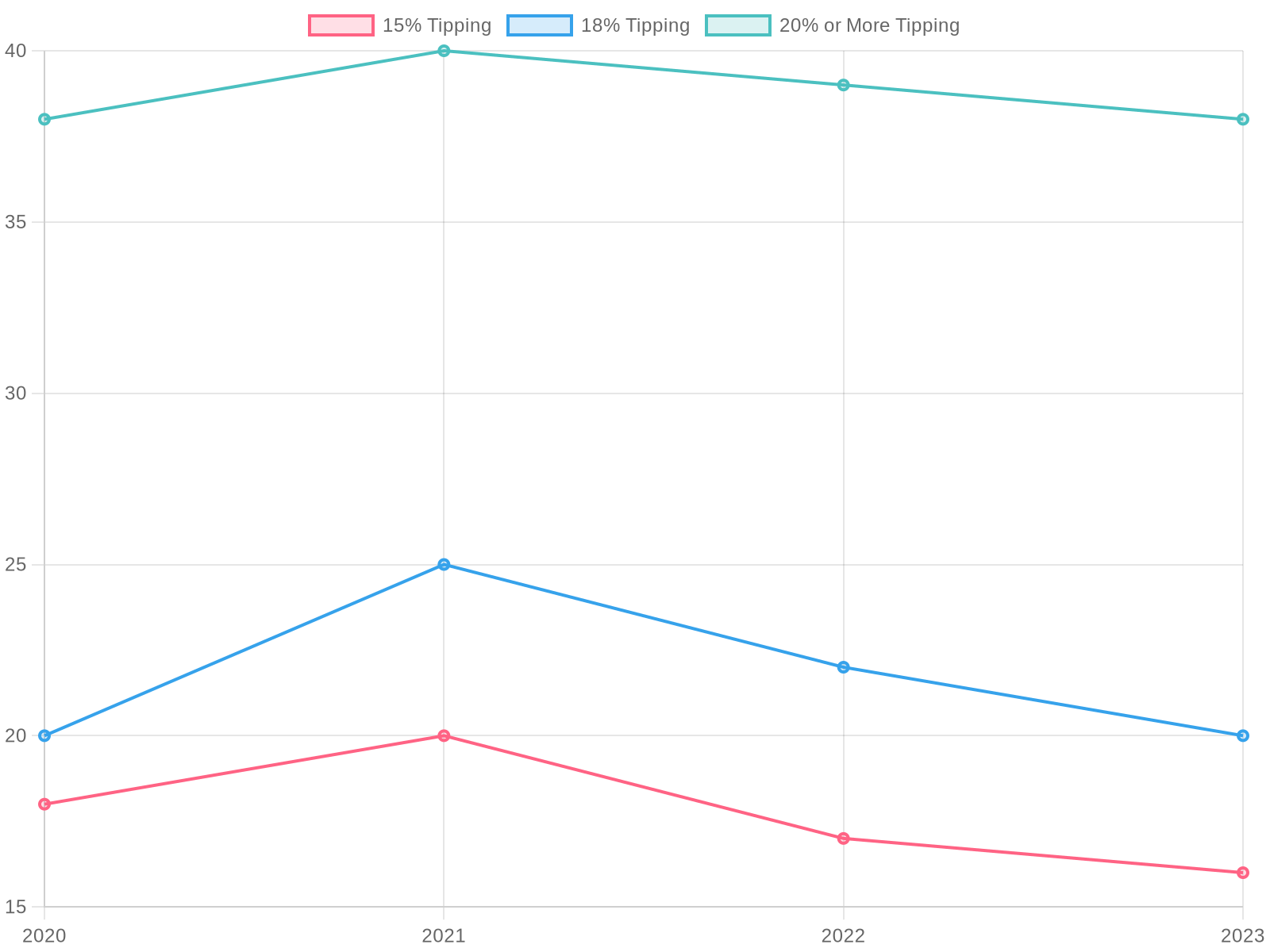
This graph illustrates the trend in tipping from 2020 to 2023, providing valuable insight for restaurant owners looking to adapt their service and pricing models accordingly. For more insights into Korean BBQ offerings, check out our menu details here.