
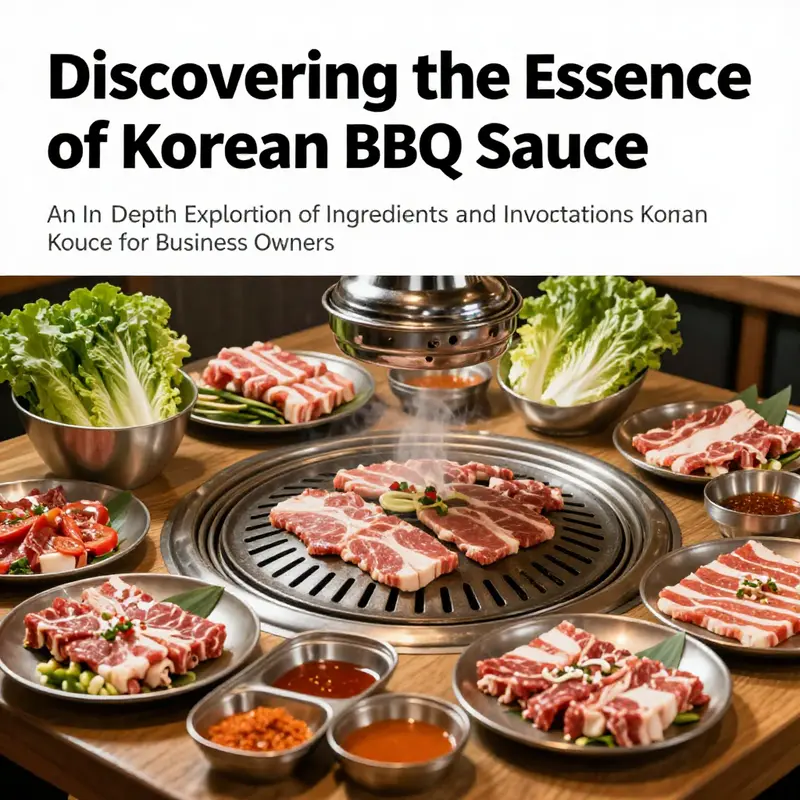
Understanding Korean BBQ sauce is essential for any business aiming to integrate authentic flavors into their offerings. This sauce is not merely a standardized recipe; it is a family of marinades that balances sweet, salty, savory, spicy, and aromatic flavors. Each component plays a critical role in forming the overall profile, making it indispensable in Korean culinary tradition. In the chapters that follow, we will explore the core ingredients that define Korean BBQ sauce, the unique role of fermentation in enhancing flavors, and the modern variations that keep this culinary staple relevant in today’s market. Business owners will gain valuable insights that can enhance their menus and cater to a growing interest in authentic Korean cuisine.
A Symphony of Ferments and Fire: Delving into the Core Ingredients of Korean BBQ Sauce
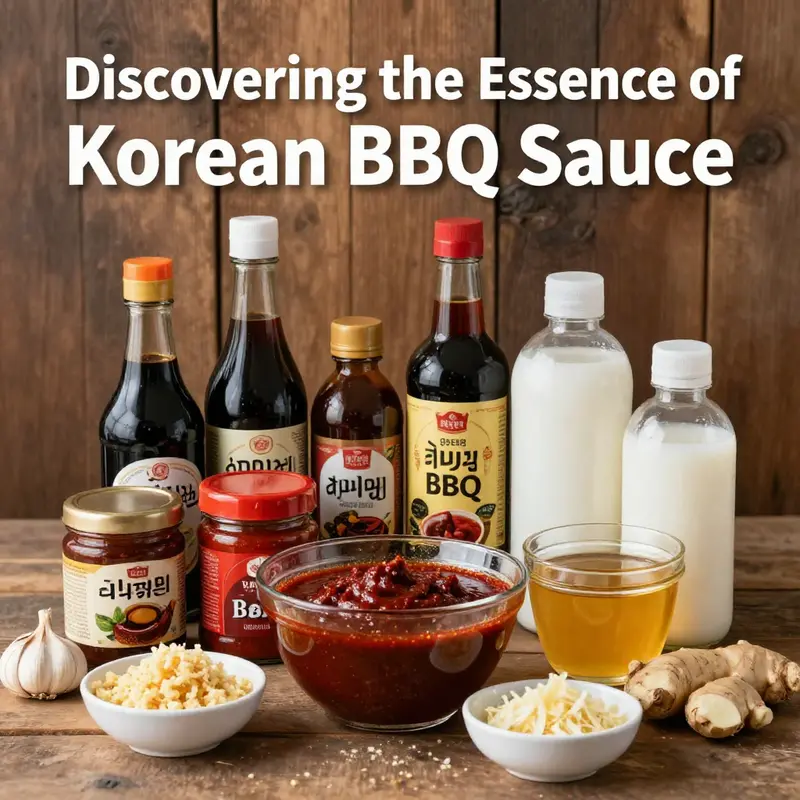
When the grill sparks and a glaze is brushed onto meat, Korean BBQ reveals itself as more than a meal. It is an ongoing negotiation between time of fermentation, precise aroma, and the drama of flame. The sauces that crown this experience, yangnyeom, are not a single recipe but a living family of marinades and glazes. They share a master chord: a balance of sweet, salty, savory, spicy, and aromatic notes that harmonize rather than compete. In most versions, a handful of cornerstone ingredients do the heavy lifting, translating the culture’s affinity for depth and restraint into a glossy coating that both flavors and tenderizes, then caramelizes in the heat to seal the moment of rescue and reunion around a shared plate of meat and side dishes. Within this framework, flavor becomes a story, one spoonful at a time, about how a kitchen’s memory can travel with a grill and still feel new with every bite.
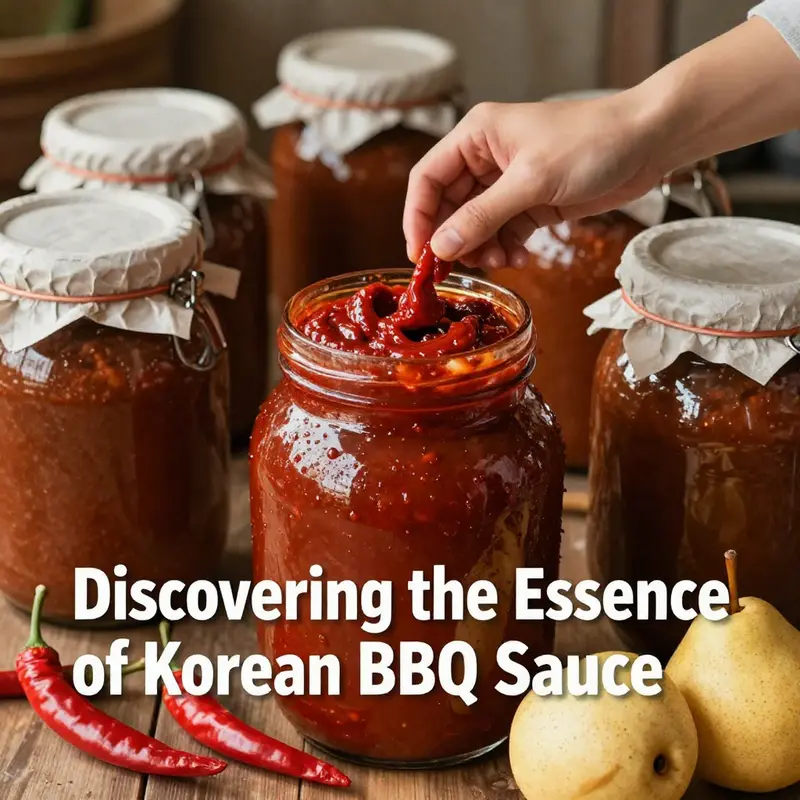
At the center of the ensemble is soy sauce, a salty, savory backbone that supplies the fundamental umami Korea has long cultivated from fermented soy. It anchors the glaze, inviting the other components to dance around it rather than compete with it. Gochujang, the fermented red chili paste, is the indispensable character in this drama. It threads heat with depth and a fermented sweetness that lingers well after the burn of the flame is gone. The paste is not merely spicy; it carries a quiet complexity that comes from slow fermentation, a flavor profile that can be described as warm, slightly fruity, and deeply earthy. Sweeteners follow as the balancing chorus. White sugar, brown sugar, honey, rice syrup, or fruit purées such as pear or kiwi juice provide a touch of sweetness that tames salt and spice while feeding a gentle enzymatic action in the meat. This last effect is part science, part craft, helping proteins yield a little more tenderness as the marinade rests.
Garlic and ginger punctuate the mix with sharp, bright aromatics. Their pungency wakes the senses and gives the glaze an immediate lift on the grill. Sesame oil adds a nutty richness that unfurls as the surface heats; it brings a sheen that makes the glaze feel almost glossy on contact with meat. Sesame seeds scatter across the surface, delivering small pops of aroma and texture that echo the larger flavor theme. Some versions introduce doenjang, the fermented soybean paste, as an optional earthy layer. Doenjang deepens the umami and adds a dark, almost cocoa-like complexity that can anchor the glaze when boldness is the aim. These ingredients are not additive in a merely linear way. They interact, melt into one another, and often reveal new facets when the meat hits the grill and surface moisture concentrates the mixture into a lacquer like a miniature lacquered finish on a wooden bowl.
What sets Korean BBQ sauce apart from many Western sauces is not the absence of other ingredients but the way fermentation, fruit sweetness, and aromatics are balanced to create a synergy rather than a single dominant note. The fermentation ethos infuses depth without heaviness, a characteristic that distinguishes yangnyeom from sauces built primarily around tomatoes or vinegar. This difference matters because it informs both technique and outcome. A marinade uses time—sometimes a brief hour, sometimes several hours or more—to allow proteins to draw in flavors and begin to break down. The glaze, meanwhile, is a dynamic layer that can be brushed on during grilling to encourage caramelization and a glossy finish. The contrast between the raw, aromatic start and the toasted, lacquered surface at the table is where texture and aroma converge in a single, satisfying moment.
Across regional and household variations, the fundamentals endure even as the specifics shift. Some cooks lean into sweeter profiles, coaxing out pear juice or fruit-based syrups to widen the glaze’s caramel color and shine. Others lean into spicier temperaments by amping gochujang or adding fresh chilies for a punch that sits atop peppery sesame and soy. In coastal areas, a touch of fish sauce might slip into the mixture to introduce a briny lift that still remains harmonious with the soy’s depth. The technique mirrors the philosophy: a sauce that tastes balanced, not overloaded, and that ages gracefully with the grill’s heat. This is why the same handful of ingredients can yield a spectrum of experiences—bulgogi’s delicate, tender coat one night, galbi’s richer, more robust lacquer another—without ever losing its sense of core identity.
For readers curious about related kitchen explorations, deeper guides exist that broaden the sense of how a single idea travels and adapts. As a final reflection, the sauce in Korean barbecue is more than a seasoning; it is a cultural instrument. It carries the patience of fermentation, the precision of balance, and the immediacy of flame. It teaches us that sweetness need not cancel heat, that salt can invite depth rather than overpower it, and that aroma can finish a dish with a whisper as the meat rests on the plate. The essence of yangnyeom endures because it respects the meat, the fire, and the moment when family and friends gather around a table to share not just a meal but a memory in the making. For those who want to see the science and tradition behind these ingredients laid out in deeper context, a comprehensive external guide explains how each component behaves and why its interaction matters on the grill: https://www.seriouseats.com/korean-bbq-sauce-ingredients-explained
null
null
Fermented Foundations, Global Twists: Redefining Korean BBQ Sauce in the Modern Kitchen
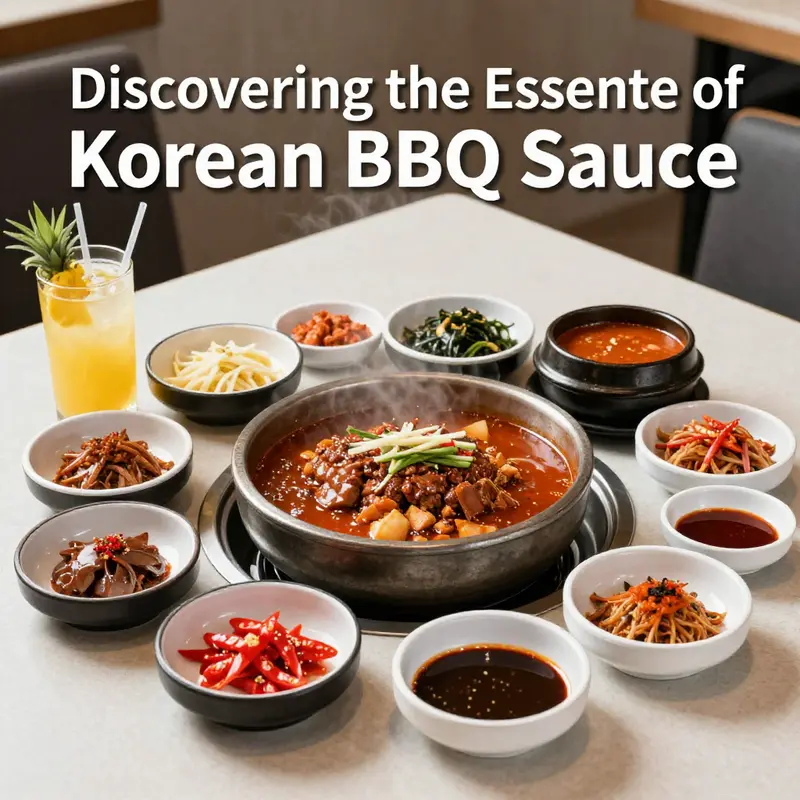
At its core, Korean BBQ sauce is not a single recipe but a family of marinades and glazes built on flavor harmony—sweet, salty, savory, spicy, and aromatic. The core ingredients typically include soy sauce for the savory-umami base; gochujang for depth and ferment-derived sweetness; sweeteners such as sugar or fruit purées; garlic and ginger for pungency; sesame oil and seeds for nutty richness; and optional fish sauce, fresh chilies, or pineapple juice. This combination works as both marinade and glaze, tenderizing meat over time and then caramelizing on the grill to a glossy lacquer. Unlike Western barbecue sauces that lean on tomato and vinegar, Korean versions lean into fermented soy products, fruit sweetness, and layered aromatics. The result is a sauce that not only flavors meat but also builds a chorus of textures and aromas that bloom as heat hits the grill. The tradition is not a fixed recipe but a flexible language, spoken differently across regions and families, yet always anchored in balance and patience.
Modern cooks have expanded that language without discarding the old accents. They lean on honey and mirin for a refined, floral sweetness that smooths the bite of salt and heat. This shift invites a glaze that caramelizes with less harshness, letting the meat’s own sugars mingle with the sauce’s glaze for a lustrous finish. In some kitchens, a small measure of coffee enters the mix, its earthy undertone deepening the sauce’s umami and evoking a smoky impression without actual smoke. The result is a sauce that reads as familiar yet unexpectedly rich, a reminder that fermentation and heat still work together even when the palate tastes something new.
Another trend embraces fruit-based syrups beyond pear or kiwi, such as mango, peach, or pineapple, which bring tropical brightness and a touch of acidity that mirrors the fruit’s natural enzymes. These additions can help tenderize meat while broadening the sauce’s color and aroma, making it vibrant enough for bold, festive gatherings. Texture has become a focal point too; many home cooks and chefs incorporate tapioca starch or cornstarch to create a thicker, clingier glaze that adheres to meat during grilling and produces that signature restaurant gloss. This isn’t merely about thickness; it’s about a coating that stays intact as the sauce caramelizes, releasing a perfume of sweetness and sesame with every turn of the grill.
Acidity remains a debated seasoning, with some chefs adding a splash of rice vinegar or apple cider vinegar to brighten the sauce subtly. Purists often resist extra acidity, arguing that it can blunt the fermented depth. But when balanced with gochujang’s sweetness and soy’s saltiness, a touch of brightness can lift the glaze without shouting over the other flavors. Health-conscious adaptations also echo through modern kitchens. Coconut sugar or other natural sweeteners replace refined sugar, tamari becomes a gluten-free alternative to traditional soy sauce, and low-sodium variants help diners manage salt while preserving the sauce’s backbone. These evolutions prove that the sauce’s core idea—depth from fermentation, sweetness to balance, and aromatics to lift—remains intact even as pantry staples move and shift.
Regional variations continue to shape the current landscape. Seoul-style blends tend toward smoother textures and a pronounced sweetness, a reflection of urban dining culture that favors a lacquered, approachable finish. Busan-inspired profiles push bolder heat and a stronger emphasis on gochujang and fresh chilies, mirroring coastal weather and the appetite for a bracing contrast. Diasporic adaptations move beyond borders, incorporating mustard in some American interpretations or tamarind in Southeast Asian renditions. These tweaks reveal a broader culinary dialogue, where a sauce born of fermentation and regional practice becomes a global canvas for taste and memory.
What links these variants is a shared method: a sauce that serves as both marinade and glaze, a tool for tenderization and a vehicle for aroma. The technique matters as much as the ingredients. Time, in the form of a brief soak or a longer marination, allows salt and fermentation to work on the protein’s fibers, while heat during grilling transforms sugars into caramel, weaving a glossy, aromatic veil over every slice. In practice, cooks blend the old and the new with instinct and care, testing ratios, adjusting sweetness, and judging when the glaze coats the meat with a shimmer rather than a smear. The sauce remains a living guide for the table: comforting in its base, adventurous in its variations, and endlessly forgiving to those who approach it with curiosity rather than a fixed rule.
For readers and cooks who want to explore how these principles translate across kitchens and menus, a broader hub of ideas can offer practical inspiration while staying true to the spirit of Korean culinary practice. You can browse the Korean BBQ marketplace at the Korean BBQ hub to see how different households adapt the base into their own signature glaze and marinade. korean-bbq-mall.
As modern cooks swap in new components and reinvest in traditional fundamentals, the Korean BBQ sauce remains a living tradition—one that travels, mutates, and still returns to the core dance of sweet, salt, umami, heat, and aroma. The result is not a single recipe but a lineage that invites experimentation while honoring fermentation, balance, and communal cooking. The evolving glaze tells a story of taste that travels—from a quiet kitchen in a historic neighborhood to a global table where friends and family gather around the grill. For deeper exploration of recipes and variations beyond this chapter, see the thoughtful discussion in the external resource linked below.
External resource: https://www.seriouseats.com/korean-bbq-sauce-recipes-5824391
Final thoughts
Korean BBQ sauce is a fascinating blend of tradition and innovation, providing rich flavors that resonate with diverse palates. Whether you are looking to enhance your menu or create unique dishes, understanding both core ingredients and the fermentation process offers business owners a competitive edge. Embracing modern variations can also attract a wider audience, ensuring your offerings remain relevant and exciting. Dive into the world of Korean BBQ to expand your culinary horizons and meet the growing demand for authentic, flavorful dining experiences.