
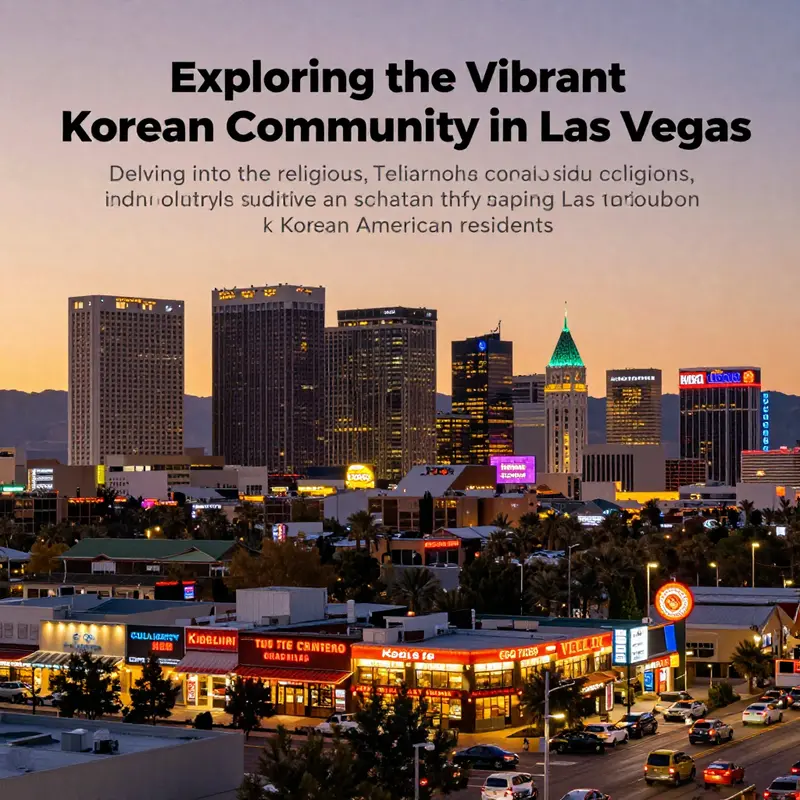
Las Vegas is more than just a hub for entertainment; it also boasts a rich tapestry of cultural diversity, especially within its Korean American community. This vibrant community has established significant religious institutions, educational initiatives for language preservation, and a dynamic culinary scene that reflects the fusion of traditional and contemporary Korean flavors. Understanding each of these aspects reveals how the Korean American community not only contributes to the social fabric of Las Vegas but also enriches the city’s cultural narrative. Explore the integral roles these chapters play in encapsulating the essence of life in Las Vegas for its Korean residents.
Sanctuaries and Crosswinds: How Las Vegas’ Korean Community Builds Faith, Culture, and Enterprise
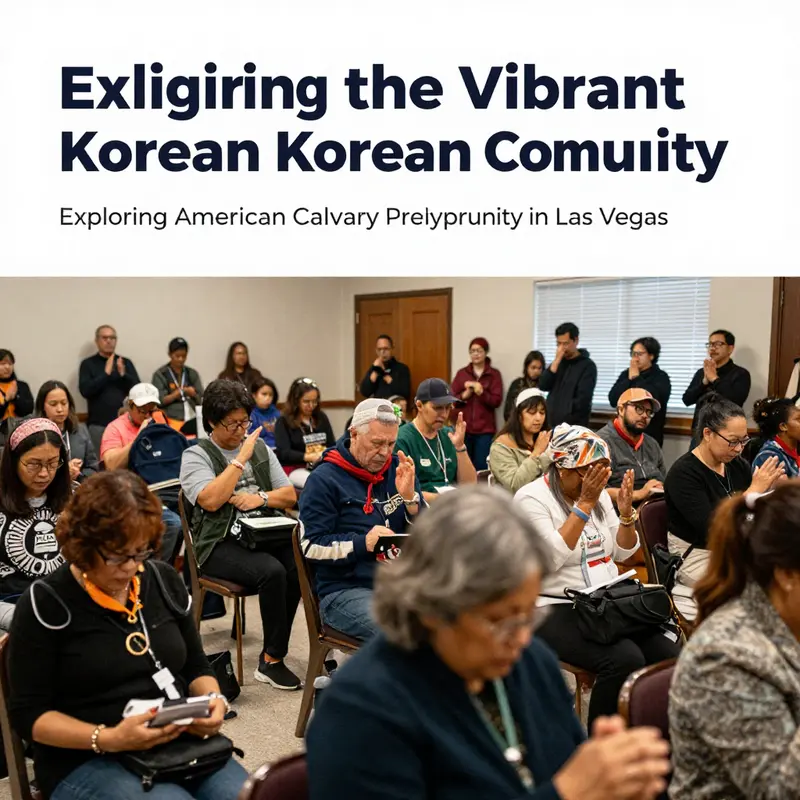
Las Vegas is often imagined as a place of neon spectacle and high-stakes chance, yet beneath that surface runs a steady current of community life shaped by Korean faith, belonging, and enterprise. In the city’s Korean neighborhoods, religious institutions function not only as houses of worship but as anchors for social ties, language and cultural maintenance, and practical support that helps families navigate migration, work, and schooling. The network is not a single temple or church, but a constellation of congregations, schools, and affiliated nonprofits that together sustain a sense of continuity across generations. Within this tapestry, the religious footprint is visible in the daily rhythms of worship, study groups, youth activities, and outreach that extend beyond Sunday into a week filled with service projects, language classes, and neighborhood gatherings. These threads bind individuals to a shared memory of Korea while weaving new patterns of life in the American Southwest, where the desert panorama meets a city of constant reinvention.
Prominent Korean churches in Las Vegas illustrate how faith communities extend their reach far beyond liturgy. Among the region’s well-known congregations are The Crossing Church, Full Gospel Las Vegas Korean Church, First Korean Presbyterian Church of Las Vegas, and St Paul Jung Ha Sang Korean Catholic Church. Each congregation carries its own distinctive approach to worship and governance, yet they converge on a common mission: to nurture spiritual vitality while offering practical channels for social connection. Regular services provide a familiar rhythm for worship and language practice, while programs such as youth groups, mentorship circles, and language classes create ongoing opportunities for intergenerational dialogue. In this way, the church becomes both sanctuary and incubator—a place where faith can grow alongside entrepreneurial confidence and networked belonging. The literature on Korean ethnic churches notes a recurring pattern: churches often transform into micro-ecosystems of support that help immigrant families start and sustain small ventures, find mentors, and share information about navigating a new economy. This dual role—spiritual center and economic bridge—helps explain why temples remain central even as Las Vegas continually morphs around them.
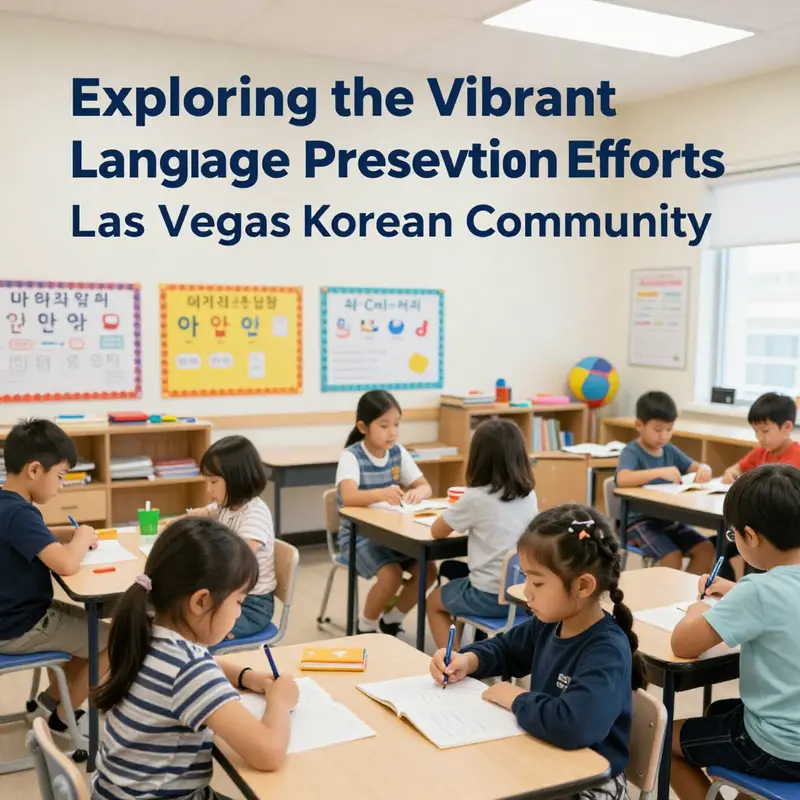
The role of religious institutions in Las Vegas is complemented by cultural organizations that preserve language, celebrate tradition, and pass on heritage to younger generations. The historical footprint of education in the Korean community is visible in endeavors like the Las Vegas Traditional Korean School, which was registered in 2009 but later revoked. The episode reflects a broader pattern: cultural institutions rise and wane with demographic tides and the practical realities of governance and funding. Yet the impulse to create spaces for Korean language, history, and arts persists, supported by churches and allied nonprofits such as the Korean Fellowship Church Las Vegas. This latter organization embodies a Christian nonprofit ethos focused on fellowship, service, and faith-based community building, underscoring the continuum between spiritual life and social contribution. Together, these entities craft a resilient infrastructure that supports identity, integration, and long-term sustainability for Korean Anglos and their descendants in the city.
Beyond worship halls and classrooms, the Las Vegas Korean community also nurtures a climate of entrepreneurial possibility. A growing body of scholarship recognizes Korean ethnic churches as catalysts for small business formation, linking faith-based networks with mentorship, capital access, and practical guidance. In this light, congregations become more than religious centers; they serve as vibrant, informal chambers of commerce and cultural exchange. The social economy that emerges from shared faith and mutual aid fuels creative collaborations, from service-oriented nonprofits to family-owned ventures that blend Korean culinary traditions with local tastes. The culinary landscape surrounding the community further enriches cross-cultural exchange. Dishes and dining experiences pepper the city’s streets, infusing neighborhoods with a sense of Korean culinary ritual. This gastronomic dimension serves as a bridge—an appetizing reminder that faith, language, and culture travel together, shaping everyday life as much as formal acts of devotion.
For readers seeking a tangible glimpse of how these threads interweave, consider the city’s connection to Korean cuisine as a parallel to its religious and cultural networks. A link to a Las Vegas Chinatown Korean dining scene offers a flavorful entry point into how Korean culture becomes visible and accessible in a broader urban fabric: Korean BBQ in Las Vegas Chinatown. Together, faith communities, cultural organizations, and business networks continually recreate a space where belonging thrives and new generations inherit both memory and opportunity. For those who want to hear contemporary voices about Korean churches in Las Vegas, insights and reflections are available through local review platforms that chronicle the lived experiences of worshippers and neighbors alike: Yelp reviews of Korean churches in Las Vegas provide a window into how these centers are perceived and lived every day. https://www.yelp.com/biz/top-10-best-korean-church-in-las-vegas-nv-2026
null
null
From Kimchi to the Strip: A Living Tapestry of Las Vegas’ Korean Cuisine
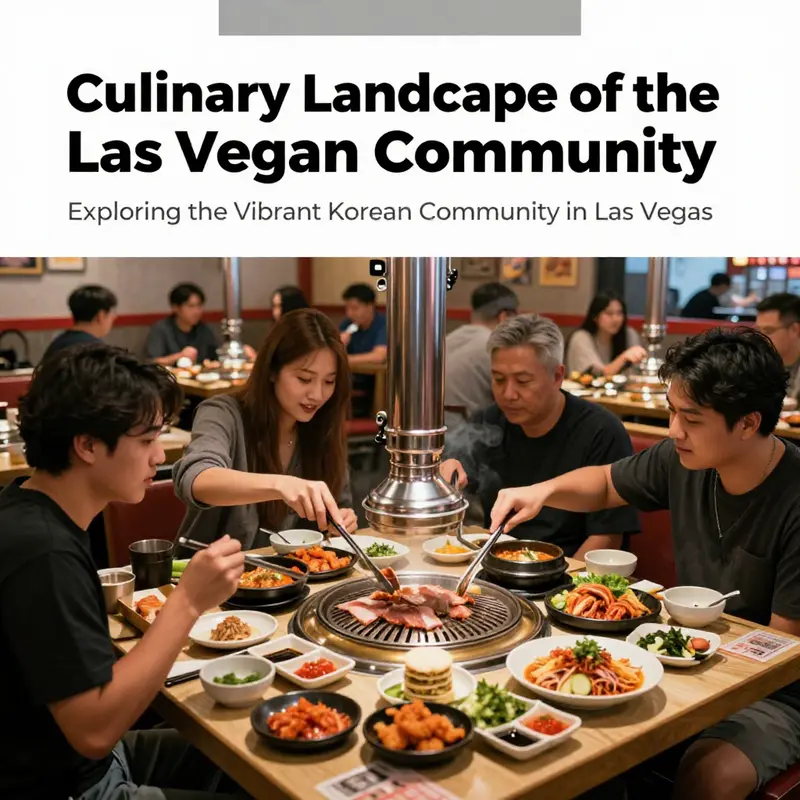
Las Vegas wears its diversity like a neon sign that never dims, and the Korean culinary scene within the city mirrors that same electric energy. It is a living tapestry rather than a fixed tableau, stitched together by generations of immigrants, their descendants, and curious eaters who converge on the city in search of comfort, novelty, and a sense of shared culture. In this landscape, traditional techniques and flavors endure, even as chefs experiment with new pairings and formats. The result is a cuisine that can feel both intimate and cosmopolitan, intimate because it honors core Korean dishes, cosmopolitan because it braids those flavors with other culinary lineages that define the broader Las Vegas dining scene. The spine of this story remains the kitchen, where cooks translate memory into broth, smoke, and glaze, and where every simmering pot becomes a repository of family history and place.
In the everyday meals of the Koreans who call Las Vegas home, the classic triad of kimchi jjigae, bulgogi, and bibimbap anchors the dining table. These dishes, modest in their origins yet mighty in flavor, travel well across generations and neighborhoods. Kimchi jjigae carries the bright tang of kimchi with depth from fermentation, while bulgogi presents the elegance of marinated beef kissed by sesame and garlic. Bibimbap offers a canvas—a bowl that unites vegetables, meat, and a fried egg with a kiss of gochujang—so that a single serving can tell a compact story of seasonality, texture, and balance. In family-owned eateries scattered beyond the city’s tourist corridors, the same recipes pass from hand to hand, letting locals taste continuity even as the city’s landscape shifts at the speed of a marquee sign.
Yet the culinary map here is not static. New ventures push traditional flavors toward contemporary sensibilities, inviting a younger, more globally minded audience to participate in the conversation. Fusion concepts weave Korean techniques with influences from nearby cultures, creating bold, approachable meals that still resonate with core tastes. Think of crunchy, hand-held creations that pair Korean seasoning with the portability of tacos, or inventive takes on broth and noodle culture that nod to regional cuisines from across the Pacific. These innovations do not erase the past; they extend it, letting a wider audience discover what makes Korean cooking meaningful through a lens that feels fresh and rhythmic rather than distant or ceremonial.
Another notable thread in Las Vegas’s Korean culinary scene is the growing emphasis on ingredients and craft. Chefs increasingly seek premium components to elevate familiar dishes, and this trend has begun to reshape expectations around what a traditional meal can be. The rise of dry-aged techniques, for instance, signals a shift toward a deeper, more complex flavor profile that still respects the integrity of traditional forms. When executed with restraint, such enhancements amplify savor without overwhelming the dish’s essential character. Diners now encounter a spectrum of textures and notes—from the wine-like mellowness of carefully aged meat to the bracing brightness of fermented vegetables—that remind them how much craft lies behind a single forkful. It is a celebration of quality as an ethical standard, a nod to the labor and patience embedded in every recipe and every plate.
This evolving culinary culture sits at the intersection of community and spectacle. Koreatown clusters and the city’s high-energy dining corridors coexist with religious centers and cultural institutions, creating a daily rhythm where food is both nourishment and celebration. The city’s Korean culinary landscape thus becomes a living archive and a forward-looking workshop, where memory informs technique and experimentation broadens belonging. For newcomers and long-time residents alike, a meal here offers more than taste; it offers a dialog with place, history, and identity. It invites travelers to explore not just a menu but a fraught and festive negotiation of what it means to be Korean in a city built on reinvention. And as visitors come to the Strip and beyond, they encounter an evolving mosaic where flavor is the common language and generosity the shared recipe.
Final thoughts
The Korean community in Las Vegas embodies a thriving blend of culture, spirituality, education, and gastronomy. Through their churches, language preservation efforts, and diverse culinary offerings, they not only enrich the local landscape but also foster a sense of identity and belonging among their members. As this community continues to establish its roots in Las Vegas, it highlights the importance of cultural exchange and integration in a city known for its diversity. The contributions of the Korean American community serve as a testament to the power of preserving heritage while embracing new opportunities.