
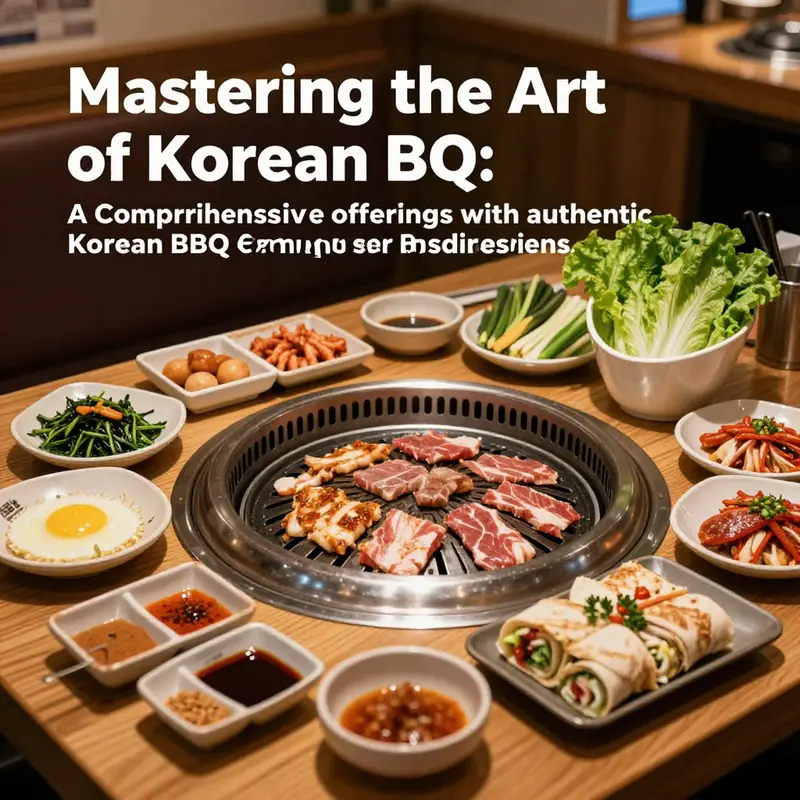
Korean BBQ transcends mere cooking; it is a cultural experience that combines communal gathering, premium ingredients, and interactive dining. The allure lies in the sizzling sounds of marinated meats over high heat, paired with fresh vegetables and unique sauces. For business owners looking to enhance their menu or set up a new dining concept, understanding the core elements of Korean BBQ is essential. This guide will explore key ingredients, an essential marinade recipe, and effective cooking methods using an electric griddle, providing a well-rounded approach to mastering Korean BBQ.
Flavor Builders and Prime Cuts: The Core Ingredients and Meat Selection for Korean BBQ at Home

Crafting authentic Korean BBQ at home starts with two quiet, powerful decisions: what you buy and how you prep it. The dance between meat and marinade hinges on a few core ingredients that do the heavy lifting for aroma, depth, and tenderness. The salty backbone is built with a good, flavorful soy sauce—ideally a glaze that carries a clean umami without excessive saltiness. In some regional or family versions, a fermented soybean paste like doenjang may appear, lending earthy, fermented notes. The sweet element comes not just from sugar or honey but from fruit-derived juices. Pear juice, a traditional favorite, is prized for its ability to help soften connective tissue while brightening the meat’s natural juices; apples can work in a pinch, but pear remains the classic. This sweetness is tempered by aromatics—garlic and onion as a duo, with sesame oil adding a toasty, nutty note that lingers on the palate. A sprinkle of toasted sesame seeds brings a subtle roasted brightness, while gochujang supplies heat, a touch of sweetness, and that unmistakable fermented kiss that marks Korean BBQ. Some cooks finish marinades with a splash of sake to lift everything, though this is optional and depends on what you have on hand. Together, these elements create a flavor spectrum described by many as sweet, salty, savory, nutty, and spicy—a five-note harmony that distinguishes Korean BBQ from many other grilled styles.
The second pillar is the meat itself. The selection matters as much as the marinade because fat distribution and muscle density determine how quickly a piece sears, how moist it stays, and how forgiving it is to imperfect timing. Beef loves a balance of lean muscle and fat; bulgogi, the quintessential marinated beef, usually comes from cuts with enough marbling to stay juicy under a quick sear. Short ribs, or galbi, offer deep beefy richness with connective tissue that softens during grilling. Poultry brings its own personality: thighs, with their higher fat content, stay juicy and respond well to bold marinades, while wings offer a punchy bite when grilled hot and fast. Pork is all about the belly and shoulder. Samgyeopsal—the beloved pork belly—provides a crisp-edged, succulent bite as the fat renders on contact with the hot surface, while pork shoulder yields meat that remains tender under quick grilling and soaks up marinade without becoming greasy. A practical rule of thumb is to choose cuts that are evenly shaped and not overly thick, so they sear quickly and stay juicy rather than drying out. In any case, slicing the meat thinly—often 3 to 5 millimeters—before marinating helps the flavors penetrate and ensures a fast finish on the griddle.
If you want to explore a classic beef cut in depth, you can look for guidance on bulgogi preparation, which is a natural starting point for home cooks who want to understand how marinade and meat interact. For readers curious about a specific beef cut, see Bul Gogi Korean BBQ. The preparation is simple: combine soy, a light sweetener, minced garlic, grated onion, a small amount of sesame oil, and a touch of pepper; thin slices so they soak quickly. Once rested in the marinade, the meat benefits from even coverage, and the cook’s attention to a rapid, high-heat sear will seal in juices. When you bring the pan to a hot, steady temperature and place the marinated slices in a single layer, avoid overcrowding to ensure a proper crust forms. The goal is to achieve a charred exterior while preserving a juicy interior, a hallmark of Korean BBQ when done at home.
External resource: https://www.koreancuisine.com/essence-of-korean-bbq-taste
Essential Korean BBQ Marinade: The Balanced Mix That Makes Your Meat Sizzle
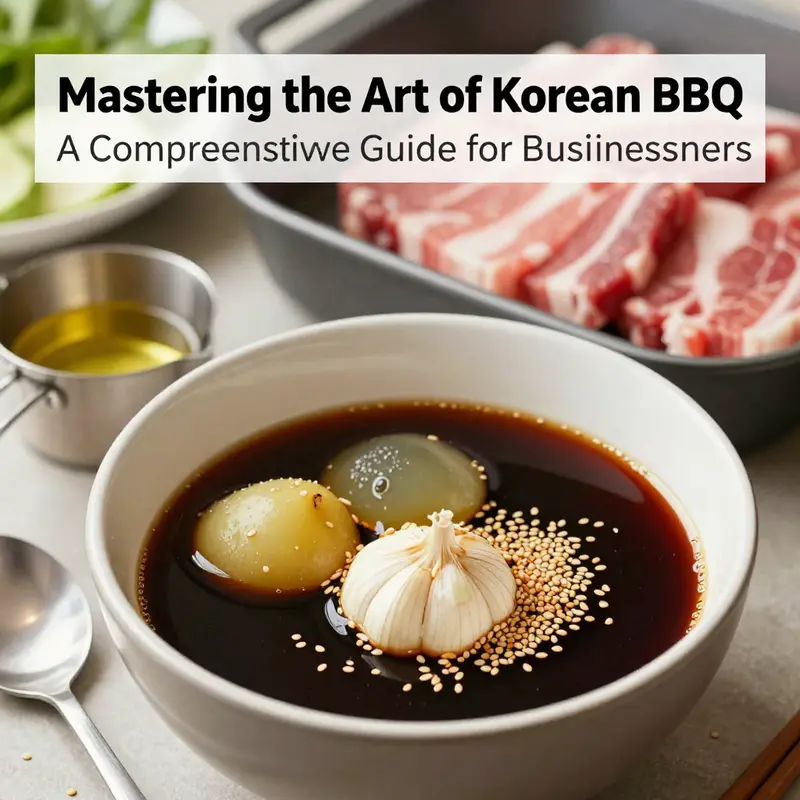
Essential Korean BBQ Marinade (Serves 4–6)
To make Korean BBQ sing at home, the marinade is where technique meets chemistry. A great marinade does four things: seasons, tenderizes, flavors, and helps form a caramelized crust under high heat. Keep the formula simple and balanced. Use a salty base for umami, sugar for caramel and balance, an oil for mouthfeel, aromatics for character, and a fruit-based tenderizer to gently break down collagen in tougher cuts.
Start with three-quarters of a cup of soy sauce. It provides deep savory notes and a foundation for all other flavors. Add roughly three tablespoons of white sugar for balance and browning; you can swap honey or brown sugar if you prefer a warmer sweetness. For richness, use toasted sesame oil—about six tablespoons—because it brings a nutty aroma that raw oils cannot match.
A small but crucial component is fruit puree. Half a ripe Asian pear grated or one peeled kiwi blended into a smooth puree introduces natural enzymes that tenderize meat. Pear is the classic choice because its enzymes work steadily and its subtle sweetness integrates without overwhelming. Kiwi acts faster, so marinate for less time if you use it. Add six large garlic cloves, finely minced. Garlic adds backbone and a touch of bite that balances the sweet and salty elements.
For heat and depth, include one to two tablespoons of fermented chili paste. Start with one tablespoon if you prefer mild heat, and increase for a deeper, spicier profile. A teaspoon of ground black pepper is optional for subtle warmth, and a tablespoon of rice wine or mirin brightens the mixture with a gentle acidity and extra gloss when grilled.
Mixing is straightforward. Combine soy sauce, sugar, toasted sesame oil, garlic, chili paste, pepper, and rice wine in a bowl. Stir until the sugar dissolves. Fold in the grated pear or kiwi puree until the marinade is homogeneous. Taste briefly; if the mix seems too sharp, a little more sugar or a splash of water will round it out.
For best results, slice your meat thinly. Aim for three to five millimeters for bulgogi-style beef or slightly thicker for pork shoulder. Thin slices let the marinade penetrate quickly and cook evenly over high heat. Place the meat and marinade in a sealable bag or covered container, massaging so every piece is coated. Refrigerate for at least four hours. Overnight is ideal, but avoid marinating longer than twenty-four hours. Extended exposure to fruit enzymes can turn the texture overly soft.
When you’re ready to cook, remove meat from the fridge and let it sit at room temperature for fifteen minutes. This brief rest prevents the meat from contracting under extreme heat. Preheat your grill, skillet, or electric griddle to high heat. A well-heated surface is essential to sear quickly and form that glossy, caramelized crust that defines Korean BBQ.
Shake off excess marinade before the meat hits the griddle. Too much surface liquid prevents searing. Cook in a single layer without overcrowding. Let the meat sit undisturbed for about sixty to ninety seconds to develop a good crust, then flip and finish in another forty-five to sixty seconds. For pork belly, render some fat first and blot excess oil before serving.
Reserve a small amount of the marinade before it touches raw meat if you plan to brush while cooking. Never reuse marinade that contacted raw meat unless it is boiled first. Cutting the cooked meat into bite-sized pieces with scissors keeps the experience authentic and makes wrapping easy.
Serve immediately with fresh lettuce or perilla leaves, ssamjang or a spicy paste, sliced garlic, scallions, and steamed rice. Wrap and eat in one bite for the classic harmony of textures and flavors. For extra umami, a small splash of anchovy broth or a dash of aged soy-based seasoning can be mixed into side sauces.
If you want to see variations and serving ideas linked to traditional preparations, check this practical note on bul-gogi preparations: bul-gogi korean bbq.
For the original recipe framework and ingredient ratios used here, see the detailed guide at https://www.foodiepost.com/korean-bbq-marinate-recipe
Sear, Wrap, and Share: Mastering Indoor Korean BBQ with an Electric Griddle

Korean BBQ indoors is more than cooking; it is a shared ritual that turns a simple kitchen into a stage for sizzling meat, bright garlic, and crisp leaves enveloping a chorus of flavors. When you set the hot griddle in motion, the room fills with the sound of fat searing on metal, the fragrance of sesame and onion, and the lively company around the table. The core principle remains constant: speed, precision, and balance. The goal is to sear a thin slice just enough to develop a caramelized crust while keeping the interior juicy, and to assemble a bite that echoes the hospitality of a Korean grill night. To begin, choose cuts with even fat distribution and marbling that render beautifully on high heat. Beef like thinly sliced bulgogi or short ribs, pork belly or shoulder, and chicken thighs have their moment when they meet the right marinade, flame, and wrapping ritual. The marinade acts as both flavor and tenderizer, a harmony of soy, sweetness, and aromatics that penetrates the meat in the minutes or hours you allow it to mingle. A classic base for 1 kilogram of meat uses 100 ml soy sauce, 80 ml pear juice (apple juice can substitute), 50 g finely grated onion, 15 g garlic, 10 ml sesame oil, 30 g sugar or honey, and a pinch of black pepper. After mixing into a smooth bath, slice the meat to 3–5 millimeters and slide it into a large ziplock bag, pouring the marinade over. The bag-slamming technique—slamming the sealed bag to help the liquid coat every surface—ensures an even distribution. Let it rest in the fridge for at least 4 hours, but no longer than 24 hours, lest the texture drift toward mush. This is where the pear juice earns its place; its natural enzymes help tenderize collagen, elevating the bite without sacrificing snap.
With the meat ready, preheat the griddle to a steady medium-high, about 190°C to 205°C (375°F to 400°F). While it comes up to temperature, prepare the ssam station: washed and dried lettuce leaves, perilla if you have it, and thinly sliced garlic, scallions, and peppers. Small bowls of dipping sauces—gochujang, a soy-based dip, and perhaps a touch of sesame oil with sesame seeds—stand by. When the surface is hot and clean, lay the marinated slices in a single layer. Do not crowd; space is essential for a proper sear. Each side needs 2 to 4 minutes, depending on thickness, to achieve a char that sings with caramelization while the center remains juicy. If you’re working with pork belly, render some fat first and blot excess oil with a paper towel to prevent soggy edges. The meat should emerge with a restrained crunch and a rosy center, aiming for an internal temperature around 55–60°C (131–140°F). A pair of kitchen shears makes quick work of cutting the hot meat into bite-sized pieces, which helps keep the grilling surface efficient and the platter ready for the next round.
The serving ritual is where Korean BBQ reveals its spirit. Each wrap is a small ceremony: a leaf holds a slice of meat, a few garlic slivers, a sprinkle of scallion, a dab of gochujang, and a sliver of kimchi. Roll tightly and eat in a single, satisfying bite to feel the balance of salt, sweetness, heat, and acidity—the hallmark of the cuisine. The social element matters as much as the technique, turning a simple supper into a shared memory of the sizzle, the laughter, and the bowls of rice and kimchi that accompany the main event. To enrich the scene, a few banchan on the side—kimchi, danmuji, and crisp cucumber slices—provide contrasts in texture and palate, inviting guests to compose wraps with different flavor profiles as the meal evolves.
If you want a touch more convenience, consider a mid-sized indoor setup that allows you to use the griddle as a central station for both meat and quick sides, such as a savory pancake or sautéed vegetables, so the table stays lively and interactive. For readers exploring regional options, a helpful reference is Korean BBQ in Moreno Valley, which captures how the core philosophy translates across spaces and communities. As you become more fluent in timing, sear, and wrap, you’ll begin to trust your griddle as a familiar partner rather than a gadget. The rhythm—marinade, sear, rest, wrap, savor—becomes a fluent cadence that makes every bite feel like the first, and every plate a shared celebration. For a detailed, appliance-specific guide to indoor grilling, you can consult this external resource: https://www.thespruceeats.com/indoor-korean-bbq-with-electric-griddle-5281568.
Final thoughts
Korean BBQ offers a unique dining experience that can enhance your restaurant’s appeal and attract a diverse clientele. By carefully selecting high-quality ingredients, mastering the marinades, and employing effective cooking methods, you can deliver authentic Korean flavors that resonate with your customers. Implementing these practices not only enriches your menu but also creates memorable experiences for your patrons, making their dining occasions truly special.