
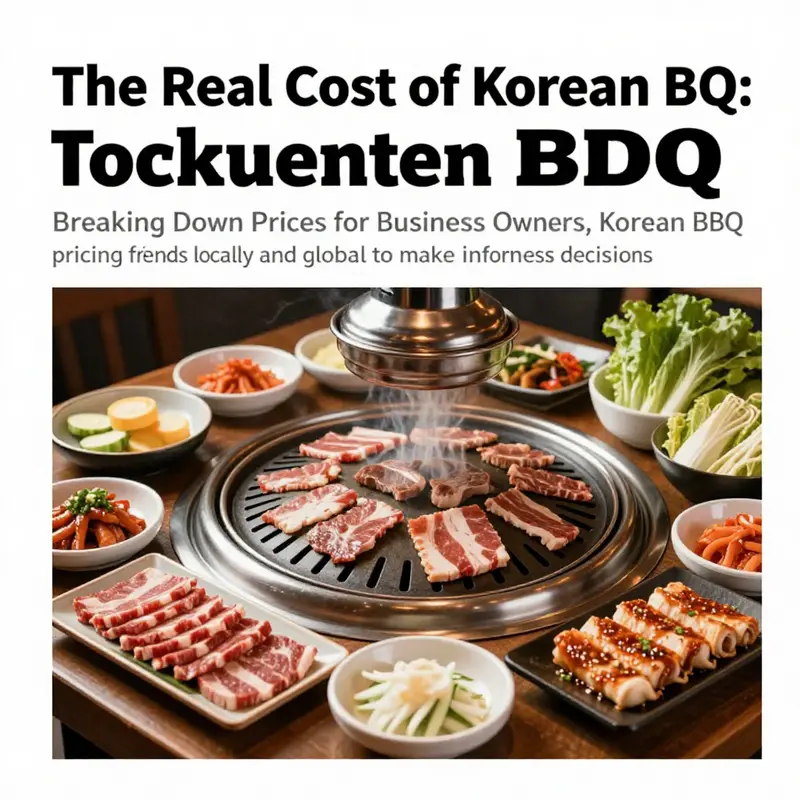
Korean BBQ has become a global phenomenon, appealing to diverse audiences with its unique dining experience. For business owners, understanding the cost dynamics of Korean BBQ is essential, whether they’re looking to enter the restaurant market or explore new menu options. The pricing of Korean BBQ varies remarkably between South Korea and international markets, influenced by local economies, ingredient availability, and consumer preferences. This article delves into the pricing structure of Korean BBQ, examining costs in South Korea and comparing them with prices in countries such as Australia and the USA. Knowing these factors will enable business owners to make strategic decisions in managing costs, setting prices, and capturing market opportunities.
Decoding the Price Tag: How South Korea Sets the Cost of Korean BBQ
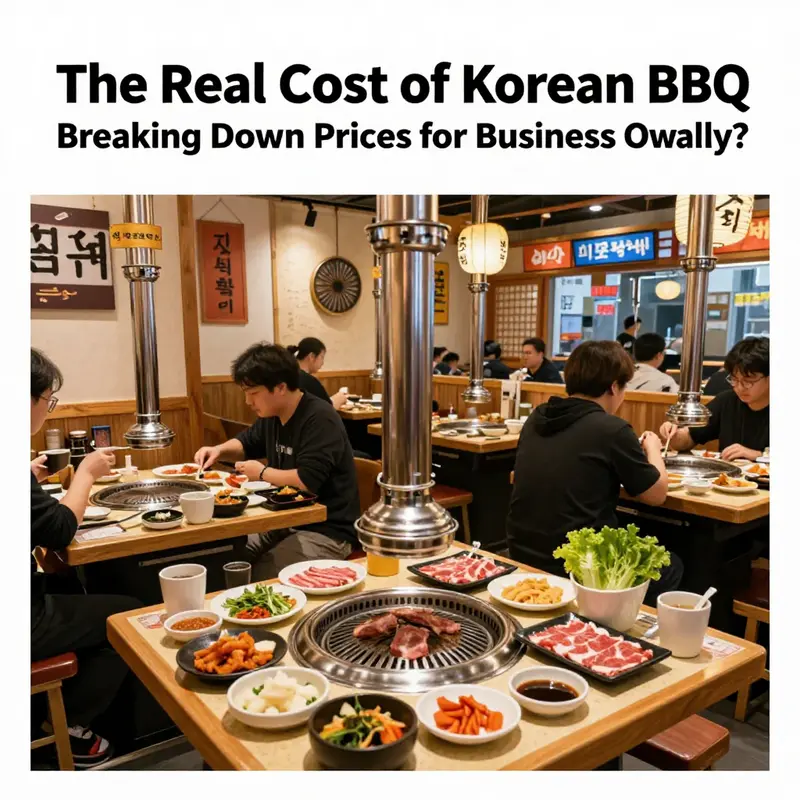
Prices for Korean BBQ in South Korea are not fixed. They shift with where you sit, the style of the restaurant, and the exact meats and accompaniments on offer. In Seoul and other big cities, the dining scene ranges from bustling casual spots that charge by the person to more curated places where the experience is framed as a feast. The average you’ll encounter in a typical mid-range establishment, particularly if the focus is all-you-can-eat, sits in a broad band. When you step into a room lit by warm amber light, with a grill in the center and a chorus of sizzling pans, the price you pay becomes a reflection of the environment more than a simple line item. This is the heart of how much Korean BBQ costs in the country: context matters as much as quantity.
In South Korea, the general structure is straightforward. All-you-can-eat formats are common, and on a per-person basis, adults often pay somewhere between ₩19,500 and ₩30,000 for a meal. That range represents a balance between modest and generous portions, with some places in the urban core pushing higher, especially in premium districts. In upscale neighborhoods, particularly in sizable metropolitan markets, prices can climb beyond ₩40,000 per person. The price ladders you see are not random; they align with the perceived value of the experience, the quality of the meat, and the overall service package. For families and groups, the value proposition shifts a little depending on the mix of meats offered, the drink selections, and the variety of side dishes that accompany the main course. The dining experience can feel like a small window into supply and demand: the more demand there is for a particular cut or the more elaborate the banchan and garnishes, the higher the bill tends to rise.
Pricing for children follows a simpler pattern, though it still reflects the structure of the restaurant. Younger guests typically pay a fraction of the adult rate. In many places, children from first through third grade are charged around ₩11,000, while toddlers in the 36-month to pre-first-grade range pay around ₩8,000. These marks help parents plan the family budget and give restaurants a predictable framework for accommodating younger diners who still want to participate in the grilling ritual. The inclusions in these all-you-can-eat packages are worth noting as well. The price usually covers a rotating assortment of meats—beef, pork, and chicken—along with a chorus of banchan, rice, and sometimes beverages. The exact lineup changes with the restaurant, the season, and the kitchen’s sourcing, but the principle is consistent: a single price aims to unlock a spread that would be difficult to reproduce at home.
The economics behind these numbers are not static. In recent years, fluctuations in the price of meat and other ingredients have nudged the mid-range price upward. A widely observed trend is the creeping up of base costs, particularly for beef cuts, as the supply chain tightens and global demand remains strong. Local consumers have started to term this phenomenon with phrases that imply inflation within a traditional dining category. The consequence for regular patrons is that a meal that once felt like a reliable weekly treat can begin to flex within a higher band, especially when the restaurant emphasizes premium cuts or a more ceremonial service style. It is important to understand that this is not merely a sticker price; it is a reflection of a broader market rhythm, where the costs of production, logistics, and labor intersect in the dining room.
Another layer of variability comes from location. The same restaurant brand can have very different price points from one neighborhood to another. In busier districts with a lot of footfall and a higher cost of living, a plate might be priced higher to cover rent and the premium atmosphere that these zones cultivate. Conversely, quieter neighborhoods or less tourist-dense areas may maintain more modest pricing. The ambiance—the seating arrangement, the exhaust system, the cleanliness and speed of the service, and even the allowed smoke level at each grill—contributes to the overall value the customer experiences. For travelers who want a window into local pricing without getting lost in a sea of options, stepping back from the trendy main drags and sampling a few mid-range venues can reveal where the good balance lies. In this pursuit of balance, many locals prefer to check current menus directly on restaurant sites or through reservation platforms, since prices can change with the times and with new promotions that do not always show up in third-party listings.
For those seeking a broader sense of how Korean BBQ pricing compares internationally, there are notable differences to consider. In places outside Korea, the market often leans toward buffet formats that promise broad variety at a fixed price. Lunch buffets in other countries can begin at modest thresholds, sometimes around twenty dollars per person, with dinner tended toward the higher end of the spectrum. These variations aren’t just about currency values; they reflect different labor costs, real estate prices, and consumer expectations. Yet even across borders, the core idea remains: pricing is a signal that a restaurant is attempting to balance quality, variety, and sustainability within a competitive dining landscape. When you travel, you will notice that the same structure—an upfront per-person charge with additional costs for premium items or beverages—reappears, but the magnitudes shift in ways that reveal the local economic climate.
If you are planning a visit and want to anchor your expectations, the best strategy is to verify pricing from the source. Check the restaurant’s own online listings or make a quick call to confirm whether the posted price includes beverages, taxes, or service charges, and whether there are separate charges for certain meats or course changes. This approach is especially useful in a city where dining trends evolve rapidly and where a single season can bring new promotions or limited-time menus that alter the value equation. For readers who would like a practical touchpoint while exploring various formats, there is an internal resource that collects a broad spectrum of all-you-can-eat Korean BBQ options, which you can consult: All-You-Can-Eat Korean BBQ Near Me. This isn’t a shopping guide; it’s a reminder that the pricing landscape is dynamic and shaped by the same forces that influence any restaurant menu: supply, demand, location, and the cost of delivering a memorable dining experience.
Beyond the borders of Korea, a different economic calculus unfolds. In countries like Australia and the United States, the same concept of a shared grill and a spread of sides is often priced with an eye toward buffet formats. Lunch offerings tend to start around the low twenties in Australian dollars, and in the United States, introductory buffet prices commonly appear around twenty dollars for lunch and roughly thirty dollars for dinner. These figures reflect the respective markets’ wage structures, rental costs, and consumer expectations for buffet experiences that include a wide array of meats, soups, and desserts, along with a broader assortment of sides. These contrasts aren’t just about currency; they illuminate how local economies shape what diners are willing to pay for the same social ritual—grilling, sharing, and tasting a spectrum of flavors without the meals becoming a financial hurdle. The same cultural idea—sharing a table, grilling together, sampling a range of flavors—arrives with different price tags, reminding us that “how much is Korean BBQ” cannot be answered with a single number. It is a conversation about context, choices, and the rhythm of daily life in a given place.
For someone who wants a vivid, hands-on sense of the tradition, shopping for a simple grilling setup at home is also a way to measure cost. A basic Korean BBQ grill pan and a few accessories can be found in many markets, and the price can provide a practical baseline against which to judge restaurant costs. If you already own a portable grill, you can visualize how much you would save by cooking at home versus dining out, factoring in the time, fuel, and the social payoff of sharing a meal with friends or family. The comparison is useful because it reframes the issue from a single price point to a broader experience economy: you are paying not only for meat and rice, but for the atmosphere, the social ritual of cooking together, and the convenience of a curated dining package that frees you from the work of grocery shopping and kitchen cleanup.
In sum, Korean BBQ pricing in South Korea paints a picture of a market that is lively, sometimes punctuated by inflation, and deeply tied to location and experience. An affordable lunch can be found in many neighborhoods, while a dinner in a premium district can push the spending envelope toward a more extravagant level. Children’s pricing provides a predictable framework for families, and the inclusions—meat, sides, rice, and often drinks—frame the value proposition. For locals, the rising costs have become a practical challenge, shaping how households allocate dining budgets and how often they choose this particular culinary ritual. For visitors, understanding the price landscape helps plan a trip with more confidence and less sticker shock. The most reliable path to current numbers remains direct verification with individual restaurants, but the general pattern—mid-range meals around twenty thousand won per person with higher tiers in prime locations—offers a workable guide as you navigate the market.
External reference: https://www.visitkorea.or.kr/eng/main.do
From Seoul to Your Street: How Much Korean BBQ Costs Worldwide and Why
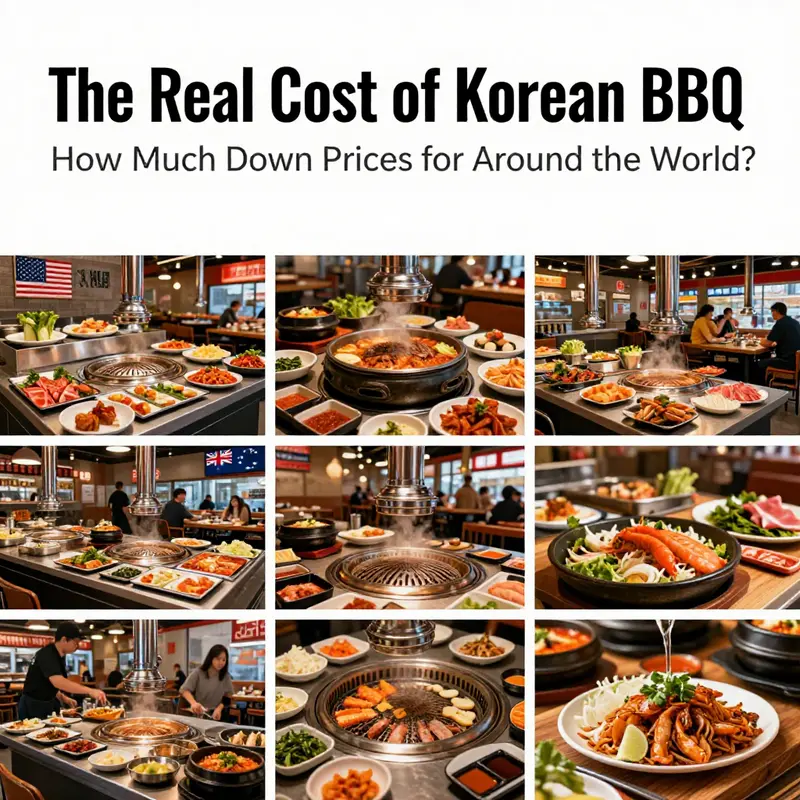
From Seoul to Your Street: How Much Korean BBQ Costs Worldwide and Why
Korean BBQ pricing is rarely a single number. It changes with geography, the cuts of meat on offer, the style of service, and local operating costs. A meal that feels like a mid-range outing in one city can be a special-occasion splurge in another. This chapter follows the logic behind those differences and gives practical guidance for what to expect when you sit down to grill, whether you are in the dish’s homeland or abroad.
In South Korea, Korean BBQ remains a central dining experience. A typical mid-range dinner for one, including marinated beef servings, rice, banchan and a drink, commonly falls between 20,000 and 30,000 KRW. Converted, that sits roughly in the $20 to $40 USD range per person. That price reflects both the dish’s cultural importance and rising costs for beef and dining out. Premium domestic beef, known for its high quality, drives prices up further. When restaurants feature those cuts, a single portion can push a meal into premium territory.
Move to major global cities and the math shifts. In places with higher rent, labor costs, and import fees, a comparable meal often lists between $35 and $75 per person. Cities with concentrated dining industries, like New York, London, Los Angeles or Tokyo, add premium to every ingredient and to the dining environment itself. When premium cuts are featured, or when the restaurant positions itself as a destination, expect higher per-person prices and smaller recommended portions.
All-you-can-eat or buffet-style Korean BBQ changes the calculus entirely. These formats are common outside Korea, especially in countries where large portions and variety appeal to diners. Lunch buffets often start near $19.99 USD in many U.S. outlets, with dinner shifting closer to $30.99 USD. In Australia, lunch buffets may begin around $19.90 AUD. Buffets trade off higher variety for lower per-unit meat cost. They appeal to groups and hungry diners, but they also often limit the most expensive cuts, reserving top-tier beef for premium plates or extra charges.
Several concrete forces explain these regional variations. First, meat quality and origin matter. Imported beef incurs shipping, tariffs, and storage costs. Domestic premium beef has a scarcity premium in its home market and a luxury markup abroad. Second, restaurant format affects price. High-end, chef-driven BBQ with table service and premium plating costs more than a casual counter or buffet model. Third, overheads such as rent, wages, and utilities vary wildly by city. A table in a downtown dining district will carry a different price tag than one in a suburban strip mall. Fourth, ancillary items influence the bill. Alcohol, side dishes beyond the included banchan, dips, and desserts can add substantially to the final check.
For diners who want to recreate the experience at home, equipment costs add another layer. A basic grill pan or small tabletop grill can be inexpensive. More advanced electric grills and built-in units cost more. The weighted average price across consumer grills sits around $75. Individual items range from tiny portable plates under $10 to commercial-grade grills that cost several hundred dollars. Home equipment reduces per-meal cost over time, especially for frequent hosts. But initial outlay, fuel, and ingredient sourcing still factor into whether at-home grilling saves money compared to dining out.
When planning a budget for Korean BBQ, consider three practical scenarios. First, the casual diner choosing pork or chicken and sharing a few plates should budget conservatively. In South Korea, this might still be in the $20-$30 range per person. Abroad, estimate $25-$45 depending on location. Second, the enthusiast who wants premium beef and beer should prepare for $40-$75 per person in many international cities. Third, groups choosing all-you-can-eat will often pay the most upfront but get volume value; for them, the $20-$35 lunch tier or $30-$50 dinner tier is common in several countries.
Value is not only a function of price. It depends on portions, cut quality, and extras. A mid-range meal with generous portions and many side dishes can represent better value than a pricier tasting menu with small portions. Look for clear menu notes on portion sizes and included side dishes. Ask whether meat is priced per portion or per order, and whether the restaurant charges by weight for premium cuts. If you want to control costs, opt for shared platters instead of multiple individual orders, and choose non-alcoholic drinks or a single shared bottle rather than individual cocktails.
Local variations also matter. Smaller cities and suburbs often have lower prices than cosmopolitan centers. Markets with strong local supply chains for pork or chicken tend to offer cheaper BBQ menus. Seasonal promotions and weekday lunch specials can reduce the cost substantially. In contrast, tourist-heavy districts and airport-adjacent locations usually carry a premium. If you travel for food, research neighborhoods away from the main tourist drag for better rates and more authentic offerings.
Groups should weigh fixed-fee options. Many restaurants offer packages or set menus priced by person. These simplify budgeting and often include a balance of meats and sides. Buffet-style places work well for diverse groups with varied tastes. If a friend group includes several heavy eaters, a buffet may deliver the best per-person value. For two or three people, ordering a selection of mid-priced cuts to share often provides better quality and a more relaxed experience.
Price trends have leaned upward in many markets. Rising global feed costs, supply chain pressures, and labor expenses have lifted meat costs. This contributes to what people sometimes call “beef inflation.” Restaurants adapt by changing portion sizes, altering menus, or raising prices. Keep an eye on menu updates and on social channels for special deals. If the menu lists price changes, check whether the change affects premium cuts first; those often shift before basic plates do.
Finally, consider the home route for cost control. Buying a basic grill and sourcing cuts directly from a butcher can lower per-person cost over repeated meals. But initial equipment investment and the time required for preparation matter. If you plan to host occasionally, factor the cost of utensils, ventilation, and cleaning into the total.
If you want to explore buffet-style options in a specific area, local listings often include complete details. For example, you can compare offerings and prices among regional all-you-can-eat venues to find the best fit for your budget and appetite by checking a local buffet guide.
For those who are shopping for grills and accessories, a current marketplace listing shows a wide range of Korean BBQ grills and related equipment. You can view options and current pricing at: https://www.alibaba.com/product-detail/Korean-Hot-Selling-Barrel-Chacoal-Grill-Mini-Charcoal-Oven_1600589979174.html?src=srp
Understanding how much Korean BBQ costs worldwide comes down to evaluating cut quality, restaurant style, local costs, and portioning. With those variables in mind, you can estimate a realistic budget for dining out or decide whether investing in at-home equipment makes sense for your taste and wallet. For a quick look at popular all-you-can-eat choices in one U.S. city, consider this local resource on all-you-can-eat Korean BBQ in Oakland: https://kogikoreanbbq.net/all-you-can-eat-korean-bbq-oakland/
Final thoughts
Understanding the pricing landscape of Korean BBQ—both locally in South Korea and internationally—is crucial for business owners in the hospitality industry. By recognizing the factors that influence costs, such as ingredient sourcing and dining formats, business owners can better position their offerings in the market. Whether you’re targeting local consumers or international tourists, knowing the competitive pricing landscape helps refine marketing strategies, optimize menu designs, and drive profitability. Don’t underestimate the impact of costs on customer satisfaction and business growth; stay informed about trends and adjust strategies accordingly.