
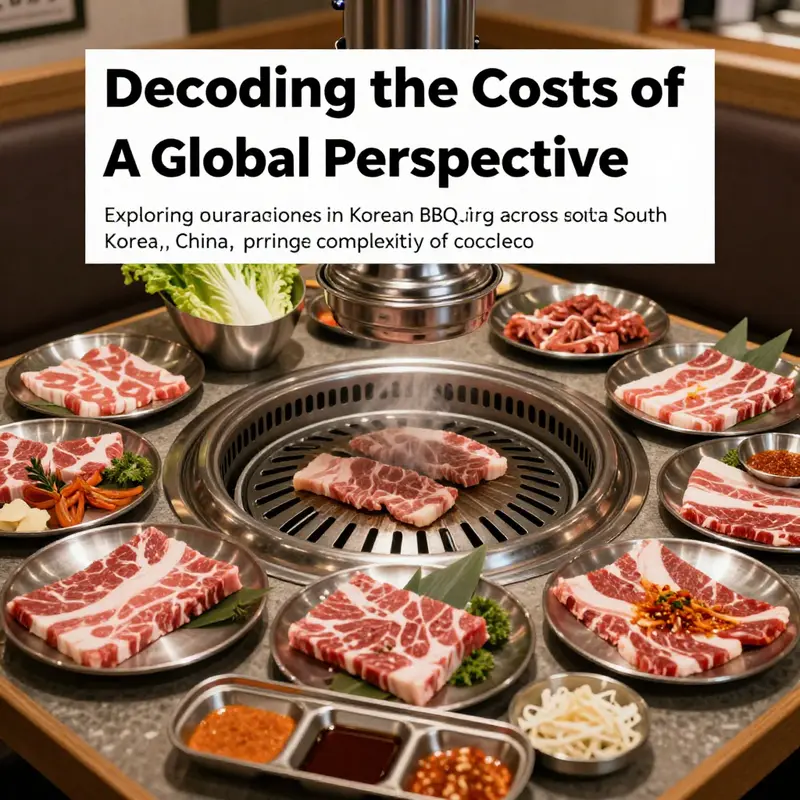
Korean BBQ has gained immense popularity worldwide, making it a hot topic for restaurant owners and potential investors. Understanding the costs per person for this engaging dining experience can impact menu pricing, customer expectations, and market positioning. In South Korea, the epicenter of Korean cuisine, costs can be steep, particularly for high-quality ingredients. In contrast, trends in China reflect a shift towards affordability amid changing consumer preferences. This article will unravel the pricing dynamics in these key regions, providing critical insights for business owners looking to optimize their Korean BBQ offerings.
Beyond the Sizzle: What Korean BBQ Really Costs Per Person in South Korea
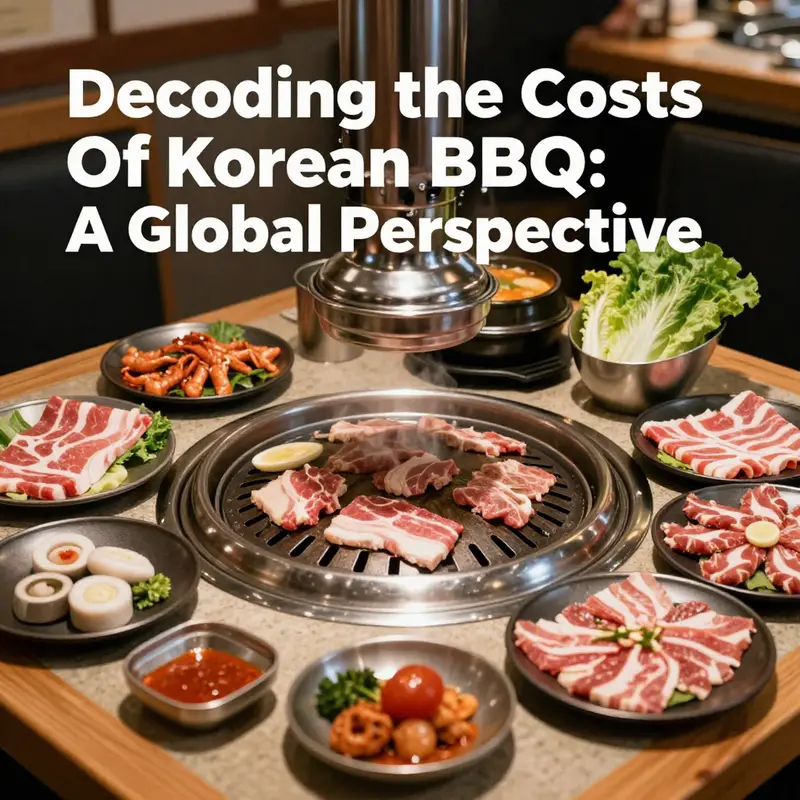
The first scent of a Korean BBQ meal is not just smoke and sesame oil, but the quiet arithmetic of the price tag that shadows the sizzle. In South Korea, where the practice of grilling at the table and sharing a spread of banchan is as much a cultural ritual as a meal, the per-person cost hides a spectrum of choices. The same scene can feel like a luxury in one district and a comfortable everyday habit in another. To understand what a typical person actually pays, you have to map more than the menu; you have to map location, restaurant type, the kind of meat you select, and whether the restaurant is selling a bundled experience or a precise, by-the-item bill.
Among the most telling figures are the all-you-can-eat (AYCE) setups. These places package the meats, sides, and rice into a single price for a time-limited session. In urban centers, AYCE prices for adults usually land somewhere around ₩11,000 to ₩19,500 per person. That range reflects a broad swath of offerings—from lean, economical cuts to more generous assortments and a faster turnover of tables. It’s a price band that invites a shared table to stretch a meal into a social event rather than a simple consumption moment. For younger guests, the cost is smaller but not dramatically so: toddlers, defined as those between 36 months up to before first grade, commonly pay around ₩8,000, while children in first through third grade are typically charged around ₩11,000. These child-friendly rates acknowledge the dining format’s fixed costs—grill upkeep, continuous supply of banchan, and the staff’s readiness to refresh sauces and sides throughout the meal.
Yet the per-person cost in reality piecemeals into more than those line items. Location matters enormously. In Seoul, where the density of diners keeps competition fierce and rents high, AYCE options skew toward higher price points, and the standard for “mid-to-high-end” experiences can translate into more premium meat choices and a more polished service style. In other districts or smaller towns, the same AYCE model can feel more casual and accessible, allowing a broader mix of families and groups to partake without the same level of financial anxiety that urban dining can entail. The urban-rural divide here mirrors many other dining segments in Korea: the same concept, different economic textures, and different expectations about what constitutes a reasonable meal out.
That spectrum reaches further into the restaurant type itself. A high-end grill house may price meals above the AYCE baseline to reflect premium ingredients, bigger portions of desirable cuts, and a more refined service environment. In such places, you might encounter Hanwoo or other favored beef varieties, which can command noticeable marks-up. Hanwoo, in particular, represents a notable line item for meat, priced by weight at a premium. It’s not unusual for premium sets to introduce a per-person cost that climbs into the upper range of the Seoul market, especially when accompanied by a carefully curated array of side dishes and sauces. The dining experience extends beyond the meat: the banchan can become a feature rather than a mere accompaniment, and cooks may present a more deliberate rotation of meat selections as part of a curated tasting approach. The result is a meal that feels more like an event than a routine supper, rightly deserving its higher price tag for those who value the added nuance of flavor, service, and presentation.
To translate these price bands into a more tangible sense of the budget, consider the broader data many travelers and locals consult. In the broader market, a typical affordable meal in South Korea now tends to fall somewhere around the 50–80 RMB per person mark when translated into Chinese currency, a reflection of how much the market has shifted toward value in some regions and segments. For travelers focusing on Seoul or similar metropolitan hubs, you’ll often see that a mid-to-high-end meal with several meat courses and shared sides can commonly land in the 110–150 RMB per person range, with upscale establishments pushing even higher, into the 200–300 RMB range for an elaborate set. Of course, these figures are currency translations that also reflect the exchange dynamics of the moment, but they illustrate the larger point: the gap between “cheap” and “worth it” is being defined by both ingredient quality and the overall dining experience as much as by the simple act of grilling at your own table.
The standpoint of locals also matters in assessing cost. While many foreigners chase the allure of premium cuts and curated menus, a portion of locals practices seasonal frugality, driven by the cost of meat and the desire to stretch every won. Reports from recent years and observers note that some households and individuals may limit meat portions or mix in more vegetables to balance the price. This behavior is not only about budgeting; it also reflects a broader cultural pattern of savoring many small tastes and textures from banchan and sauces, rather than concentrating the meal value in a single heavy meat course. Even within the AYCE format, thoughtful diners may pace themselves, choosing a rotation of different meats and sides, and deliberately pausing to weigh whether an additional meat portion is worth the incremental cost in the moment. In other words, cost per person is not simply a sticker price. It’s a decision framework—how much to grill, what to eat, and how long to linger over the meal with friends, family, or colleagues.
The dining ritual itself feeds back into the cost calculation. Korean BBQ is more than a set of items; it’s a communal experience where the grill is the center, and the table becomes a microcosm of social exchange. Banchan—those small, vibrant plates of kimchi, pickled vegetables, seasoned greens, and other delicacies—form a rotating chorus around the main course. The rice, sauces, and seasonings are not mere sides but tools for shaping flavor and texture across bites. In many cases, a well-chosen sauce lineup can add depth to leaner cuts, raising the perceived value of the meal without dramatically increasing the bill. That dynamic matters for budgeting: the price of meat is only part of the total, while the value of the overall sensory experience can keep the meal feeling generous even when the meat portions are moderate.
For travelers planning a visit, the practical path to pricing clarity lies in reliable, up-to-date sources. The Korea Tourism Organization (KTO) is one widely respected reference that aggregates current dining insights, including typical AYCE price ranges, local variations, and practical guidance for visitors. Checking official restaurant pages or reputable travel platforms can help calibrate expectations before you arrive. If you’re trying to map a budget to a day of exploration in Seoul or another major city, the KTO can serve as a baseline compass, guiding decisions about which neighborhoods favor more wallet-friendly options and where to allocate a larger share of the budget for a premium tasting experience. It’s a reminder that the price you pay is not simply a line item; it’s an informed choice about what kind of dining experience you want to have.
Within this framework, a per-person budget in Korea can be imagined as a spectrum rather than a fixed price. On the one end, an AYCE session in a modest venue can deliver a satisfying spread with room to sample a few meats and many sides for a price that keeps the evening comfortable. On the other end, a carefully staged, premium set with exclusive cuts, excellent service, and a refined atmosphere can offer a sense of luxury and a different flavor of value, one that emphasizes quality, curation, and atmosphere as components of the overall price. In urban Seoul, that contrast is most visible, with some meals feeling like a culinary indulgence and others offering a more accessible, family-friendly dining option that still celebrates the social ritual of grilling and sharing. The implied lesson for price-conscious diners is not simply to chase the lowest price but to align choice with the dining experience you want—whether that experience is casual, communal, and abundant or polished, intimate, and premium.
For those who want to anchor their expectations to a specific frame, it’s useful to translate the per-person costs into a practical planning approach. If you’re visiting with a group and aim for a balanced experience, you might opt for an AYCE option with a modest meat rotation. This typically yields a comfortable meal for the group without taxing the budget, and it allows you to enjoy the variety of banchan, which often carry a value that exceeds their small size at first glance. If you’re in a mood for a more curated tasting, you can allocate a portion of the budget to a premium selection, knowing you’ll enjoy a higher quality of meat per bite, a more attentive service routine, and a refined ambiance that elevates the whole evening. Either path respects the social fabric of Korean dining, where the value lies not solely in the meat you grill but in the shared conversation, the rhythm of passing dishes, and the moment when the grill becomes a stage for a memory with friends or family.
As you plan, keep in mind that beverages, desserts, and extras rarely come included in the base AYCE price. They are common add-ons that can shift the final per-person tally by a meaningful margin, especially in the more premium segments. It’s wise to ask about what is included and what isn’t before you sit down, so you can gauge whether the set you choose already includes drinks or whether you’ll be ordering water, tea, or something stronger to accompany the meal. And if you’re after a rough international comparison in the moment, remember the broader trend that a typical affordable bite somewhere around the world now sits in the neighborhood of fifty to eighty local currency units per person, with regional variations driven by the type of establishment, the ingredients on offer, and the dining format itself. In Korea, that translates to the nuanced price landscape described here: a spectrum from practical, family-friendly AYCE meals to more immersive, premium experiences, all anchored by the unique social ritual that Korean BBQ represents.
For travelers who want to validate the numbers before stepping into a restaurant, a practical approach is to check multiple sources, including the official tourism portal and local restaurant pages. In Seoul, you’ll often find that the range of options is broad enough to accommodate different budgets and dining goals while still preserving the shared essence of the meal. If you compare this with the broader international market, the contrast becomes even more instructive. In places outside Korea, you may encounter a comfortable range that still captures the essence of a Korean BBQ experience, though the exact price structure will reflect local costs, import duties on premium meats, and the intensity of competition among dining establishments. The key takeaway is that the per-person cost is not a fixed fee but a dynamic figure shaped by location, restaurant, and your choices about quantity and quality. The meat you select, the sides you savor, and the pace at which you grill will all influence the final tally, and that is precisely what makes Korean BBQ a meal with a memory as much as a meal with a price.
To further connect the experience with the broader landscape of dining in Asia and beyond, some readers might find it interesting to explore how these price dynamics compare with other markets where Korean BBQ is popular. In major Chinese cities, for example, the trend has shifted toward affordability and value, with many popular chains shrinking or adapting to changing consumer preferences. The end result in those markets often resembles the higher end of the Korean spectrum in Seoul, but with differences in the scale and speed of pricing adjustments. Meanwhile, in international hubs outside Asia, prices can be more variable still, influenced by local operating costs, supply chains, and the degree of authenticity a venue aspires to deliver. These patterns illuminate why, when you step into a Korean BBQ restaurant in Korea, you are not simply purchasing meat; you are purchasing a curated portion of a social ritual that carries with it a long tradition of sharing, conversation, and communal enjoyment. The cost, then, becomes a measure of the experience you choose to invest in.
For readers who want a reliable anchor as they plan a future meal, the most practical guidance remains to verify current pricing through reputable sources. The Korea Tourism Organization offers curated recommendations and cost estimates for visitors, helping travelers gauge what to expect in Seoul and other major cities. The key is to use these numbers as a baseline and then tailor your plan to your appetite for variety, quantity, and ambiance. Whether you go for a straightforward AYCE session or a more refined dining experience, the per-person price should reflect not only the meat on the grill but the overall enjoyment—the laughter at the table, the clinking of glasses, and the shared ritual that makes a Korean BBQ meal memorable. For updated dining insights, you can consult trusted sources such as the Korea Tourism Organization’s official site at https://www.korea.net/AboutKorea/Travel/TravelInfo, which offers curated recommendations and cost estimates to help travelers make informed decisions based on budget and preference. In the end, the price point becomes a personal choice about how to spend a night out, how to savor a culture, and how to join a tradition that makes every bite a little more meaningful.
In the broader arc of this chapter, the lesson is simple: Korean BBQ per person is a function of context. It’s not a single number but a spectrum of possibilities, driven by where you eat, what you order, and how you choose to experience the meal. The next steps for any reader are to map a plan that aligns with personal budgets and expectations, to consult current sources for the latest numbers, and to approach the grill with an openness to both flavor and conversation. If you’re curious about specific local variations or want to compare the Seoul experience with nearby cities, consider exploring the linked resource that reflects the global reach of these dining formats, and remember that the heart of Korean BBQ is, at its core, communal eating—the chance to share, laugh, and linger over a meal that is as much about people as it is about meat.
Internal link: For a comparative look at AYCE formats in a different market, see All-You-Can-Eat Korean BBQ San Mateo.
External resource: For updated dining insights and official guidance, visit The Korea Tourism Organization’s travel information page at https://www.korea.net/AboutKorea/Travel/TravelInfo
Markets at the Grill: How Per-Person Korean BBQ Pricing Shifts Across China and the World
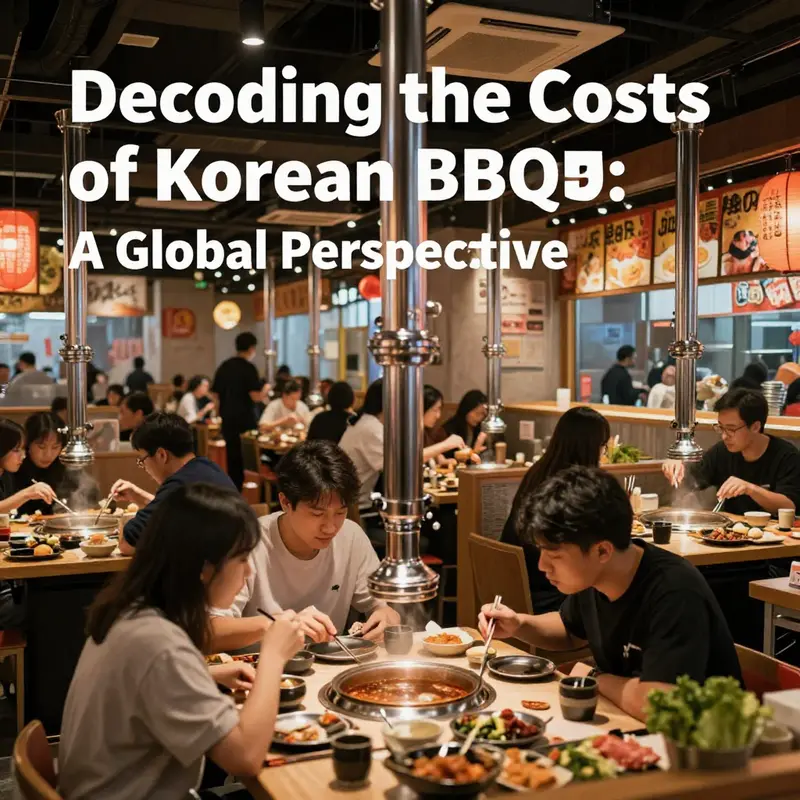
The question of how much Korean barbecue costs per person travels across borders the way smoky aroma travels through a crowded dining room: it lingers where the meat sizzles, it changes with the air, and it is never the same twice. When people ask, “How much is Korean BBQ per person?” they are really asking about a spectrum that stretches from careful local budgeting to premium dining, from bustling street-side grills to quiet, upscale sets where the meat arrives with a gleaming glaze and a whisper of steam. The simplest answer, price-wise, is that there is no single number. Instead, price per person reflects a blend of localization, menu format, ingredient quality, and the choreography of service. The same dish can drift from modest to high-end depending on where you stand and what you’re looking for in the moment. Yet across the global map there are discernible patterns, and those patterns tell a story about value, taste, and the economics of feeding more than one person at a time. In Seoul and other major cities in South Korea, the price story begins with quality and scarcity. The most prized beef options, such as Hanwoo, can command prices that feel steep when translated into other currencies. The most recent observations show premium cuts fetching around 13,500 Korean won per pound. That translates to roughly ten U.S. dollars per pound and around 71 Chinese yuan per pound in cross-currency terms. When you translate that into a complete meal at a mid-to-high-end restaurant, the per-person figure often lands in the realm of 110 to 150 Chinese yuan. Some upscale venues push beyond 300 yuan per person for a full set, a reflection not only of meat cost but of the entire dining experience—the service, the banchan (the small side dishes), the pace of grilling, and the ambience. It is also important to note that even within South Korea, there is a spectrum of practice: many locals, mindful of the cost, may opt for smaller portions or choose mid-range establishments rather than the most premium spots. The social dimension of dining in Korea, including how much meat is served and how it is priced in a high-cost urban environment, contributes to the overall sense that a “typical” Korean BBQ meal can be a substantial investment for a single person, especially at peak hours or in neighborhoods known for culinary prestige. The scene shifts when we look beyond Korea, especially toward China. The narrative there has taken a different turn in recent years. Rather than chasing luxury, the dining landscape in many Chinese cities has leaned toward affordability and value. The market dynamics have shifted as consumer preferences matured and costs rose, leading to the closure of some Korean BBQ chains that could not align with consumers’ willingness to pay. In major Chinese cities today, the typical meal per person ranges from roughly 35 to 60 yuan. The pricing here is not just about meat; it is about the entire package—the appetite of a hungry crowd, the reliability and efficiency of service, and the economics of a consumer base that seeks to balance indulgence with prudent budgeting. There are also deals that make it possible for three people to share a meal for around 100 yuan, a practical asseveration of the broader trend toward value and the emergence of more economical formats. In China, as in many other places, consumption patterns have evolved in ways that regulators, restaurateurs, and patrons increasingly track: price sensitivity rises as the cost of living tightens, and consumers often pursue meals that deliver more bang for the buck rather than the most extravagant experience alone. Moving farther afield, other international markets present a mosaic of pricing realities that can be surprising, even to seasoned travelers. In North America, the dispersion is wide but often less extreme than the high-end Seoul scene. Take New Jersey’s Korean Town as an example of a market where the per-person price can appear modest by comparison with Seoul’s premium tier. In that locale, the average price per person hovers around what Chinese readers would recognize as 35 yuan, a gauge that helps illustrate how exchange rates and local restaurant economics shape perceived value. The same dish in a different city can carry a markedly different price tag due to rent, labor, and supply chain realities, even when the underlying meat and technique are similar. In Hong Kong, where real estate, utilities, and wages tend to push costs upward, the per-person price for a comparable repertoire of cuts and accompanied dishes sits higher—around 125 yuan per person in some well-regarded venues. The contrast between a more budget-friendly approach in one global hub and a higher-fidelity, service-intensive setting in another underscores a broader truth: price is a function of place as much as plate. Taken together, these regional snapshots converge on a central, practical takeaway: a typical affordable Korean BBQ meal on a global scale now tends to land in a broad band, roughly between 50 and 80 yuan per person, with substantial regional variation rooted in the local economy, menu structure, and the branding of the dining concept. This range captures a wide swath of restaurant formats—from casual, all-you-can-eat establishments that emphasize volume to storefronts that offer a curated selection of premium cuts in a more measured, palate-focused setting. It is a spectrum rather than a fixed line, and it is shaped by a dynamic interplay of meat quality, portion sizing, service expectations, and the pace at which the grill is tended. Those forces are never static. In fact, the pricing narrative for Korean BBQ is a useful lens for understanding broader shifts in global dining. The per-person cost depends on a simple arithmetic of ingredients and labor, yet the outcomes depend on intangible factors—the perceived value of the experience, the social ritual of grilling at the table, and the way the meal is paced so that it feels generous without becoming wasteful. Consider how meat quality, marbling, and cut variety intersect with the format of the meal. An à la carte experience, where diners choose a precise set of meats and allow the portions to accumulate gradually, tends to align with a higher price per person when the venue emphasizes quality and sourcing. In contrast, an all-you-can-eat model often leans on the economics of volume—the ability to serve many small portions at a uniform price—where the perceived value is a function of abundance as much as the taste of any single piece. In contemplating these differences, it is useful to reflect on how travelers and locals alike navigate the budgeting question. For travelers, the guiding principle often becomes “set expectations before tasting,” recognizing that the best value may come from places that balance meat quality with efficient service. For locals, the decision may hinge on the occasion: a casual meal with friends, a family gathering, or a celebratory night out. The economic calculus in each case incorporates not only the sticker price per plate or per person, but also the added costs of beverages, the continuous refills of banchan, and the pace at which the grill is tended. In many markets, the availability of shared platters, combination sets, or limited-time promotions can tilt the affordability scale by offering larger portions at a marginally higher base price but with overall better cost-per-person totals. The social aspect of Korean BBQ—sharing, conversation, and the ritual of cooking together—can amplify perceived value, so the price tag is only part of the equation. For travelers and locals alike, the real value often lies in the choreography of the meal—the timing of the grill, the distribution of dipping sauces, and the sense that you’ve eaten enough without feeling overfull.\n\nOne of the more revealing takeaways from cross-market observation is how quickly a market can pivot toward value-focused offerings when costs rise or consumer sentiment shifts. In the Chinese market, the shift toward affordability has been pronounced in recent years, with chains closing and new formats emerging that explain value through sharing plates, smaller portions, or shorter menus that reduce waste. In other markets, price increases tend to be more gradual, buffered by the particularities of labor markets and food costs. Yet the same underlying principle persists: consumers seek a satisfying, social dining experience that aligns with their budget, and restaurateurs respond by calibrating portion sizes, menu breadth, and pricing strategies to meet evolving expectations. For those who want a data-driven frame, industry trackers and price databases always provide a benchmark, though they may lag real-time local changes. The current landscape suggests there is no universal price ceiling or floor for Korean BBQ per person; instead, there is a moving average that drifts with inflation, supply chain costs, and consumer demand in each city or country. The best approach for someone planning a visit or evaluating ongoing dining options is to set a personal budget across the expected formats in the target city, then to allow for variability by choosing places that balance meat quality with portion size and service. If you are traveling, a practical tactic is to pair your visit with a plan for several meals in a given area, so you can compare value across different formats—one night of an all-you-can-eat setup, another night of curated cuts with a fixed price, perhaps a third experience that emphasizes a social dining ritual rather than an extended meal. In each case, the idea is to maximize the overall satisfaction while keeping a realistic eye on per-person cost. The broader implication of these pricing dynamics is that Korean BBQ, far from being a monolith of expense, is a flexible dining category that adapts to place and purpose. The per-person cost is a mirror of how a market prioritizes quality, speed, and social experience, all within the constraints of local wages, real estate, and consumer willingness to pay. As more markets blend traditional grilling artistry with modern dining formats, the spectrum of price per person will continue to evolve. What remains constant is the social ritual: people gather around a table, share a grill, and allow smell, taste, and conversation to mingle with the price tag. In practical terms, this means that when planning a meal—whether for a casual weeknight out or a special occasion—the best lens is not a single price, but the combination of format, portion, and context that best fits your moment and your budget. For readers seeking a deeper connection to how menus translate into value, one practical touchstone is to explore menu formats that pair Korean BBQ with other culinary offerings. A glance at menu structures that combine barbecue with supplementary dishes can illuminate how restaurants justify price points while maintaining a perceived sense of abundance. In this broader framework, a well-designed menu may tilt toward value by offering curated selections that balance meat variety with a thoughtfully chosen set of banchan and sides—an approach that often yields a more favorable cost-per-person without compromising the dining experience. To explore a representative example that touches on the balance between meat choices and accompanying offerings, you can refer to the Korea BBQ and Sushi Menu page, which provides a window into how a mixed-format menu structures pricing and portions in a way that aligns with diverse consumer preferences. Korea BBQ and Sushi Menu. In closing, the question of “how much is Korean BBQ per person” becomes a study in localization as much as in taste. Across Seoul, across Chinese cities, and across international shores, the per-person price is a thread that knits together meat quality, portion strategy, service style, and the economics of city life. The midrange of 50–80 yuan per person offers a practical starting point for many travelers and residents, but the actual expense will always depend on the exact format you choose, the quality of meat you desire, and the level of immersion you seek in the dining ritual. By understanding the regional forces at play—the premium expectations in one market and the value-focused pragmatism in another—you can better navigate menus, compare options, and plan meals that maximize satisfaction without overstepping your budget. And as markets continue to evolve, that balance will keep shifting, offering new opportunities to discover how much flavor, social connection, and culinary craft can be enjoyed for a given price per person. External resource: for a broader, data-driven view of restaurant pricing trends that can supplement local observations, see Statista’s topics pages, which provide ongoing context about how consumer spending and menu pricing interact in dining sectors. External data: https://www.statista.com/topics/
Final thoughts
The pricing dynamics of Korean BBQ reveal significant regional differences that can affect business strategies. In South Korea, premium offerings command higher prices, while international markets, particularly in China, demand more cost-effective options. Business owners must adapt their menu and pricing strategies accordingly to meet consumer expectations and enhance profit margins. Staying informed about these trends can empower restaurateurs to make data-driven decisions that cater effectively to their target audiences.