
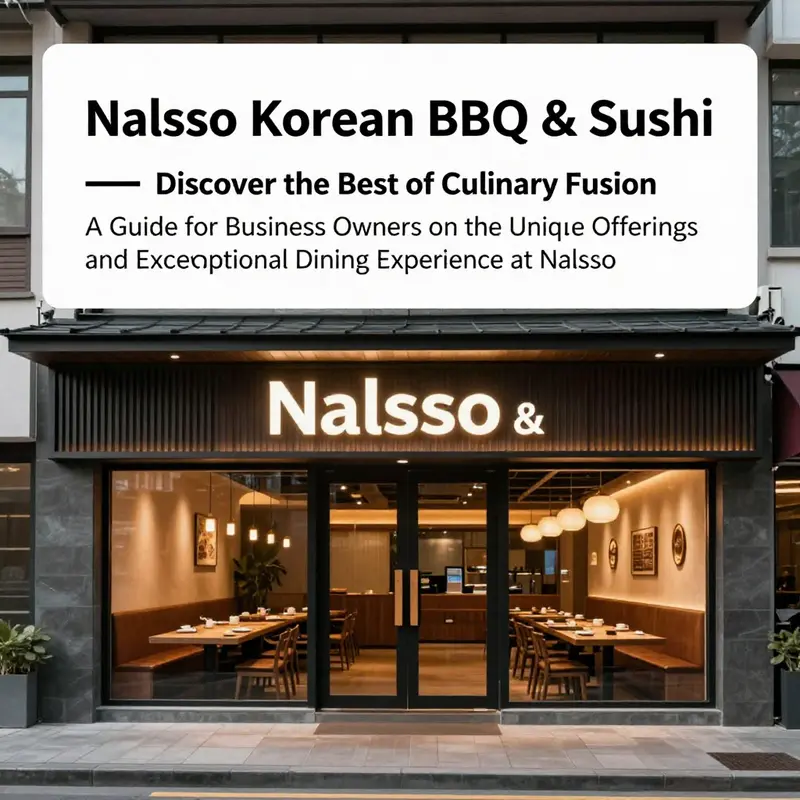
Nalsso Korean BBQ & Sushi is a culinary gem located in Las Vegas, combining the best elements of Korean BBQ and Japanese sushi. This restaurant not only boasts an impressive menu but also highlights a dining experience that attracts both locals and tourists alike. In this exploration, we will delve into the cultural fusion that Nalsso represents, followed by an evaluation of its dining experience that sets it apart as a top destination in Las Vegas. Understanding these elements can inspire business owners looking to enhance their own restaurant’s appeal and service.
Bridging Flames and Fin: A Culturally Infused Voyage Through Nalsso Korean BBQ & Sushi in Las Vegas
Las Vegas is a city built on spectacle, a landscape where culinary borders bend as easily as light at dusk. In this environment, a restaurant like Nalsso Korean BBQ & Sushi stands not merely as a place to eat but as a case study in contemporary fusion dining. Its name signals a promise of two traditions meeting at the intersection of fire and finesse, where the charcoal scent of Korean barbecue mingles with the precise, almost ceremonial craft of sushi making. It is not enough to call it a menu; it feels like a cultural negotiation, a conversation between two kitchens that have long existed on parallel tracks but never quite shared the same plate. The experience begins with the sense of place. Nalsso sits in the Chinatown corridor of Las Vegas, a neighborhood that has learned to celebrate ethnic diversity as a daily practice rather than an occasional trip. The address, 4480 W Spring Mountain Rd, Ste 300, places guests amid a cluster of eateries and markets that invite lingering exploration after a meal, a rhythm that suits a dining concept built around shared dishes, conversation, and the slow savoring of small details. The interior design mirrors the concept, presenting a vibrant, modern space where the energy of a bustling kitchen translates into a welcoming, communal atmosphere. Tables are arranged to encourage conversation and glances between the grill and the sushi counter, a subtle nudge that the meal is as much about the spectacle of cooking as it is about the final bite.
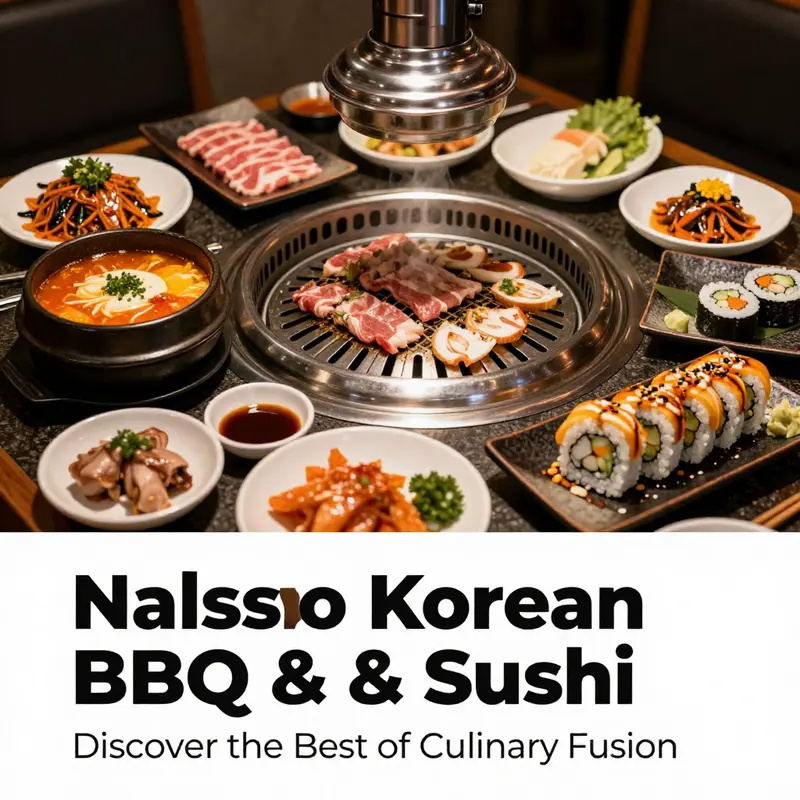
What makes the cuisine at Nalsso particularly compelling is its deliberate fusion of two distinct culinary languages. Korean barbecue, with its marinated meats and open flame, is a system of flavors built on boldness, a balance of sweet, savory, and sometimes smoky notes that invites interaction— diners control the pace of their cooking, searing, flipping, and tasting as they go. Sushi, by contrast, is a discipline of restraint and precision: the cut of the fish, the tempering of the rice, the breath of wasabi and soy that allows each ingredient to shine without shouting over the others. Nalsso does not pretend these traditions must remain separate. Instead, it choreographs them into a single, fluid course of dishes that acknowledge the value of both. The menu reads like a map of this interplay. One can begin with a selection of marinated beef and pork for the table, grilled to order at the center of the dining space, the sizzling sound a defining soundtrack to the first exchanges of conversation and appetite. The grill becomes a stage where guests watch the meats transform, the surface of the cast iron darkening with a glossy sheen, the aromas rising in waves that mingle with the more delicate scents of fresh sushi arriving from the kitchen.
Meanwhile, the sushi offerings provide a counterpoint to the hearth. An extensive assortment of rolls and sashimi showcases the care that goes into sourcing and preparing seafood, a reminder that in fusion cuisine, freshness remains the common thread tying diverse techniques together. The chefs bring a quiet authority to the sushi counter, an ownership of knife work and temperature control that reassures even first-time visitors that the restaurant values craft as much as spectacle. It is this dual commitment—to bold, social grilling and to refined, precise handcraft—that gives Nalsso its distinctive rhythm, a pace that invites lingering rather than hurried consumption. Diners find themselves sampling a lineage of flavors that speak to both comfort and curiosity. The marinated meats deliver a familiar, comforting profile with the glossy lacquer of sweet-soy and sesame, while the nigiri and rolls present a palate-pleasing change of pace, offering clean notes of oceanic brightness, the gentle tang of vinegared rice, and the occasional spark of heat from a carefully placed chili or a subtle drizzle of a citrusy glaze. The balance is not accidental but the result of a thoughtful menu design that anticipates how a table of friends or family might want to move through a meal: shared plates, then a return to individual favorites, then a final round of tasting that feels like a culmination rather than a conclusion.
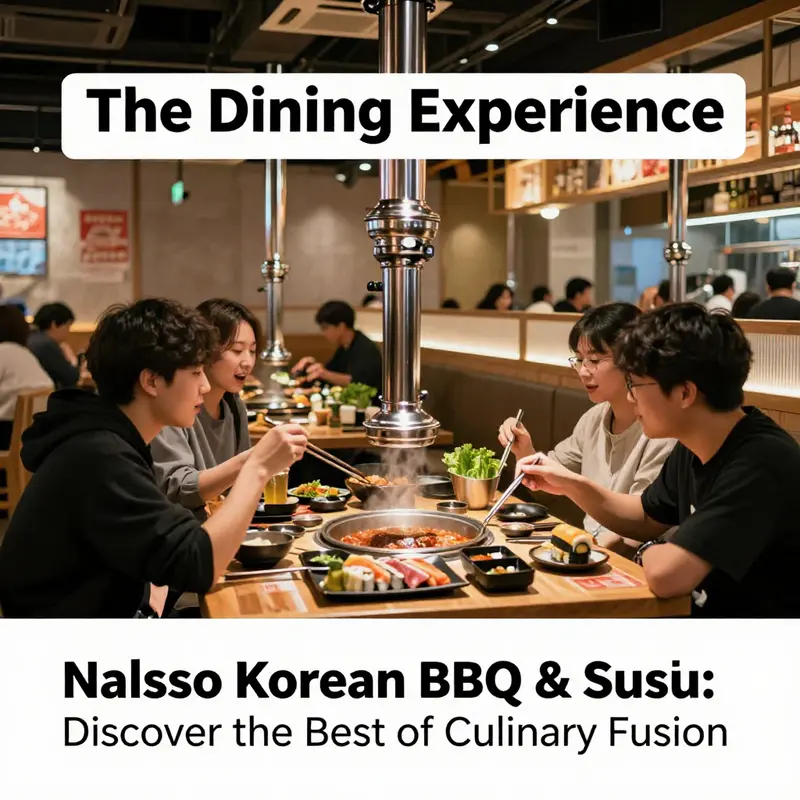
The dining experience at Nalsso also benefits from a high level of service that supports the fusion concept rather than distracting from it. Guests are greeted with warmth and efficiency, a familiarity that makes the room feel more like a culinary home than a formal venue. The staff manage the flow of courses with a confidence born of experience, ensuring that grill time and kitchen timing align so the sizzling entrées and the soft, precise textures of sushi arrive in a complementary cadence. In a setting that invites interaction, service becomes a bridge rather than a barrier—the kind of professional attentiveness that leaves diners free to focus on savoring, discussing, and discovering how the two cuisines converse through each plate. A table’s shared experience—watching meat sear on the grill, then turning to a delicate bite of sashimi—is a microcosm of cultural exchange in a city that has long thrived on rapid, varied experiences. The social element is amplified by the environment itself: a lively, energetic space that remains welcoming, with lighting that flattens the sharp edges of evening fatigue and textures that absorb sound enough to keep conversations intimate within the larger bustle.
Beyond the sensory details of flavor, aroma, and ambiance, there is a larger narrative at play. Fusion dining, at its best, does not erase tradition; it translates it into a new context that makes both cuisines legible to a broader audience. In this sense, Nalsso is an exemplar of how regional cuisines can meet in a contemporary metropolitan setting and still retain the integrity of their origins. The Korean barbecue introduced guests to the ritual of cooking at the table, a communal practice that invites collaboration, conversation, and shared appetite. The sushi counter, with its precise cuts and the careful balance of flavors, provides a counterweight—an insistence on technique, discipline, and restraint that honors the discipline of Japanese culinary craft. The combination becomes more than the sum of its parts. It offers a storytelling medium: a narrative about how cultures learn from one another when given a platform that respects both the heat of tradition and the cool of modern interpretation.
The restaurant’s reputation in Las Vegas reflects this narrative. A Google rating of 4.8 indicates a broad endorsement from guests who have sought out not just a meal but an experience. Such ratings often arise from a convergence of factors—the quality and consistency of the food, the attentiveness of service, and the overall atmosphere that makes a meal feel like a complete event rather than a routine stop. In the case of Nalsso, diners repeatedly emphasize the sense that they are part of a culinary experiment that has found its footing in a city famous for experiments in flavor. This social proof matters, not simply as a marketing footnote, but as a reflection of a dining room that has learned to balance boldness with approachability. Guests frequently come from a range of backgrounds, drawn by the promise of familiar anchors—well-prepared meat, fresh sushi, and a lively dining room—while allowing themselves the curiosity to try a dish they might not order at a traditional Korean barbecue joint or a conventional sushi bar alone.
All of these elements—location, ambiance, menu architecture, and service philosophy—converge to make Nalsso more than a place to eat. It becomes a planned encounter with cultural conversation. The experience invites diners to consider the possibility that culinary borders can be permeable without losing identity. It asks guests to reflect on how a single meal can carry echoes of distant kitchens while still presenting a unified, contemporary taste. The result is a dining moment in which the act of cooking at the table, the artistry of sushi, and the rhythms of a social meal harmonize. In a city where novelty can be both currency and expectation, the restaurant’s approach offers a thoughtful alternative: not merely to push flavor boundaries but to invite guests to participate in the making of a memory that feels both intimate and expansive.
For those planning a visit, practical details matter as much as taste. The Las Vegas Chinatown locale makes it feasible to pair a meal with an evening stroll through nearby markets or a casual dessert at a nearby cafe, extending the cultural and sensory experience beyond the dining room. If timing is a factor, the hours—from late morning through the early hours of the night—accommodate both midday meals and post-show celebrations, reflecting a strategy that recognizes the city’s round-the-clock tempo. Reservations by phone are recommended to secure a seat in a space that can feel intimate when the room fills, yet generous enough for larger groups to feel at ease. The address and the warm, contemporary interior together create a sense of arrival that primes the palate for what is to follow. The menu’s dual emphasis on grilled meats and fresh sushi supports a flexible dining plan, allowing guests to opt for a social, shared round at the table or a more structured, course-by-course progression that feels like a curated tasting.
As a narrative centerpiece within the broader article about fusion dining, this Las Vegas chapter traces a path from tradition to contemporary practice. It shows how an establishment can honor two culinary lineages while building a signature that is unmistakably its own. In the end, what stays with the guest is less the exact combination of dishes than the sense of discovery—the moment when a bite of marinated beef gives way to a delicate piece of nigiri, and the palate realizes that the two experiences have not collided, but rather harmonized. The fusion is not a gimmick but a language: a vocabulary formed through careful technique, thoughtful sourcing, and a shared understanding of how food can tell a story across boundaries.
For readers who want to explore this culinary conversation further beyond the plate, there is a clear thread that connects the idea of fusion dining to other neighborhoods where cultural exchange is a daily practice. The Las Vegas Chinatown scene, in particular, offers a strategic lens to consider how a city’s migrant stories reemerge in the kitchens and dining rooms that welcome them. The careful balance between a sense of home and a sense of adventure becomes the restaurant’s own narrative device, one that encourages visitors to reflect on the ways in which food can be a bridge, not a barrier. This is the essence of what makes the Nalsso experience worth savoring: a deliberate, well-tuned invitation to witness two kitchens speaking in the same dining room, sharing the same table, and ultimately inviting guests to taste the dialogue in real time.
Internal link: Korean BBQ in Las Vegas Chinatown. This link provides a broader sense of the neighborhood’s barbecue culture and situates Nalsso within a larger spectrum of nearby options, inviting curious readers to explore how the region’s culinary ecosystem has evolved in recent years.
External resource: For a current snapshot of the dining room, hours, and guest feedback, see the Google Maps profile here: https://www.google.com/maps/place/Nalsso+Korean+BBQ+%26+Sushi/@36.159795,-115.274934,15z/data=!4m2!3m1!1s0x80c9b7a5e1f4d7c5:0x65519767a57d45b2?sa=X&ved=2ahUKEwjJvYjy6IiIAxV3XHwCHZPpFt8CChDAAzABegQIBhAB
null
null
Final thoughts
Nalsso Korean BBQ & Sushi exemplifies the beauty of culinary fusion, bringing together the rich flavors of Korean BBQ with the delicate artistry of Japanese sushi. This blend not only draws patrons looking for a unique dining experience but also creates an appealing model for business owners seeking to innovate within their own establishments. By embracing the essence of multiple culinary traditions, as seen in Nalsso, owners can inspire both creativity and customer loyalty. A visit to this Las Vegas hotspot offers more than just a meal; it provides a cultural adventure that resonates with the growing demand for diverse dining options.