
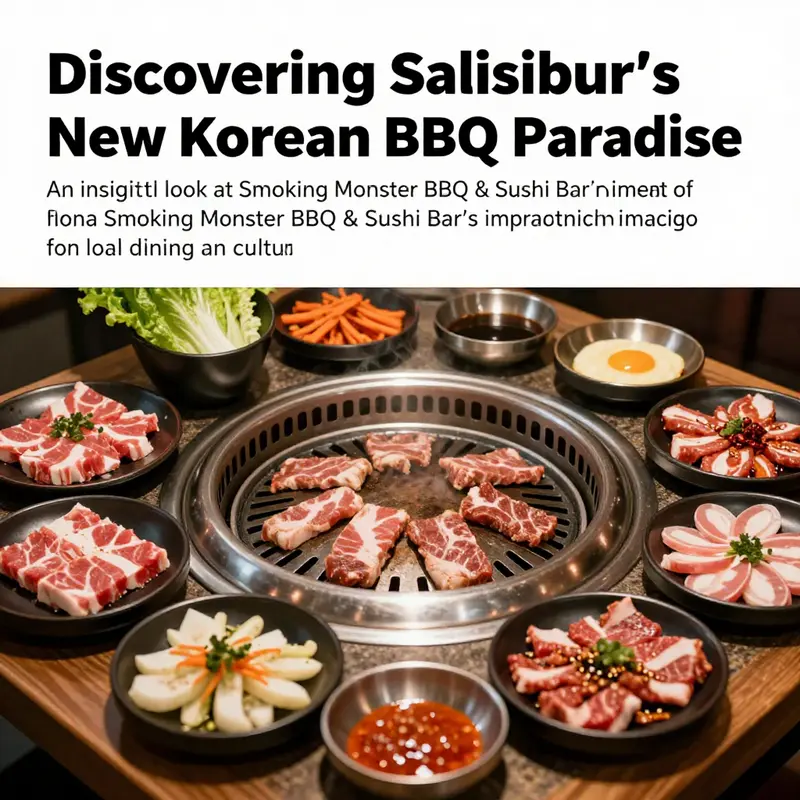
In recent years, Korean BBQ has carved an undeniable niche within American restaurant culture, seamlessly blending traditional flavors with modern twists. This trend has now made significant inroads into Salisbury, MD, with the arrival of Smoking Monster BBQ & Sushi Bar—the area’s first and only authentic Korean BBQ establishment. This article aims to explore how Smoking Monster is shaping the local dining landscape, beginning with its unique culinary offerings, then delving into the fusion of Korean and Japanese cuisine, and finally examining the broader Korean BBQ scene in Salisbury and its reception among the community.
null
null
Flame, Rice, and Rolling Seas: A Fusion Frontier in Salisbury’s Korean BBQ and Sushi Scene
In Salisbury, Maryland, a new dining concept has quietly begun to rewrite how locals think about a night out. It arrived not as a distant trend but as a bold, tangible experience that fuses the interactive drama of barbecue with the refined precision of sushi. The room pulses with a sense of scavenged spice and bright energy, a place where the clink of plates meets the sizzle of meat meeting flame. This is more than a meal; it is a shared ritual that invites guests to participate, to coax flavor from a raw piece of meat by turning a knob and watching it transform before their eyes. The promise is straightforward and ambitious: two beloved culinary traditions, one table, and a conversation that lingers long after the last bite. It is a city’s first dedicated Korean barbecue concept, delivered with a contemporary touch that respects the past while inviting experimentation in real time.
What makes this concept compelling is the way it reframes the dining experience. Rather than passively consuming, guests become co-creators of their flavors, choosing from a range of premium meats and letting the tabletop grill do the work of searing, caramelizing, and locking in aroma. The aroma itself becomes a guide, a thread that leads conversations about texture and balance. You might begin with a lean slice that blooms with a kiss of heat, then switch to something fattier that holds smoke and oil in a glossy sheen. The interaction is intimate and playful, yet grounded in the craft of careful heat management and timing. A well-tuned kitchen backs this theater with marination that respects the meat’s own character, using traditional techniques that emphasize harmony rather than overpowering sweetness or salt.
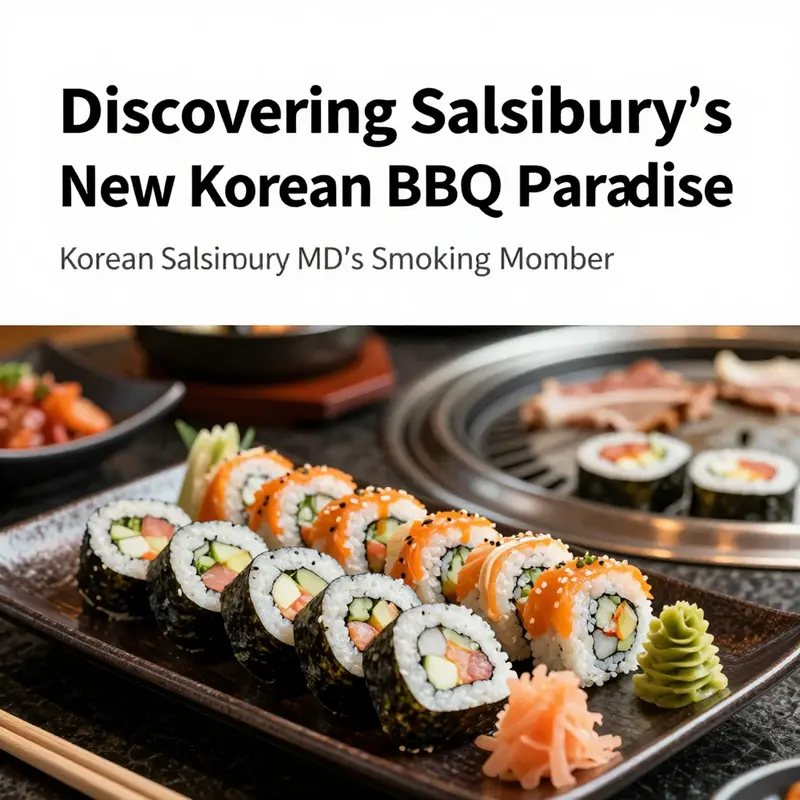
Alongside the grill, a sushi counter offers a counterpoint to the meat-focused theater. Here, chefs roll and plate with a precision that speaks to Japanese technique while embracing Korean-inspired flavor profiles. Sushi, in this setting, becomes a bridge rather than a destination, a reminder that both cuisines share a love of balance, texture, and umami. The result is not a hybrid gimmick but a considerate pairing: crisp rice, clean fish, and a careful chorus of seasonings that lift, rather than eclipse, the ingredients’ natural virtues. The sushi offerings serve as a lighter counterpoint to the grilled richness, inviting diners to oscillate between the intensity of flame and the calm clarity of a bite with delicate tang and finish.
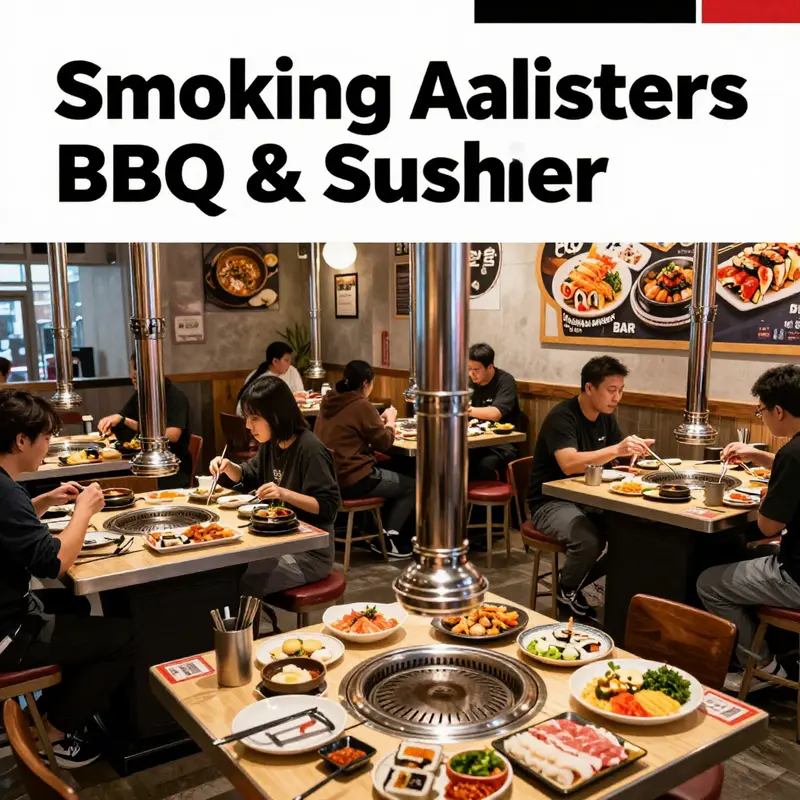
The dining room itself mirrors this blend of energy and restraint. Modern lines meet warm wood tones, and the layout encourages conversation across tables as friends and family pass small dishes back and forth. Small plates and banchan—traditional Korean side dishes that accompany meals—arrive in a rotating procession. While the exact lineup can shift with the seasons, the spirit remains constant: bright, fermented, and adventurous flavors that cleanse the palate between richer bites. The banchan set the table not just with flavor but with rhythm, a reminder that every dining moment can be a small performance: a chorus of textures that includes crunch, bite, and something tangy to reset the senses.
What visitors notice quickly is the accessibility of the concept. It invites curious eaters who are exploring new flavor horizons and veteran fans who crave a familiar sense of communal dining. The interactive grill lowers the barrier between kitchen and table, turning cooking into a social activity and letting diners assess doneness and savor. This is not a one-note experience but a menu of choices that respects appetite, pacing, and the joy of sharing. Even the sushi counter, with its array of rolls and nigiri, is approached with a mindset of inclusivity. Techniques from one culinary tradition meet ingredients that sing in another, producing combinations that feel both comforting and refreshing at once. It’s a reminder that Seoul’s love of bold, clean flavors can coexist with Tokyo’s reverence for precise presentation, all within a single, lively space.
The broader local impact is worth noting. Salisbury has long celebrated seafood and regional comforts, but the emergence of a dedicated Korean barbecue concept marks a moment of culinary expansion. It signals a community open to experimentation, where new ideas can take root without displacing cherished favorites. The buzz around this development has grown quickly, propelled by word of mouth, social media chatter, and local coverage that recognizes the venue as a fresh centerpiece on the dining map. For many residents, the concept has become a point of pride—a sign that the city is embracing a wider spectrum of flavors while preserving the warmth and accessibility that define its dining culture. For visitors, it offers a compelling reason to linger, to compare the experience with other barbecue or sushi-focused destinations, and to consider Salisbury as a day-trip culinary destination rather than a mere stopover.
The fusion logic at work here rests on a simple, persuasive premise: two beloved cuisines can teach and elevate one another when given space to breathe. The grill’s flame liberates fat and nuance, coaxing sweetness and char in ways that a sushi-only night might not achieve. The sushi bar, with its crisp precision, tempers that heat, offering brighter acidity and a different kind of textural pleasure. Diners can move through courses with a dynamic rhythm—grill, bite, roll, savor—creating a dining arc that feels both intimate and expansive. The social aspects of the format reinforce this arc. Sharing plates becomes a form of storytelling, each person contributing a small clause to the evening’s evolving narrative. The communal approach to dining—whether near, far, young, or old—does more than feed bodies. It fosters connection, curiosity, and a sense of discovery that lingers beyond the last plate.
For those who want to explore how two distinct culinary traditions can be merged into a single, coherent experience, there is a pathway that echoes this chapter’s themes. You can read about the concept that blends sushi and Korean flavors in more detail here: All-You-Can-Eat Sushi and Korean BBQ. This resource offers a fuller sense of how such dual setups can function, from the rhythm of service to the balance of flavors that makes the pairing feel natural rather than forced. The linked piece helps map the underlying logic of fusion concepts that celebrate both comfort and novelty without sacrificing quality or hospitality.
As this Salisbury chapter unfolds, it invites a broader reflection on what it means to eat boldly in a smaller city. The arrival of a concept that treats Korean barbecue and sushi as complementary voices in a shared conversation marks more than a trend; it signals a shift in how communities can approach dining as an experience that blends performance, craft, and conviviality. The space encourages guests to experiment, to laugh at imperfect sears, and to savor the moment when tender meat meets a glossy finish and a roll that offers just the right kiss of spice. It is a reminder that food, at its best, is not only about sustenance but also about the stories we tell while gathering around a table, the way we cheer for a well-seared crust, and the way a carefully composed bite can transport us to distant kitchens without leaving our city behind.
For travelers seeking a two-cuisine evening in one place, the Salisbury concept offers a robust blueprint: a clear emphasis on interaction, a balance between bold heat and refined technique, and a menu that invites sharing without demanding compromise. It respects the integrity of each tradition while allowing them to converse in a common language of flavor and texture. It is, in every sense, a culinary invitation to explore what happens when a city seizes the moment to try something new, while still honoring the comfort of familiar favorites.
External reference: MapQuest location reference for the Salisbury site. https://www.mapquest.com/maps/map.adp?address=1530+Hartman+St,+Salisbury,+MD+21804&ll=38.347697,-75.636989&spn=0.01,0.01
Sizzling Signals: How Salisbury, MD Is Carving an Authentic Korean BBQ Niche on the East Coast
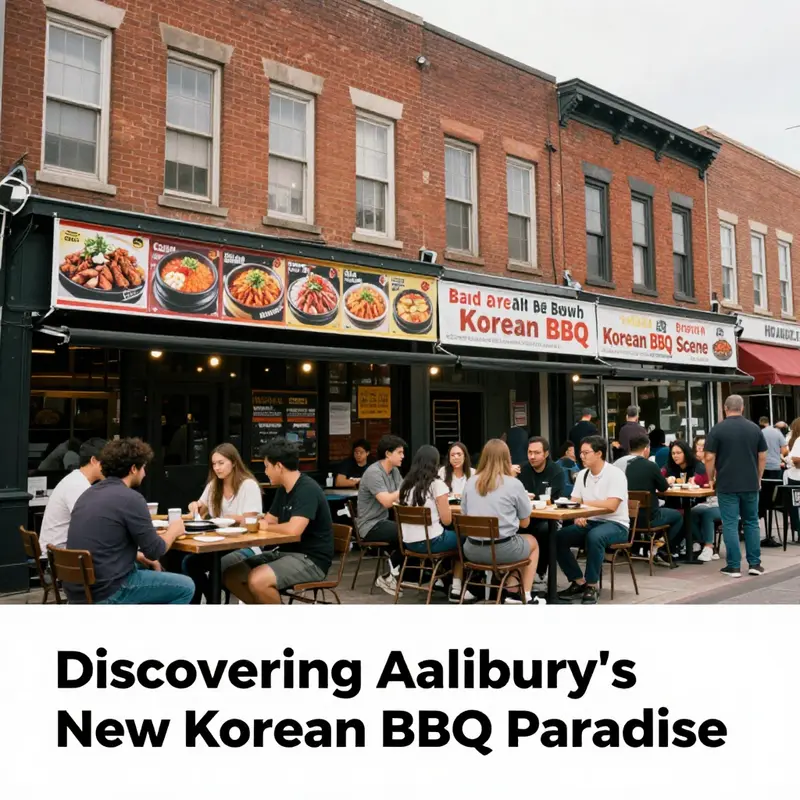
In Salisbury, Maryland, a new heat signature began to rise in the dining landscape when Smoking Monster BBQ & Sushi Bar opened its doors in early 2025. What started as a local buzz about a bold take on Korean BBQ quickly grew into a defining moment for the city’s food scene. The restaurant arrived with a promise of authenticity, then delivered a vivid experience that blended traditional Korean grilling with a dash of sushi vibes and Korean-inspired heat. The energy in that room was unmistakable: the sizzling of marinades meeting the searing of metal, the clatter of chopsticks, and the cheerful chorus of tables learning to share more than meals. It wasn’t just about meat under a flame. It was about a cultural exchange happening over a table where everyone could partake in banchan, bisected conversations, and the rhythmic crackle of charcoal and gas burners. The result was immediate and tangible: Salisbury gained a new social hub, a place where flavor, technique, and showmanship coexist with community conversations about food, family, and the evolving East Coast pantry of Korean cuisine. The restaurant quickly earned a reputation for authenticity and energy, and it did so in a way that resonated with locals who value bold flavors, generous portions, and a dining atmosphere that invites participation rather than passive consumption.
Beyond its bold concept, Smoking Monster BBQ & Sushi Bar distinguished itself through a deft fusion approach. While rooted in traditional Korean barbecue, the menu ventured into sushi-infused territory and spice-forward dishes that drew in a broader crowd. This hybrid model—honoring technique while embracing cross-cultural touches—captured the imaginations of Salisbury’s diners on TikTok and beyond. The platform’s short-form videos showcased the way meat sizzles on a tabletop grill, the chef’s precise timing, and the communal vibe of a table full of friends and families. The combination of spectacle and substance helped the restaurant become not just a place to eat, but a destination that sparked conversations about what rings true in a modern, diverse culinary city.
As the city’s appetite for Korean BBQ grew, a second player emerged on the scene with a different flavor profile but a shared dedication to an immersive experience. K-Pot became known for its all-you-can-eat Korean BBQ concept, with a West Coast-inspired flair that emphasized generous portions and a lively dining environment. Social media content around K-Pot—especially TikTok clips that pull back the curtain on kitchen operations, sizzling meats, and the playful bento-box presentations—helped solidify Salisbury’s status as a place where Korean barbecue is not a niche indulgence but a staple of communal dining. In this ecosystem, both Smoke Monster and K-Pot contributed to a larger narrative about how Salisbury is approaching Korean cuisine: not as a static menu item but as a living tradition that evolves with table-side rituals, modern presentation, and social storytelling.
The rise of these venues aligns with a broader dining trend toward experiential eating. Diners today often look for more than a flavorful bite; they seek a moment—an event—where a tabletop grill becomes a stage for shared meals and a forum for culinary discovery. In Salisbury, this means a dining room where the grill is the focal point and where banchan—those small, abundant side dishes—appear in endless variety. The philosophy mirrors the larger East Coast appetite for authenticity paired with abundance, a sentiment that local diners recognize from New York-adjacent Korean barbecue flavors but are now experiencing in a distinctly Salisbury voice. The city’s patrons gravitate toward not just high-quality meat, but the entire ritual: the ordering flow, the careful marination, the careful choreography of the grill, and the way a plate transitions from raw ingredient to communal feast.
This urban, table-centric approach to Korean BBQ has also spilled over into how Salisbury residents think about cooking at home. Viral TikTok videos have fed a growing curiosity about home techniques, encouraging enthusiasts to try DIY methods, experiment with marinades, and imagine a mini-grill in their own kitchens or on a balcony. The rise of home-style Korean BBQ content—think DIY ideas and quick, practical demonstrations—signals a broader cultural engagement with Korean flavors beyond the dining room. It’s a shift from simply consuming meals to adopting a kitchen philosophy: the idea that the sizzle and the science of a well-marinated piece of meat can be replicated, celebrated, and shared in everyday life. In a city so attuned to community storytelling, that DIY impulse becomes another thread that ties people back to how Salisbury experiences food together.
Within this evolving scene, the reception has been notably positive and rapidly amplified by online reviews and local media coverage. Recent rankings place Smoking Monster BBQ & Sushi Bar at the top among Salisbury’s Korean BBQ options, a distinction that reflects both its fresh arrival and its ability to deliver consistently bold flavors with a stylish, energetic dining atmosphere. The restaurant’s positioning as the city’s leading Korean BBQ destination—at least as of the latest updates from 2026—speaks to a broader appetite for immersive, culturally resonant dining experiences that celebrate regional pride while embracing global influences. Other venues in the area, such as the all-you-can-eat concept offered by K-Pot, contribute to a diverse ecosystem that satisfies varied preferences—from endless meat feasts to more curated tasting lines. In this environment, Salisbury’s Korean BBQ narrative is less about a single icon and more about a growing culture of shared meals, where every grill session becomes a conversation starter and every table a small stage for culinary storytelling.
The city’s Korean BBQ moment is, in short, a compelling blend of authenticity, innovation, and community energy. It’s a scene that invites curiosity without sacrificing depth, a combination that resonates with a broader American appetite for cuisines that are both rooted and adventurous. The practical takeaway for a visitor is straightforward: in Salisbury, plan for an evening that centers on conversation and accompaniments as much as the main courses. The footprint of these restaurants—where neighbors become dining companions over sizzling meat and a profusion of banchan—offers a snapshot of how a regional city can redefine a national food trend. For anyone tracing the growth of Korean flavors on the East Coast, Salisbury’s current chapter serves as a vivid reminder that authenticity can coexist with bold experimentation, and that a city’s identity can expand rapidly when food becomes a shared ritual rather than a solitary indulgence.
As the scene continues to mature, curious readers may explore related narratives in nearby markets and online discussions. For those who want to see the broader dialogue about Korean BBQ in similar urban contexts, a useful reference point can be found in other markets that have developed comparable dynamics, such as Korean BBQ in Moreno Valley, which offers a familiar model of a community embracing a hybrid, all-encompassing dining concept. Mcuration and cross-market learning become part of Salisbury’s ongoing story, enriching local pride while inviting visitors to compare regional flavors and dining rituals. To explore that remote but thematically connected path, you can follow the discussion linked here: Korean BBQ in Moreno Valley.
The Salisbury chapter of Korean BBQ is still writing its most important lines, with feedback loops that include diners, critics, and social media alike. The city’s embrace of the format—paired with a commitment to hospitality, an open kitchen ethos, and a willingness to experiment—points to a future where Salisbury remains a notable East Coast gateway for Korean barbecue. The ongoing dialogue between live dining energy and at-home experimentation promises to keep the local conversation vibrant, ensuring that the sizzle you hear in the restaurant may well echo in kitchens and online feeds long after the grill cools. For readers who want to see the living, breathing energy of Salisbury’s newest Korean BBQ gem in action, a recent social snapshot from a local reviewer makes a fitting, illustrative companion piece to this chapter. External resource: https://www.tiktok.com/@salisburysfoodie/video/741234567890123456
Final thoughts
Smoking Monster BBQ & Sushi Bar represents an important milestone in Salisbury’s culinary journey, bridging cultural gaps and enhancing the local food scene. By combining the richness of Korean BBQ with the delicate flavors of sushi, this restaurant not only caters to diverse tastes but also reinforces the growing demand for authentic and varied dining experiences. As Salisbury embraces this new culinary gem, one can expect a ripple effect throughout the restaurant industry, encouraging more exploration within the realm of global cuisines.