
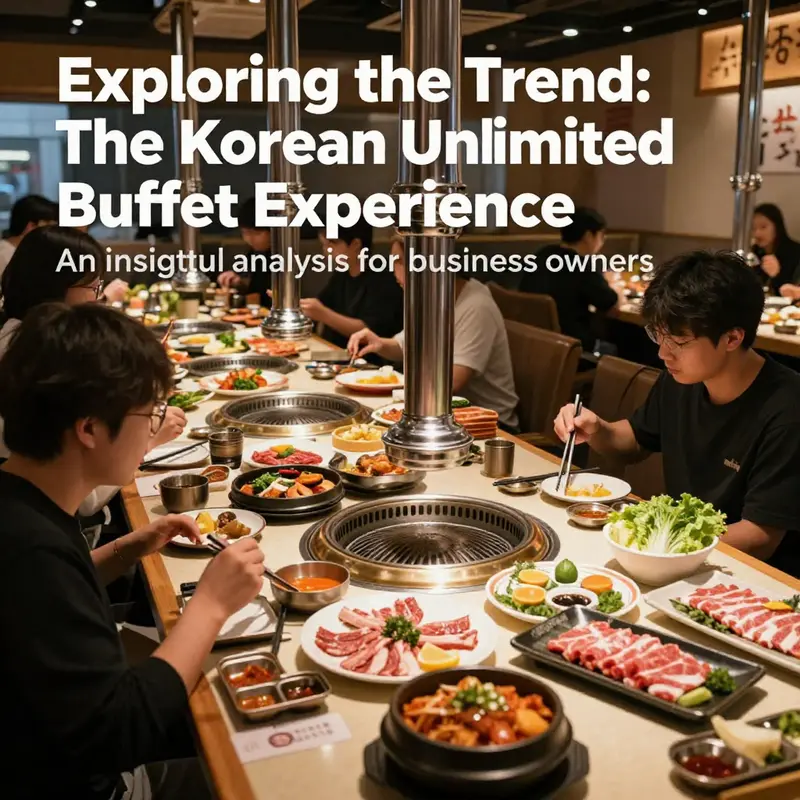
The rise of Korean unlimited buffets is revolutionizing dining experiences, combining a communal atmosphere with culinary variety. This format presents unique opportunities for business owners looking to tap into a lucrative market. In this article, we will delve into the multifaceted experience of dining at a Korean unlimited buffet, highlighting the diverse culinary options available, and examining the economic implications for restaurant owners in this growing industry.
Grill, Gather, and Savor: The Immersive Experience of Korean Unlimited Buffet Dining
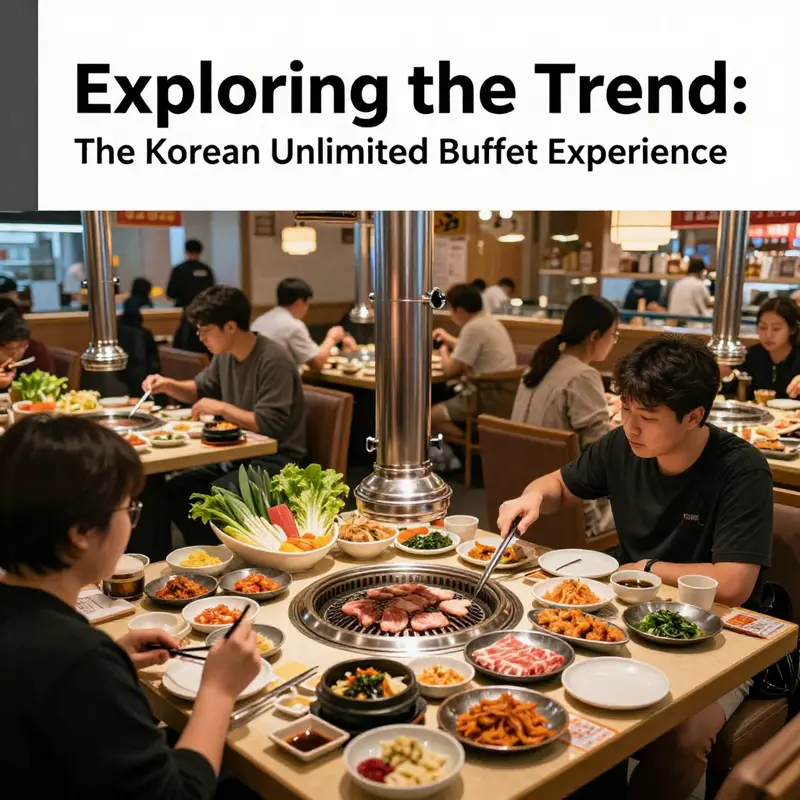
Walking into a Korean unlimited buffet feels like stepping onto a stage where steam, sizzle, and color perform in front of a constantly shifting audience. The air carries the scent of sesame, garlic, and marinated meat, mingling with the bright chatter of groups planning their next move. At the table, a grill waits, its surface already warm enough to wake the first slices of meat into tiny curls of smoke. Diners move with a comfortable rhythm: a plate filled with vegetables and rice, a tray of raw meats chosen with care, and a companion who tastes first before passing judgment on the tenderness of beef or the snap of a well-seared pork. This is not merely eating; it is a shared ritual where the act of cooking becomes a social language, and food becomes memory in the making.
What makes the experience stand apart is how value and variety negotiate with each other in real time. The concept of all-you-can-eat is not simply about quantity; it shapes a pacing that invites conversation, experimentation, and discovery. Diners learn to balance portions, timing, and heat. A thin slice of brisk marbling for the first round can be followed by a leaner cut after the palate has warmed to the grill’s rhythm. Sauces and condiments are not afterthoughts but partners in the meal. A line of tiny bowls offers options—garlic, sesame oil, a touch of chili, a smear of bean paste—so that a single bite can shift from mild to bold without leaving the table. Even the vegetables, crisp and bright, become a counterpoint to the smoky richness of meat, allowing balance rather than excess to shape the experience.
Beyond the grill, the buffet is a cabinet of curiosities. There are stacks of banchan—small kimchi, seasoned greens, pickled roots—that arrive as much to reset the palate as to enchant it. A station for doughy, comforting dumplings or ribbons of fresh noodles widens the frame, reminding guests that Korean culinary culture thrives on contrast: heat and coolness, spice and sweetness, heft and lightness. The dessert corner often completes the arc with playful stations where guests can build personal sweet finales. A grid-like pancake station, whipped cream, fresh fruit, and a scoop of ice cream invite a touch of whimsy, while a simple scoop of sorbet offers a cleansing finish after savory explorations. This texture-rich experience turns the meal into a playground where appetite is the guide, not a rigid curriculum.
The social texture of a Korean unlimited buffet is equally revealing. Families, friends, coworkers, and travelers converge around long tables where laughter travels as easily as steam. The pace is elastic; conversations unfold around the grill as if the conversation itself were another cooking surface. One table negotiates spicier sauces, another compares the tenderness of different cuts, and a third group introduces a quiet moment of silent appreciation for a dish that tastes like home. The atmosphere can range from a bustling, high-energy hall to a calm, garden-like space designed for slower, more contemplative meals. Some settings purposefully cultivate mindfulness by offering serene dining rooms where the clatter lowers and the focus shifts to savoring each bite. Whether the mood is boisterous or intimate, the act of sharing food makes the meal feel larger than the sum of its parts.
Regional variation adds further texture to the experience. On islands or in coastal cities, there can be a stronger emphasis on seafood and lighter broths, while inland or urban centers lean into red meats and smoky profiles. One of the most beloved elements across regions is the presence of local specialties that surface in small bursts at the table—distinctive cuts, seaweed creations, or uniquely prepared banchan that hint at regional terroir without breaking the all-you-can-eat promise. For those who chase a premium moment within an unlimited format, some spots showcase standout local proteins that feel like a rare indulgence within a familiar framework. This is where the unlimited concept stretches toward aspirational dining, offering a tasting of high-quality ingredients without a prohibitive price tag.
Themed experiences have also begun to color this landscape. A nostalgic, youthfully spirited vibe can surface in places designed around late 20th-century pop culture, inviting guests to reminisce while they grill. Others explore a more serene, nature-inspired ambiance, where the meal unfolds in a quiet, contemplative tempo and the table becomes a meeting point of taste, memory, and nature. These shifts demonstrate how unlimited buffet dining remains dynamic, responsive to the desires of diverse generations while preserving the core values of abundance, accessibility, and communal joy.
For those who want to keep exploring on their own terms, the practical side of this dining format matters as much as the romance. It helps to approach the experience with a flexible plan: start with a few grilled staples to wake the palate, then move to a broader array of sides that refresh the senses, and finally loosen the reins for a slow, satisfying finish. A mindful sequence—savory first, fresh second, sweet last—can transform what might feel like a scramble into a curated, satisfying journey. And because the buffet invites experimentation, it rewards curiosity: try a wisp of smoke with a bite of kimchi, pair a seared slice with a dip of sesame-soy, or test a delicate noodle against a robust broth. The more you engage with the play between heat, texture, and seasoning, the more you understand why this format has found a home in so many cultures across the globe.
For readers curious to explore similar experiences in their own neighborhoods, a practical entry point is to look for near-me options that offer a broad all-you-can-eat Korean BBQ experience. All-You-Can-Eat Korean Buffet Near Me. This kind of resource can help travelers and locals alike map out places where menus retain their balance of quality and quantity, where staff keep pace with a steady flow of guests, and where the sense of ceremony around grilling remains intact even as the room fills with chatter. The enduring appeal of these unlimited buffets lies not only in the food but in the sense of belonging they cultivate—an invitation to gather, try, and remember together.
External resource for broader context on the rise of unlimited buffets in Korea: https://www.koreatimes.co.kr/www/news/food/2025/11/153.html
A Palette Without Limits: The Culinary Tapestry of Korean Unlimited Buffets
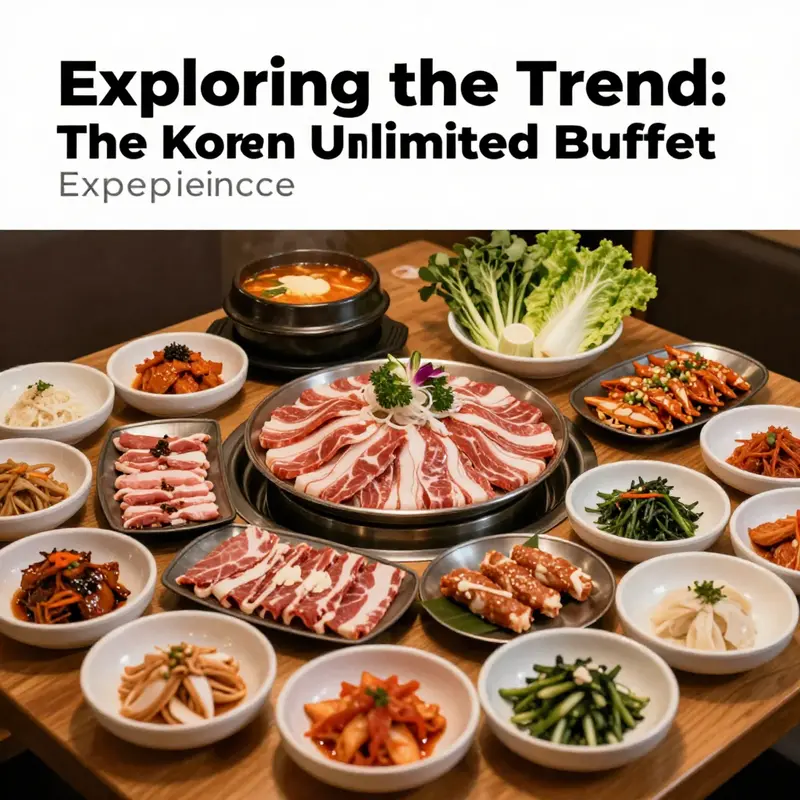
The Korean unlimited buffet presents itself as more than a meal; it is a navigable tapestry of flavors and textures that invites diners to wander from one station to the next, collecting memories the way others collect plates. At its heart lies abundance, but the abundance is not random. It is organized around a core idea: variety that respects tradition while welcoming improvisation. You begin with the crisp bite of fresh vegetables cut and seasoned to complement the smoky depth of grilled meats, then slip into the simmering warmth of broths and soups that carry echoes of home-cooked comfort. The kimchi, a chorus of fermented peppers and cabbage, introduces foggy heat and bright acidity that sharpens your palate for what follows. There is also japchae, the glass noodles that catch oils and sesame seeds like tiny living landscapes, offering a slippery, savory welcome to the meal. The menu often threads bulgogi and galbi through the spread—thin slices of beef, marinated in soy, garlic, sugar, and sesame, grilled to caramelized tenderness right at the table or on a central grill. Each bite builds a bridge between familiar flavors and the thrill of discovery, a hallmark of these unlimited formats where sampling becomes the guiding principle rather than finishing every dish to the last crumb.
What makes the experience distinctive is not only the array of main dishes but the accompanying side dishes, or banchan, which are refreshed with a reliability that feels almost ceremonial. A rack of small bowls offers seasoned bean sprouts that crackle with sesame oil, pickled cucumbers that snap with tang, and marinated vegetables that balance softness with bite. This is where the buffet shows its generosity: the banchan are often replenished as the crowd shifts, ensuring that even late arrivals encounter the same bright, unpretentious hospitality that greeted earlier guests. The texture palette is generous too—crunch from daikon pickles, chew from chewy rice cakes, and the pliant tenderness of well-cooked beef. The visual display matters as well. A well-curated spread makes the food feel accessible and celebratory; the colors greens, oranges, deep reds, and pale whites read as a promise that this meal will be vivid, not merely filling.
Beyond the core dishes, modern Korean buffets have evolved into interactive experiences that reward curiosity and social dining. Some venues expand their format to include unlimited grilled meats that guests cook themselves, or a hotpot option where diners swirl morsels through simmering broths, watching raw ingredients transform into comforting nourishment. The table becomes a stage for conversation and shared discovery as friends and family coordinate their cooking strategies, compare sauces, and cheer each other on as they try an unfamiliar cut or a new handmade noodle. In this sense, the buffet becomes a social ritual as much as a culinary one, a place where conversations about textures and flavors mingle with laughter. The participatory element intensifies the sense of value, because what felt like a simple choice about how long to grill a slice of meat or how aggressively to fish for a spoonful of hot broth becomes part of the evening’s story.
Affordability and access are not afterthoughts in these setups. The model often implies a fixed, predictable price that grants broad access to a spectrum of dishes, making it particularly appealing to families and groups with varied tastes and appetites. The value proposition rests on breadth rather than on single, premium items, and for many diners that breadth is a compelling invitation to try something new without worry about the cost of admission. Yet the idea of value also comes with a caveat: the quality of the ingredients and the care in preparation can vary from location to location. The best examples balance abundance with freshness; the meats are marinated with care, the vegetables are crisp, and the sauces carry depth without overpowering the core ingredients. When this balance is achieved, the buffet reads like a well-tuned orchestra in which every instrument supports the others rather than competing for attention.
Globally, the appeal of the unlimited buffet format has encouraged a cross-pollination of techniques and presentation. Restaurants around the world adapt the concept to local preferences while keeping the core promise of unlimited choices. The result is a dining landscape where the same fundamental joy—being able to assemble a personalized plate from a wide menu—translates across cultures. The aesthetic of the spread—large, organized displays, generous piles of vegetables, and a rhythm of restocking that makes the array feel abundant rather than exhausted—conveys care and craft. Diners might be drawn to the way a single station showcases a signature element—like a bright chili-touched kimchi, a glossy bulgogi slice, or a velvety miso-based broth—then wander to other corners to contrast that element with something more restrained or differently seasoned. The dynamic is playful as well as practical, turning a meal into a kind of edible catalog of flavors.
For readers looking to explore this dining format in their own towns, the practical steps are simple: survey the layout, note how often the stations are refreshed, and observe how staff balance the need for speed with the obligation to maintain quality. If you decide to sample a broader range, consider trying a mix of grilled meats and hotpot options to see how they complement each other. An internal reference guide for readers curious about nearby choices can be found by exploring local buffet listings and review sites to identify places with steady replenishment and clear labeling. It serves as a practical starting point for stepping into this world of unlimited comfort and culinary curiosity.
As this chapter closes, the takeaway is not merely the catalog of dishes but the approach to dining that Korean unlimited buffets embody: generosity, adaptability, and a spirit of shared discovery. The plates accumulate, but so do stories—humor in a mis-timed flip of a grill, the quiet satisfaction of a well-balanced plate, the surprise of an unfamiliar flavor that lingers in memory. The format encourages diners to taste widely and thoughtfully, to notice how a modest mix of banchan can brighten a stew, or how a single slice of well-charred meat can elevate a bowl of noodles. In this sense, the unlimited buffet becomes more than a value proposition. It is a narrative about appetite—how people seek, and sometimes uncover, a sense of place at the table through a science of selection, careful preparation, and shared enjoyment.
Beyond the Plate: The Economic Currents Behind Korea’s Unlimited Buffet Restaurants
Across many urban markets, the Korean unlimited buffet has moved from a novelty to a staple of the hospitality landscape. Diners are drawn not only by the abundance of choices but by the sense that a single fixed price grants access to a culinary spectrum—from marinated meats and crisp vegetables to steaming bowls of soup and a chorus of banchan. This deceptively simple setup hides a web of economic dynamics that ripple through consumer behavior, labor markets, and the broader hospitality ecosystem. At the heart of the model is perceived value: a fixed price for a large quantity of food lowers the mental barrier to trial, nudges groups toward shared assortments, and encourages extended dining sessions. When people feel they are getting more value for their money, their spending becomes less price-sensitive, yet the throughput remains high because the menu is designed for quick replenishment and steady recalibration of plates. In this light, the AYCE format functions as a demand amplifier. It converts diverse appetites into a steady stream of orders, a pattern that sustains sales momentum even when per-item pricing might feel modest. The result is a business model with high customer turnover, where revenue per outlet benefits from volume, while the price point remains accessible to a broad audience. The economic logic is not merely about cheap meals; it is about maximizing the efficiency of a shared dining environment. A kitchen that efficiently toggles between raw prep for grilling and rapid restocking of banchan can serve many tables in a short window, translating into higher table turnover and improved capacity utilization. In markets where foot traffic is dense, this efficiency matters as much as the cuisine itself. The economic contributions of this format extend beyond the walls of a single restaurant. The surge in AYCE dining has fed demand in adjacent sectors: bulk food production, supply chain logistics, and the apparatus of the modern kitchen. Food manufacturers respond to bulk procurement cycles, while logistics providers scale cold-chain and storage capacity to keep high volumes flowing from producers to plates. The ripple effect also reaches restaurant equipment manufacturers, who respond to the demand for buffet stations, grills, and efficient ventilation systems tailored for high-throughput settings. These supply-chain effects are not incidental; they shape how quickly a city can expand its dining options and how reliably it can sustain them. Employment patterns follow suit. AYCE operations require a breadth of roles—from food preparation and grill attendants to front-of-house staff and management—creating steady, if sometimes seasonal, work opportunities. In cities with thriving food tourism, these jobs accumulate into a meaningful share of local employment, aiding economic resilience during slower periods. The scale of this impact is not only local. Regions that cultivate a cluster of AYCE concepts can become magnets for visitors seeking value, a factor that feeds tourism inflows and extends the reach of related experiences such as neighborhood markets, cultural events, and street-food scenes. The economic story is complemented by strategic management insights that operators increasingly rely upon. A 2026 study employing an integrated AHP-IPA framework underscored the need to bridge the perception gap between what managers believe guests value and what guests actually experience. Food quality, hygiene standards, the diversity of offerings, and the speed of service emerge as the core levers. When operators align perceived priorities with actual expectations, customer satisfaction rises, turning one visit into a repeat encounter and expanding the chance of word-of-mouth referrals. This dynamic is especially potent in competitive urban markets where the cost of customer acquisition is high and loyalty has a longer half-life than a single meal. The social dimension of AYCE dining—shared plates, casual conversation, and group rituals around grilling—also strengthens its economic gravity. It becomes a social dining experience that encourages larger party sizes, weekend gatherings, and post-dining extensions like nearby cafes or markets. In this way, the buffet format acts as a catalyst for broader local economic activity, drawing in foot traffic that spills over into retail, entertainment, and transit-oriented development. Yet the model is not without its challenges. Sustaining profitability requires tight control of food costs, careful menu design to balance variety with predictability, and rigorous hygiene practices to maintain trust in a high-volume environment. Price competition remains intense, which is why the capacity to deliver consistent quality at scale is the ultimate differentiator. The resilience of this sector has been evident through fluctuating macroeconomic conditions. With a projected revenue uptick of around 12 percent between 2023 and 2024 in some markets, AYCE operations have demonstrated a capacity to navigate economic uncertainty by leaning into throughput and value rather than price cuts alone. This resilience is not just about surviving downturns; it reflects a deeper adaptability: menus can be refreshed to reflect seasonal preferences, labor can be allocated to match peak hours, and supply chains can be diversified to weather disruptions. For readers seeking a tangible example of how these dynamics play out in practice, the Oakland scene offers a useful case study. There, a prominent AYCE concept has become a local touchpoint for affordability, variety, and social dining—an ecosystem where dining choices, labor needs, and supplier relationships interact in ways that echo the broader regional economy. all-you-can-eat-korean-bbq-oakland provides a window into how these networks organize themselves around volume, service speed, and menu breadth, illustrating the operational realities behind the macroeconomic picture. External scholarship supports these observations, highlighting how the AYCE segment contributes to employment, tourism, and related industries. The Korea Times offers a comprehensive view of this broader impact, outlining how the surge of AYCE dining shapes city dynamics, consumer behavior, and local business ecosystems. This chapter draws on those insights to present a cohesive picture: Korean unlimited buffet restaurants are more than a dining format. They are dynamic economic platforms that translate culinary abundance into employment, supply-chain activity, and urban vitality. They challenge operators to innovate in quality and efficiency while inviting diners to participate in a social, value-rich experience that keeps communities economically engaged and culturally connected.
Final thoughts
As the Korean unlimited buffet dining trend continues to capture interest globally, restaurant owners have a unique opportunity to delight customers with interactive and diverse culinary experiences. The blend of high-quality food, community-focused dining, and the potential for significant economic impact positions these establishments favorably in a competitive market. Embracing this trend can not only elevate the dining landscape but also drive profitability and customer loyalty in your restaurant ventures.