
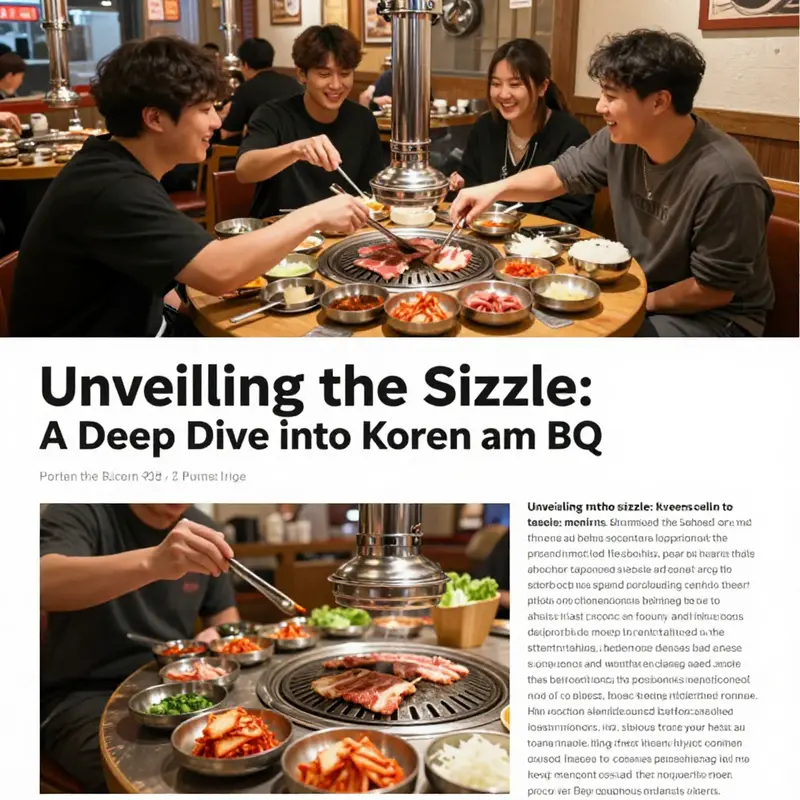
Korean BBQ offers not just flavor but a cherished dining experience where meat is grilled at the table, encapsulating social bonding and cultural celebration. This unique cooking method, centered around marinated meats and a communal atmosphere, encourages diners to engage actively with their food. In this exploration, we will dissect the culinary intricacies that make Korean BBQ a world-renowned cuisine, and understand its profound cultural significance in Korean society. Each chapter will shed light on different facets of this beloved practice, from its preparation and cooking techniques to its role in fostering community and tradition.
Korean BBQ Unveiled: The Tabletop Ritual That Defines Korean Barbecue

Korean BBQ is more than grilled meat. It is a living, shared ritual. At the center of the table sits a hot grill. Around it gather people, conversation, and a small galaxy of side dishes. The meal is interactive. Diners cook, season, wrap, and taste in a steady loop. That interaction turns dinner into theatre. It turns food into memory.
The core idea is simple. High-quality cuts of meat are prepared, often marinated, then cooked at the table. The grill may be charcoal or gas. It may be electric in modern setups. What matters is the communal focus. The sizzling sound, the caramelized edges, the aroma—these are signals that the meal is happening now, together.
Marinades are central to the flavor profile. Classic blends use soy sauce, sesame oil, garlic, and sugar. Pear or apple juice sometimes appears. These fruits act as tenderizers. They add gentle sweetness and help the meat brown. For beef, galbi—marinated short ribs—delivers deep savory notes and a sticky glaze when grilled. Thinly sliced beef, known as bulgogi, cooks quickly and soaks up marinade. For a deeper look at bulgogi traditions and variations, see this page on Bul-gogi Korean BBQ: https://kogikoreanbbq.net/bul-gogi-korean-bbq/.
Not all meats are marinated. Samgyeopsal, or pork belly, often comes unseasoned. Its richness relies on fat rendering and smoke. Diners grill slices until the edges crisp. Then they tear the pieces and build a bite with fresh greens and condiments. The contrast is deliberate. Cool lettuce offsets hot, fatty meat. Sharp kimchi cuts through oil. Spicy, savory sauces add dimension.
Those sauces and wraps create the signature ssâm experience. Ssâm means ‘‘wrap.’’ A leaf of lettuce or perilla becomes a vessel. Into it goes a piece of meat, sometimes rice, garlic, and a dab of ssamjang. That paste blends fermented soybean paste with chili paste, sesame oil, and aromatics. The result is balanced. The wrap cools the meat, adds texture, and layers flavors.
No Korean BBQ table is complete without banchan. These small side dishes arrive in many bowls. Kimchi is the most familiar. Pickled radish provides crunch. Seasoned spinach and bean sprouts offer vegetal notes. Banchan are shared. They are refilled without fuss. Each variety is intended to change the pace of the meal. They refresh the palate. They add color and contrast.
The cooking surface shapes the result. Charcoal imparts a smoky, almost sweet edge. Gas offers control and convenience. Modern restaurants may use electric grills with ventilation. Each choice affects taste and experience. Charcoal enhances depth. Gas is efficient. Ventilation reduces smoke indoors and keeps clothes free of lingering aromas.
Korean BBQ also embraces a range of cuts and techniques. Thin slices grill fast and caramelize quickly. Bone-in cuts hold juiciness and develop complex flavors. Fat is prized. It carries flavor and helps meat brown. Chefs and home cooks both manage heat carefully. They sear to lock in juices. They move pieces to a cooler zone to finish cooking.
Learning to cook at the table is part of the fun. Beginners watch the grill and learn to read doneness. Hosts often help, flipping and cutting to share evenly. The pacing matters. You do not rush each bite. You take small portions, wrap, and savor. You trade stories between turns at the grill.
Korean BBQ shines as social cuisine. It fosters Jeong, a Korean term for emotional warmth and connectedness. Meals become bonding time. Friends and coworkers gather to celebrate, to commiserate, and to close deals. The act of cooking for one another builds rapport. The table becomes a communal stage where everyone participates.
The restaurant formats vary. Some places serve à la carte small plates. Others offer set courses with defined portions. A popular modern option is all-you-can-eat. These buffets let diners try many cuts and banchan for a fixed price. Each format changes the rhythm of the meal. Set menus can highlight premium cuts. Buffets encourage exploration and tasting.
At home, Korean BBQ adapts easily. Portable grills and tabletop burners make the experience accessible. Home cooks can replicate marination techniques and banchan recipes. The key is preparation. Marinate ahead of time. Slice thinly. Arrange banchan in small bowls. Provide tongs and scissors. Scissors are a common tool used to cut meat into bite-sized pieces right at the grill.
There is a practical science behind great Korean BBQ. Marinades combine sugar and salt to both season and promote caramelization. Enzymes from fruits like pear and kiwi break down proteins, tenderizing the meat. Acidic ingredients, such as vinegar or citrus, can also help but must be used sparingly to avoid a mushy texture. Heat management influences texture and flavor. High heat sears and creates a Maillard crust. Moderate heat renders fat and cooks the interior. Moving pieces from hot to cooler zones prevents overcooking.
Pairings are deliberate. Rice is a neutral base that lets strong flavors shine. Cold noodles, like naengmyeon, often follow a heavy meal to cleanse the palate. Alcoholic beverages also have roles. A light beer refreshes. Soju—a neutral, slightly sweet spirit—cuts richness. Traditional rice wine pairs nicely with grilled meats. Pairings enhance the experience without overwhelming it.
Etiquette at a Korean BBQ table blends casualness with subtle rules. Offer cooked pieces first to elders. Use communal utensils for shared platters. Avoid placing your own chopsticks directly into shared bowls. Those small courtesies keep the meal comfortable for everyone. In restaurants, staff may assist with grilling. Accepting help is common and part of the communal atmosphere.
Regional and contemporary variations expand the concept. Some chefs fuse flavors, adding unexpected spices or smoking techniques. Seafood and vegetable grills appear more often, offering alternatives to meat-heavy tables. Korean immigrants have adapted recipes abroad, blending local produce and tastes. These adaptations keep Korean BBQ evolving while preserving its core rituals.
Health and sustainability concerns influence choices too. Leaner cuts and more vegetables can balance the meal. Charcoal grilling produces smoke and particulates. Ventilated setups and responsible sourcing minimize impact. Many restaurants now highlight sustainable sourcing and ethical meat choices. That transparency appeals to conscious diners.
Equipment choices matter when you replicate Korean BBQ at home. A sturdy grill plate with a slight incline helps fat drain away. Quality tongs provide control. A good exhaust fan reduces smoke. For charcoal setups, use natural lump charcoal and avoid lighter fluid. For gas or electric grills, maintain even heat and clean the surface regularly to prevent sticking.
The sensory thread ties everything together. Visual cues, like browned edges and melted glazes, signal readiness. Sound cues, the steady sizzle and occasional pops, set the pace. Aroma cues—garlic, sesame, caramel—draw people closer. Taste is the final proof. A successful bite balances savory, sweet, spicy, and fresh. Each component contributes. No single element dominates.
Korean BBQ also teaches restraint. Because food is cooked communally, portion control comes from sharing. You try many flavors in small amounts. You return to favorites without finishing a whole plate alone. That sharing encourages variety and mindfulness.
From the simplest table to the most sophisticated restaurant, Korean BBQ keeps its essence. It is communal, interactive, and focused on flavor. It celebrates meat while balancing it with fresh greens and lively side dishes. It invites participation and rewards attention. Whether you enjoy a sizzling platter in a busy eatery or recreate the ritual at home, the experience centers on shared moments and layered tastes.
For readers who want to explore the history, techniques, and cultural significance of Korean BBQ further, a comprehensive overview is available from a reputable source. This article provides deeper context and background: https://www.koreatimes.co.kr/www/nation/2024/07/114_389751.html
Flame, Family, and Social Bonding: The Cultural Significance of Korean BBQ in Korean Society
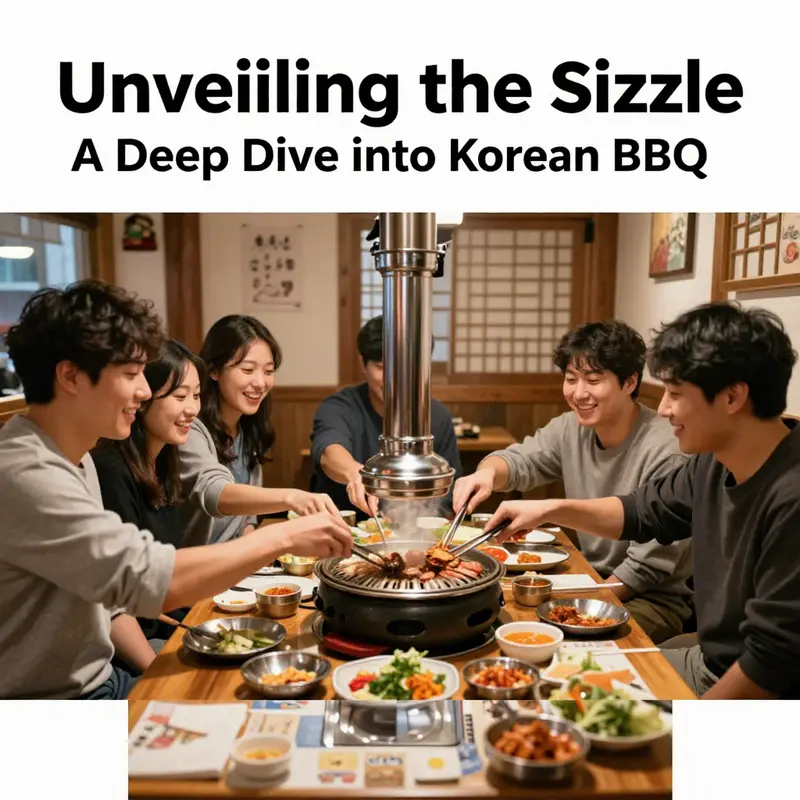
The scent of sizzling meat, the glow of a tabletop grill, and the quiet rustle of lettuce leaves being pulled apart all converge into a ritual that Korean society has refined into a language of togetherness. Korean BBQ, at its core, is more than a meal; it is a social practice that translates values, relationships, and communal identity into a shared, sensory experience. The act of cooking at the table, known locally as gogi-gui—literally, meat roast—turns dining into a participatory event. It invites everyone at the table to contribute, monitor the flame, judge the browning of each slice, and tailor each bite to personal preference. In this sense, the kitchen becomes a common ground where authority and hospitality meet, where tradition and improvisation negotiate with each other in real time. The result is a dining moment that can feel both intimate and expansive, a microcosm of Korean social life that happens to occur over food.
What makes this ritual especially resonant is its insistence on sharing. The grill is a communal stage, the thinly sliced or marinated meats a common script, and the sides—banchan, kimchi, pickled vegetables, and sauces—are the chorus that keeps the performance lively. The arrangement is neither random nor merely decorative. It embodies a philosophy of abundance and balance, a recurring theme in Korean culinary culture that values variety without overstating any single element. To bite into a piece of grilled beef wrapped in crisp lettuce with a dab of ssamjang is to enact a small but meaningful exercise in integration: the spicy, the savory, the fresh, and the crunch join in one mouthful, much as social etiquette seeks harmony within diverse relationships.
The social fabric around Korean BBQ is threaded with practices that reflect long-standing cultural ideals. The discipline of service, for instance, is subtly observed through the flow of the meal. Elders and guests are often tended to first, with hosts ensuring every person is comfortable and well fed. This graceful attentiveness is not mere politeness; it encapsulates hospitality as a social duty and a cherished virtue. It places responsibility on the host to curate an experience that is not only satisfying but also inclusive. Even the pace of cooking becomes a sign of respect: diners often take turns tending the grill, which prevents a single person from monopolizing the experience and reinforces the sense that everyone has a stake in the meal’s success.
The table itself becomes a mirror of social hierarchy and kinship networks. In many settings, family members and colleagues gather around a single grill, a setup that foregrounds direct interaction and collective participation. In business contexts, this arrangement can transform meals into informal arenas where trust is built and relationships are solidified beyond the formal office. The act of sharing meat, of adjusting portions, and of negotiating taste preferences in real time all contribute to a relational intelligence that is hard to replicate in more segmented dining formats. It is no accident that Korean BBQ is often described as a ritual of fellowship as much as a culinary practice; the sizzle becomes a soundtrack to conversations about work, life, and shared futures.
Within this framework, the side dishes play an essential role that extends beyond flavor. Banchan—the small, often eclectic array of condiments and accompaniments—embodies a philosophy of abundance within balance. The assortment can include kimchi, pickled radish (mu), seasoned vegetables, and fermented pastes, each contributing a distinct texture and taste. The presence of multiple banchan servings signals a societal value: diversity is welcomed and minimized only to ensure that every bite can be reinterpreted in light of another, creating a mosaic of tastes rather than a single dominant note. This concept of diversity within unity echoes broader cultural principles in Korea, where harmony is achieved not by erasing differences but by weaving them together into a coherent whole.
Another layer of meaning lies in the technique of wrapping the grilled meat with leaves, a practice that fosters a mindful, almost ritualized consumption. A leaf-wrapped bite—a ssam—pairs meat with crisp greens, aromatic herbs, and a dab of dipping sauce. The wrapping act is a small ceremony: the eater assembles the components, makes a choice about how much of each element to include, and then savors the assembled bite. In Korean social life, such wrapping rituals symbolize the synthesis of complementary forces—hot and cool, spicy and mild, oily and refreshing—and they model a broader principle of balance in relationships. The gesture of wrapping is not just a culinary trick; it is a form of communication, a nonverbal cue about how people can coexist with varied tastes and expectations while still sharing a single meal.
The cultural significance of Korean BBQ extends beyond the dining room into history and collective memory. The practice has roots that trace back to nomadic grilling traditions in northern Korea and was refined through the long arc of the Joseon Dynasty. Over time, it evolved with changing food availability and urbanization, especially after the Korean War, when meat became more accessible and social life shifted toward crowded city settings. The modern image of Korean BBQ—an intimate neighborhood restaurant, a smoky grill at the center of the table, a chorus of conversations—emerges from this layered history. Today it stands as a quintessential element of Korea’s culinary export, carrying with it memories of home, hospitality, and shared resilience. In many ways, the global reception of Korean BBQ reflects a broader curiosity about Korean social codes: how communities transform simple acts of cooking and eating into experiences that cultivate trust, memory, and a sense of belonging.
It is also important to consider how the sensory dimensions of the dining experience reinforce its social meaning. The sizzle, the aroma of marinated meat, and the smoky notes from charcoal or gas grills translate social warmth into a tangible atmosphere. The grill becomes a living, breathing forum for dialogue—about family news, workplace milestones, or just the comfort of a good evening with friends. The sensory richness of Korean BBQ supports what many scholars describe as a social ritual that anchors communal life. The shared meals create a sense of togetherness that can outlast the meal itself, leaving a memory that can be recalled during future gatherings and used to rejoin conversations across time.
In the contemporary setting, this ritual continues to adapt while preserving its core meanings. The rise of casual, communal dining spaces—where grills are central and the pace of service emphasizes participation—echoes the enduring appeal of the practice. Yet the essence remains anchored in trust-building and hospitality. When a host attends to guests with thoughtful choices about meat cuts, cooking times, and the pace of serving, the act becomes a microcosm of social governance: leadership expressed through care, communication fostered by shared tasks, and an atmosphere of equal participation that still respects hierarchical norms in subtle ways. The table becomes a micro-society where rules are not heavy-handed but negotiated through everyday interactions, enabling a sense of safety and belonging that can be deeply reassuring in a rapidly changing world.
Within Korean society, the practice of gathering around a gogi-gui table also carries implicit lessons about generosity and reciprocity. When portions are shared and leftovers are kept in mind, the meal becomes a mutual pledge—each participant contributes to the feast and, in return, receives care and attention. This reciprocity is a quiet but powerful force in social life, shaping how people show up for one another in family milestones, friendships, and team projects. The ritual of offering more food to guests and the careful attention to ensure everyone has enough to eat are everyday demonstrations of respect, hospitality, and social responsibility. Through such acts, Korean BBQ becomes a living classroom for the values that many societies hold dear—values that emphasize community over isolation and nourishment as a civic practice as well as a personal one.
The global journey of Korean BBQ also speaks to its cultural potency. As it travels beyond borders, it carries with it a script for social interaction that can be adapted to different settings while preserving its core meaning. In diasporic communities, gatherings around the grill can reproduce a sense of home and continuity, helping newer generations connect with their roots. In international cities, the practice invites others to participate in a ritual that is as much about dialogue and relationship-building as it is about flavor and technique. The universal appeal of the sizzling, social, participatory meal has helped Korean BBQ become a kind of cultural ambassador, offering a doorway into Korean social life without requiring prior knowledge of language or cuisine terms. Yet for all its global reach, the practice remains deeply rooted in Korean ideas about communal life, hospitality, and the ethical work of sharing.
To understand the cultural significance in a practical sense, consider how a typical Korean BBQ meal unfolds. The grilling begins as a collaborative act, with diners taking turns to flip and monitor the meat, a gentle choreography that keeps everyone engaged without producing a sense of exclusion. The host often determines when to bring out new batches, balancing the pacing with conversation and entertainment. Between bites, the side dishes offer a familiar cadence: a quick dip into kimchi, a bite of pickled radish for palate cleansing, a spoonful of a cool, garlicky sauce to rejoin the flavors. The act of wrapping and eating—together, not alone—becomes a ritual of community-building. It is in these small, repeated gestures that the deeper values crystallize: respect for elders, generosity toward guests, and the belief that shared nourishment can strengthen the ties that bind people together.
The chapter’s arc would be incomplete without acknowledging the subtle tension between individual preference and collective dining. Korean BBQ rests on a balance between personal taste and communal harmony. Each diner may have a preferred degree of doneness, a favorite dipping sauce, or a preferred combination of banchan. Yet the social ritual asks for patience and cooperation: allowing others to sample different cuts, offering a piece of meat to someone who may have arrived late, or adjusting the pace to ensure that conversations flow without the meal becoming a competitive race for the best piece of meat. In that sense, the dining table becomes a classroom for social etiquette, a place where rules are learned and practiced in a warm, tactile way. The ritual teaches a form of social literacy, where the ease with which people navigate flavors and textures translates into a broader fluency in human relationships.
This chapter is not meant to celebrate nostalgia alone, but to illuminate how a simple cooking method can crystallize a culture’s approach to life. The cooking flame is a metaphor for the spirited nature of Korean society—bright, communal, and infused with a sense of purpose that goes beyond food. The meal’s outcomes—satisfaction, connection, and memory—carry forward into future gatherings, reinforcing the social fabric that holds families and communities together. The practice also invites reflection on how culinary rituals can adapt to new contexts without losing their essence. As Korean BBQ continues to evolve in kitchens, restaurants, and homes around the world, its core message remains clear: food is most meaningful when shared, when texture and temperature are negotiated together, and when the act of eating becomes a doorway to belonging.
For readers curious to explore one facet of Korean BBQ culture through a contemporary example, consider the way certain venues host communal grills that invite guests to participate in the preparation of their own meal. These spaces foreground the democratic spirit of the practice, where everyone is invited to contribute and care for one another through shared cooking. The atmosphere in such settings is rarely hurried; it is patient, inviting, and deliberately crafted to sustain conversation as much as appetite. In this sense, Korean BBQ functions as a social technology—a way to cultivate trust, soften boundaries, and democratize the dining experience in a manner that honors tradition while embracing change. It is a vivid reminder that food, when organized around a table, has the power to shape social life in enduring ways.
As the chapter closes, the significance of Korean BBQ in Korean society can be understood as a living tradition that nourishes both body and community. It is a ritual that binds people to one another across generations and geographies. It teaches the virtues of generosity, patience, and balance. It offers a framework for hospitality that is both accessible and meaningful. In the end, the sizzling meat is more than sustenance; it is a communal act that makes a society visible—the people, their stories, and their shared future gathered around a single flame.
Internal link for further reading on related dining experiences: The Moon Korean BBQ and Hot Pot.
External resource: for a broader historical and cultural overview of the essence of Korean BBQ, see Serious Eats’ exploration of its spice, sizzle, and global tradition. https://www.seriouseats.com/korean-bbq-essence-spice-sizzle-global-tradition
Final thoughts
Korean BBQ stands out as a quintessential dining experience that goes beyond mere sustenance; it embodies community, tradition, and joy. The intricate preparation of marinated meats and the interactive grilling process foster a unique social bond among diners, whether in the comfort of their homes or at bustling restaurants. Understanding Korean BBQ offers invaluable insights for business owners seeking to connect authentically with their customers through culinary experiences. As you consider introducing or expanding your offerings, keep in mind the cultural richness and communal dynamics that define Korean BBQ as a celebrated part of Korean heritage.